Freshly Printed - allow 10 days lead
Couldn't load pickup availability
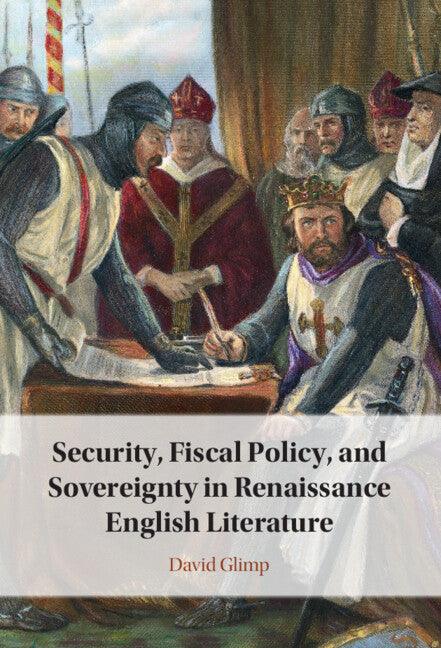
Security, Fiscal Policy, and Sovereignty in Renaissance English Literature
A groundbreaking account of how Renaissance England's changing tax system profoundly affected the work of its most influential writers.
David Glimp (Author)
9781009618809, Cambridge University Press
Hardback, published 18 September 2025
282 pages
23.4 x 15.9 x 2.1 cm, 0.55 kg
'In Fiscal Policy and the Limits of Sovereignty in Renaissance English Literature,David Glimp offers a nuanced examination of how the administrative realities of funding collective security and managing risk in early modern England shaped literary culture. In deft readings of works by Thomas More, Christopher Marlowe, William Shakespeare, George Herbert, and John Milton, the book identifies what amounts to a 'fiscal poetics,' hiding in plain sight, that transforms our sense of the relationship between writing and security in the period.' Julian Yates, H. Fletcher Brown Professor of English and Material Culture Studies, University of Delaware
Taxation was a central challenge for England's rulers during the Renaissance, and consequently became a major theme for some of the period's greatest writers. Through close readings of works by Thomas More, Christopher Marlowe, William Shakespeare, George Herbert, and John Milton, David Glimp reveals how these writers and others grappled with the period's expanding systems of taxation and changing understandings of collective security. Such debates involved questions of political obligation, what it meant to be safe, and the nature of political community itself. Challenging dominant understandings of Renaissance sovereignty, Glimp explores in greater detail than ever before how early modern authors thought about and engaged the fiscal realities of government. From Utopia to Paradise Lost, his groundbreaking analysis illuminates how Renaissance literature addressed concerns about fiscal policy, state power, and collective wellbeing and will appeal to scholars of Renaissance literature, political theory, and economic history alike.
1. Security dilemmas: towards a fiscal poetics
2. Funding Utopia: security, fiscal policy, and humanist association
3. Marlowe's treasuries
4. Sovereignty and security dilemmas in William Shakespeare's history plays
5. George Herbert's fiscal theology: sovereignty and insecurity in the temple
6. Metasecurity dilemmas in John Milton's late poems
Coda: the heart of the matter: the security of the humanities
Endnotes
Works cited
Index.
Subject Areas: Literary studies: general [DSB]