Freshly Printed - allow 10 days lead
Couldn't load pickup availability
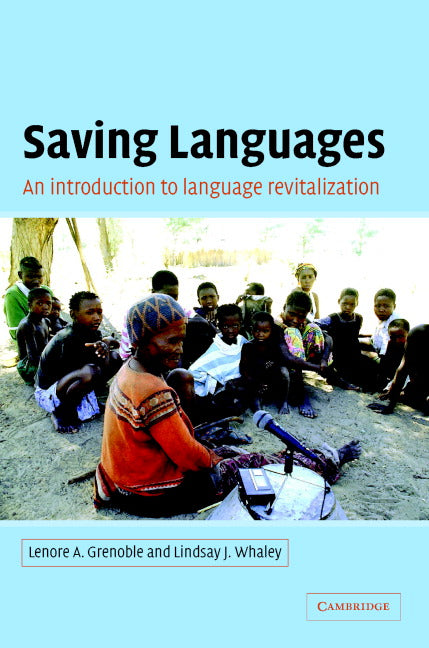
Saving Languages
An Introduction to Language Revitalization
A guide to language revitalization, presenting the issues and practices involved in preventing language loss.
Lenore A. Grenoble (Author), Lindsay J. Whaley (Author)
9780521816212, Cambridge University Press
Hardback, published 3 November 2005
244 pages
23.5 x 15.8 x 2.1 cm, 0.522 kg
"Written in English, the world's most dangerous language, the book is most accessible to linguists and, in part, to the educated elite of developed-world communities, especially those where English is the endangering language. In some cases, these communities have already made their own overt or covert choices about language maintenance and are able to carry out their own advocacy and networking and to participate in decisions about evitalization program goals, content, and methods' for them, this book can provide some ideas and faciliate such programs. In other cases, this volume may provide some impetus to community leaders. It is also a very valuable summary for linguistic, anthropological, and other community-based fieldworkers." - David Bradlye, La Trobe University
Language endangerment has been the focus of much attention and as a result, a wide range of people are working to revitalize and maintain local languages. This book serves as a general reference guide to language revitalization, written not only for linguists and anthropologists, but also for language activists and community members who believe they should ensure the future use of their languages, despite their predicted loss. Drawing extensively on case studies, it sets out the necessary background and highlights central issues such as literacy, policy decisions, and allocation of resources. Its primary goal is to provide the essential tools for a successful language revitalization program, such as setting and achieving realistic goals, and anticipating and resolving common obstacles. Clearly written and informative, Saving Languages will be an invaluable resource for all those interested in the fate of small language communities around the globe.
Preface
1. Language revitalization as a global issue
2. Issues in language revitalization
3. Models for revitalization
4. Case studies
5. Literacy
6. Orthography
7. Creating a language program
Appendix: online resources
References
Index of languages
General index.
Subject Areas: Social & cultural anthropology, ethnography [JHMC], Linguistics [CF]