Freshly Printed - allow 8 days lead
Couldn't load pickup availability
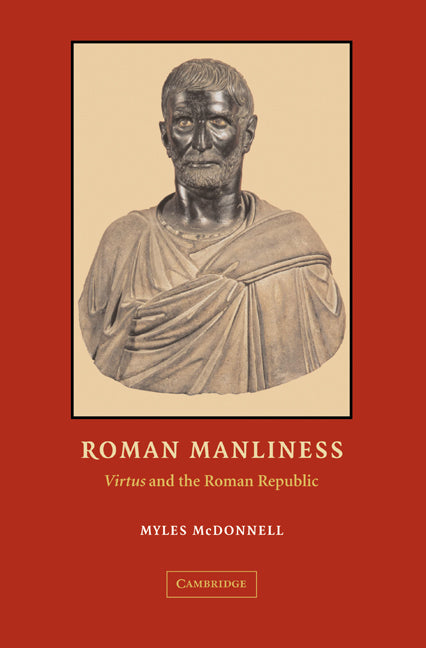
Roman Manliness
"Virtus" and the Roman Republic
This 2006 book examines notions of virtus as it contributed to Roman ideas of manliness.
Myles McDonnell (Author)
9780521827881, Cambridge University Press
Hardback, published 3 July 2006
504 pages
22.9 x 15.2 x 3.2 cm, 0.91 kg
'For historians, therefore, the study of ethics is now the study of a basic building block of the Greek and Roman world, and McDonnell … [has] made a major contribution to the field.' The Times Literary Supplement
Some studies of ancient Roman masculinities have concentrated on the private aspects of the subject, particularly sexuality, and have drawn conclusions from a narrow field of reference, usually rhetorical practice. In contrast, this 2006 book examines the public and the most important aspect of Roman masculinity: manliness as represented by the concept of virtus. Using traditional historical, philological, and archaeological analyses, together with the methods of socio-linguistics and gender studies, it presents a comprehensive picture of how Roman manliness developed from the middle to the late Republic. Arguing that virtus was not, in essence, a moral concept, Myles McDonnell shows how the semantic range of the word, together with the manly ideal that it embodied, were altered by Greek cultural ideas; and how Roman manliness was contested in the religion, culture, and politics of the late Republic.
Introduction - manliness and Virtus
1. Manliness as courage in early Latin
2. Hellenization and Arete - semantic borrowing
3. Arete and manly Virtus
4. Visual representations of Virtus
5. The boundaries of manliness
6. Manliness in Republican Rome
7. Divine Virtus, M. Claudius Marcellus and Roman politics
8. Virtus contested
9. Virtus Imperatoris
10. Manliness redefined
Epilogue - Roman manliness and the Principate
Index.
Subject Areas: Literary studies: classical, early & medieval [DSBB]