Special Order - allow 2+ weeks lead
Couldn't load pickup availability
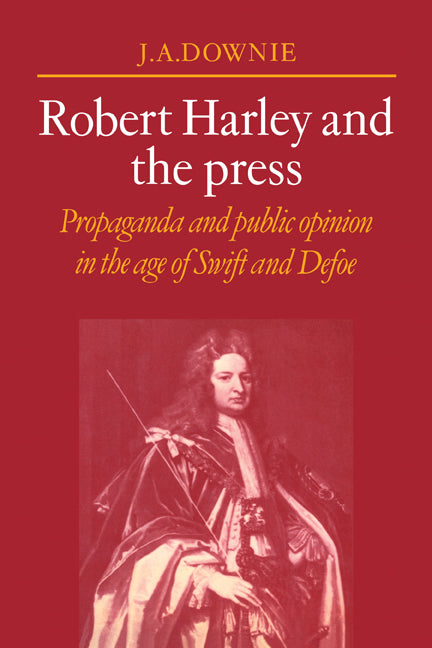
Robert Harley and the Press
Propaganda and Public Opinion in the Age of Swift and Defoe
In 1695, with the expiry of the licensing act, state censorship of the press ceased.
J. A. Downie (Author)
9780521070744, Cambridge University Press
Paperback / softback, published 28 August 2008
248 pages
22.8 x 15.2 x 1.6 cm, 0.39 kg
In 1695, with the expiry of the licensing act, state censorship of the press ceased. The end of the licensing system coincided almost exactly with the passing of the triennial act, and from the outset there was a discernable connection between electoral activity and the rise of a virulent political press. This study seeks to explain why press regulations were not reimposed to curb the invective of the party writers; and concludes that the principal reason was the development of government propaganda and counter-propaganda agencies under the direction of Robert Harley. Contemporaries were bewildered by the development of a 'fourth estate'; and successive administrations, brought in through ten general elections between 1695 and 1715, were at a loss when it came to dealing with the problems raised by a free press. But during the course of Queen Anne's reign a government policy gradually emerged, and arrangements were made for the publication and dissemination of 'official' propaganda.
Part I. 1689–1708: 1. The propaganda of court and country
2. The paper war of 1701
3 Harley and Defoe
4. The Memorial of the Church of England (1705): a case study
Part II. 1708–1714: 5. The tort' resurrection, 1708–1710
6. Swift, Defoe, and the peace campaign
7. The stamp act of 1712
8. The organisation of propaganda, 1710–1714.
Subject Areas: Early modern history: c 1450/1500 to c 1700 [HBLH], British & Irish history [HBJD1]