Freshly Printed - allow 7 days lead
Couldn't load pickup availability
Risk Management in Life-Critical Systems
Patrick Millot (Edited by)
9781848214804, Wiley
Hardback, published 7 November 2014
422 pages
24.1 x 16.5 x 2.8 cm, 0.753 kg
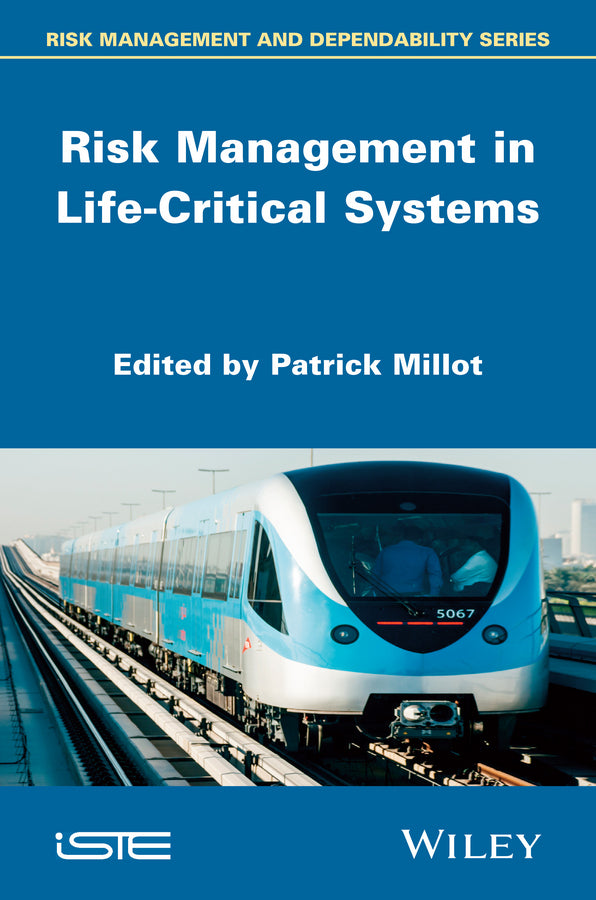
Risk management deals with prevention, decision-making, action taking, crisis management and recovery, taking into account the consequences of unexpected events. The authors of this book are interested in ecological processes, human behavior, as well as the control and management of life-critical systems, which are potentially highly automated. Three main attributes define life-critical systems, i.e. safety, efficiency and comfort. They typically lead to complex and time-critical issues and can belong to domains such as transportation (trains, cars, aircraft), energy (nuclear, chemical engineering), health, telecommunications, manufacturing and services. The topics covered relate to risk management principles, methods and tools, and reliability assessment: human errors as well as system failures, socio-organizational issues of crisis occurrence and management, co-operative work including human−machine cooperation and CSCW (computer-supported cooperative work): task and function allocation, authority sharing, interactivity, situation awareness, networking and management evolution and lessons learned from Human-Centered Design.
Part 1. General Approaches for Crisis Management 1. Dealing with the Unexpected 2. Vulnerability and Resilience Assessment of Infrastructures and Networks: Concepts and Methodologies 3. The Golden Hour Challenge: Applying Systems Engineering to Life-Critical System of Systems 4. Situated Risk Visualization in Crisis Management 5. Safety Critical Elements of the Railway System: Most Advanced Technologies and Process to Demonstrate and Maintain Highest Safety Performance 6. Functional Modeling of Complex Systems Part 2. Risk Management and Human Factors 7. Designing Driver Assistance Systems in a Risk-based Process 8. Dissonance Engineering for Risk Analysis: A Theoretical Framework 9. The Fading Line Between Self and System 10. Risk Management: A Model for Procedure Use Analysis 11. Driver-Assistance Systems for Road Safety Improvement Part 3. Managing Risk Via Human-Machine Cooperation 12. Human–Machine Cooperation
Principles to Support Life-Critical Systems Management 13. Cooperative Organization for Enhancing Situation Awareness 14. A Cooperative Assistant for Deep Space Exploration 15. Managing the Risks of Automobile Accidents Via Human–Machine Collaboration 16. Human–Machine Interaction in Automated Vehicles: The ABV Project 17. Interactive Surfaces, Tangible Interaction: Perspectives For Risk Management
Guy A. Boy
Eric Châtelet
Jean-René Ruault
Lucas Stéphane
Stéphane Romei
Morten Lind
Pietro Carlo Cacciabue
Frédéric Vanderhaegen
René van Paassen
Kara schmitt
Serge Boverie
Marie-Pierre Pacaux-Lemoine
Patrick Millot
Donald Platt
Makoto Itoh
Chouki Sentouh and Jean Christophe Popieul
Christophe Kolski, Catherine Garbay, Yoann Lebrun, Fabien Badeig, Sophie Lepreux, René Mandiau and
Emmanuel Adam
Subject Areas: Business & management [KJ]