Freshly Printed - allow 10 days lead
Couldn't load pickup availability
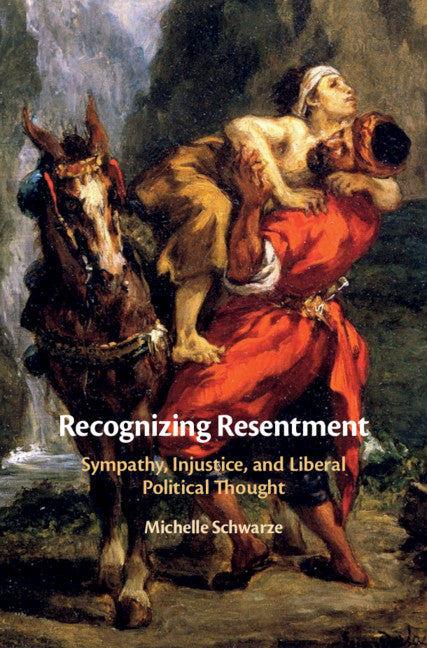
Recognizing Resentment
Sympathy, Injustice, and Liberal Political Thought
Innovative theory surrounding the liberal demand for sympathetic resentment, which entails a recognition of the political equality of victims of injustice.
Michelle Schwarze (Author)
9781108478663, Cambridge University Press
Hardback, published 22 October 2020
178 pages
16 x 23.5 x 1.5 cm, 0.42 kg
'Thanks to her careful historical analysis and her original theorizing, Schwarze succeeds in providing a historical account of resentment and a theory of how to grapple with contemporary claims of injustice. [She] enables us to accept that free government can survive among a people led by their hearts so that we can consider what this demands of ourselves and our institutions.' Kristen R. Collins, The Review of Austrian Economics
We typically think of resentment as an unjustifiable and volatile emotion, responsible for fostering the worst political divisions. Recognizing Resentment argues instead that sympathy with the resentment of victims of injustice is vital for upholding justice in liberal societies, as it entails recognition of the equal moral and political status of those with whom we sympathize. Sympathizing with the resentment of others makes us alive to injustice in a way no rational recognition of wrongs alone can, and it motivates us to demand justice on others' behalves. This book rehabilitates arguments for the moral and political worth of resentment developed by three influential thinkers in the early liberal tradition - Joseph Butler, David Hume, and Adam Smith - and uses these to advance a theory of spectatorial resentment, discussing why we should be indignant about the injustice others face, and how such a shared sentiment can actually bring liberal citizens closer together.
Introduction: Sympathetic Resentment
1. Vicious Passions: Resentment and Sociability Before Butler
2. Innocent Resentment, Sympathy, and Limited Duty in Butler
3. Sympathizing with Injustice: Hume on Resentment
4. Coping with Resentment: Spectatorial Resentment for Smith
Conclusion: Resentment Reconsidered
References
Index.
Subject Areas: Political science & theory [JPA], Social & political philosophy [HPS]