Freshly Printed - allow 7 days lead
Couldn't load pickup availability
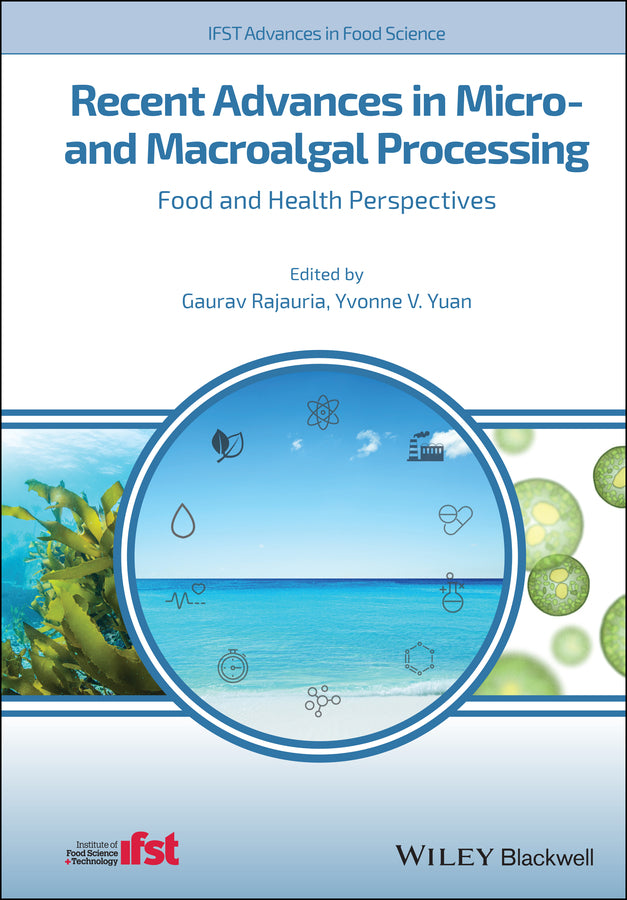
Recent Advances in Micro- and Macroalgal Processing
Food and Health Perspectives
Gaurav Rajauria (Edited by), Yvonne V. Yuan (Edited by)
9781119542582, Wiley
Hardback, published 13 May 2021
672 pages
24.4 x 17 x 3.7 cm, 1.418 kg
Recent Advances in Micro- and Macroalgal Processing A comprehensive review of algae as novel and sustainable sources of algal ingredients, their extraction and processing This comprehensive text offers an in-depth exploration of the research and issues surrounding the consumption, economics, composition, processing and health effects of algae. With contributions from an international team of experts, the book explores the application of conventional and emerging technologies for algal processing. The book includes recent developments such as drying and milling technologies along with advancements in sustainable greener techniques. The text also highlights individual groups of compounds including polysaccharides, proteins, polyphenols, carotenoids, lipids and fibres from algae. The authors provide insightful reviews of the traditional and more recent applications of algae/algal extracts in food, feed, pharmaceutical and cosmetics products. Offering a holistic view of the various applications, the book looks at the economic feasibility, market trends and considerations, and health hazards associated with algae for industrial applications. This important book: Written for food scientists, allied researchers and professional food technologists, Recent Advances in Micro- and Macroalgal Processing: Food and Health Perspectives offers a guide to the novel processing and extraction techniques for exploring and harnessing the immense potential of algae.
Acknowledgments v About the IFST Advances in Food Science Book Series xvii List of Contributors xix Preface xxiii Section I Composition and Extraction Technologies For Algal Bioactives 1 Algae: A Functional Food with a Rich History and Future Superfood 3 1.1 Introduction 3 1.2 History of Macro- and Microalgae Consumption 4 1.3 Economic Relevance of Macro- and Microalgae 6 1.4 Book Objectives 7 1.5 Book Structure 7 References 11 2 Influence of Seasonal Variation on Chemical Composition and Nutritional Profiles of Macro- and Microalgae 14 2.1 Introduction 14 2.2 Influence of Seasonal Variation on Biochemical Composition of Micro- and Macroalgae 22 2.3 Pigments 24 2.4 Carbohydrates/Polysaccharides 31 2.5 Fiber Content 36 2.6 Proteins 38 2.7 Lipids and PUFAs 48 2.8 Inorganic Elements and Minerals 52 2.9 Vitamins 56 2.10 Phenolic Compounds 57 2.11 Other Compounds 59 2.12 Conclusion 59 References 60 3 Advances in Drying and Milling Technologies for Algae 72 3.1 Introduction 72 3.2 Algal Cell Drying Technologies 74 3.3 Algal Cell Milling Technologies 81 3.4 Challenges and Prospects 87 3.5 Conclusion 89 References 89 4 Recent Advances in the Use of Greener Extraction Technologies for the Recovery of Valuable Bioactive Compounds from Algae 96 4.1 Introduction 96 4.2 Green Extraction Technologies and Applications 98 4.3 Combination Techniques 112 4.4 Challenges and Future Perspectives 115 Acknowledgments 116 References 116 5 Extraction Technologies for Functional Lipids 123 5.1 Introduction 123 5.2 Conventional Extraction Techniques for Functional Lipids 124 5.3 Application of Novel Extraction Technologies for Functional Lipids 127 5.4 Future Recommendations 134 Acknowledgments 134 References 135 6 Extraction Technologies for Proteins and Peptides 141 6.1 Introduction 141 6.2 Conventional Extraction Techniques for Proteins and Peptides 144 6.3 Emerging Technologies for Proteins and Peptides 151 6.4 Conclusion and Future Outlook 154 References 155 7 Extraction Technologies to Recover Dietary Polyphenols from Macro- and Microalgae 163 7.1 Introduction 163 7.2 Conventional Extraction Techniques for Polyphenols 164 7.3 Innovative Extraction Technologies for Isolation of Polyphenols from Macroalgae 166 7.4 Factors Affecting Extraction 178 7.5 Challenges and Future Recommendations 180 Acknowledgments 180 References 181 8 Extraction Technologies for Bioactive Polysaccharides 188 8.1 Introduction 188 8.2 Polysaccharides in Seaweed 189 8.3 Conventional Technologies for Polysaccharide Extraction 192 8.4 Advanced Technologies for Polysaccharide Extraction 200 8.5 Conclusion 203 References 203 Section II Biological Properties of Algal Derived Compounds 9 Potential Biological Activities Associated with Algal Derived Compounds 211 9.1 Introduction 211 9.2 Antioxidant and Anticarcinogenic Activities of Macro- and Microalgal Constituents 213 9.3 Antiobesogenic Biological Activities of Macroalgal Constituents 224 9.4 Antidiabetic Biological Activities of Macroalgal Constituents 224 9.5 Prebiotic Biological Activities of Macroalgal Constituents 226 9.6 Immune System Biological Activities of Macroalgal Constituents 227 9.7 Conclusion and Future Work 227 Acknowledgments 227 References 228 10 Algal Polysaccharides and Their Biological Properties 231 10.1 Introduction 231 10.2 Structure of Marine Algae Polysaccharides 232 10.3 Isolation and Purification of Polysaccharides from Algae 240 10.4 Health-Promoting Activities of MAP 248 10.5 Conclusion and Future Trends 263 References 264 11 Marine Algal Derived Phenolic Compounds and their Biological Activities for Medicinal and Cosmetic Applications 278 11.1 Introduction 278 11.2 Types and Structures of Phenolic Compounds from Algae 280 11.3 Isolation and Purification of Phenolic Compounds from Algae 285 11.4 Biological Properties of Phenolic Compounds in Health, Well-Being, and Cosmetics 290 11.5 Potential Commercial Applications 306 11.6 Conclusions and Future Trends 308 Acknowledgments 310 References 310 12 Algal Carotenoids: Recovery and their Potential in Disease Prevention 335 12.1 Introduction 335 12.2 Types and Structure of Carotenoids in Microalgae 337 12.3 Isolation and Purification of Carotenoids from Algae 343 12.4 Biological Properties of Carotenoids and Possible Health Effects 349 12.5 Potential Commercial Applications 354 12.6 Conclusions and Future Recommendations 358 Acknowledgments 358 References 358 13 Algal Derived Functional Lipids and their Role in Promoting Health 370 13.1 Introduction 370 13.2 Types and Structures of Fatty Acids from Algae 371 13.3 Isolation and Purification of FAs from Algae 378 13.4 Health Properties of FAs 384 13.5 Potential Commercial Applications 396 13.6 Conclusion and Future Trends 397 Acknowledgments 398 References 398 14 Algal Proteins and Peptides: Current Trends and Future Prospects 418 14.1 Introduction 418 14.2 Isolation and Purification of Proteins from Algae 419 14.3 Structural Characteristics of Micro- and Macroalgae Peptides 421 14.4 Protein and Peptide Extraction Methods from Algae 424 14.5 Biological Properties of Micro- and Macroalgal Peptides and Possible Health Effects 431 14.6 Potential Commercial Applications of Micro- and Macroalgal Peptides and Proteins 436 14.7 Conclusion and Future Recommendations 437 Acknowledgments 438 References 438 15 Algal Dietary Fiber and its Health Benefits 446 15.1 Introduction 446 15.2 Dietary Fiber 447 15.3 Physical Properties of Dietary Fiber (Dispersibility, Viscosity, Binding Capacity, Fermentability) 452 15.4 Therapeutic Effect of Algal Dietary Fibers 456 15.5 Potential Commercial Applications 458 15.6 Conclusion and Future Recommendations 459 References 460 Section III Application of Algae and Algal Components 16 Applications of Algae and Algae Extracts in Human Food and Feed 467 16.1 Introduction 467 16.2 Nutritional Composition of Algae 468 16.3 Application of Whole Algae in Food Products 468 16.4 Application of Whole Algae in Feed 473 16.5 Algal Extracts as Ingredients in Food Products 475 16.6 Conclusion and Future Recommendations 481 References 481 17 Role of Algal Compounds for Human Health 487 17.1 Introduction 487 17.2 Classification of Algae 488 17.3 Proximate Composition of Algae 490 17.4 Commercial Importance of Macroalgae in Human Nutrition 500 References 502 18 Advancements in Algae in Nutraceutical and Functional Food 506 18.1 Introduction 506 18.2 Algal Derived Molecules 507 18.3 Perspectives 524 References 526 19 Role of Algal Derived Compounds in Pharmaceuticals and Cosmetics 537 19.1 Introduction 537 19.2 Algae as a Source of Active Ingredients for Pharmaceutical Products 538 19.3 Potential Pharmaceutical Formulations from Algae 559 19.4 Algae as a Source of Active Ingredients for Cosmeceuticals 567 19.5 Potential Cosmeceutical Formulations from Algae 580 19.6 Conclusion and Future Trends 583 References 584 20 Economic Status of Seaweed: Production, Consumption, Commercial Applications, Hazards, and Legislations 604 20.1 Introduction 604 20.2 World Seaweed Utilization 605 20.3 Commercial Usage of Seaweed and Seaweed Functional Components 611 20.4 Hazards Associated with Seaweed Applications 612 20.5 Legislation 613 20.6 Conclusion 614 References 614 Index 617
Gaurav Rajauria, and Yvonne V. Yuan
K. Suresh Kumar, Sushma Kumari, Kamleshwar Singh, and Pratibha Kushwaha
K.Y. Show, Y.G. Yan, and Duu-Jong Lee
Marco Garcia-Vaquero, Torres Sweeney, John O’Doherty, and Gaurav Rajauria
Calle Niemi and Francesco G. Gentili
Ariane Tremblay and Lucie Beaulieu
M. Shanmugam, Abirami Ramu Ganesan, and Gaurav Rajauria
Rashida Qari and Rajeev Ravindran
Yvonne V. Yuan
Kit-Leong Cheong, Valentina Jesumani, Bilal Muhammad Khan, Yang Liu, and Hong Du
Leslie Gager, Fanny Lalegerie, Solène Connan, and Valérie Stiger-Pouvreau
V. Sivamurugan, D. Radhika, Abirami Ramu Ganesan, and S. Murugesan
Nolwenn Terme, Benoît Chénais, Mathilde Fournière, Nathalie Bourgougnon, and Gilles Bedoux
Abirami Ramu Ganesan, Shanmugam Munisamy, Rajeev Bhat, Palaniappan Seedevi, Kannan Mohan, and Shingo Matsukawa
Shakeel Ramzan, Muhammad Mushtaq, Sumia Akram, and Ahmad Adnan
Sara Amiri Samani, Maryam Jafari, Sayed Mohammad Sahafi, and Shahin Roohinejad
Sidra Ehsan, Sumia Akram, Zohaib Saeed, Muhammad Pervaiz, and Muhammad Mushtaq
Froylán M.E. Escalante and Daniel A. Pérez-Rico
María Lourdes Mourelle, Carmen P. Gómez, and José L. Legido
Anushree Priyadarshini, Akanksha Priyadarshini, and Gaurav Rajauria
Subject Areas: Agriculture & farming [TV]