Freshly Printed - allow 10 days lead
Couldn't load pickup availability
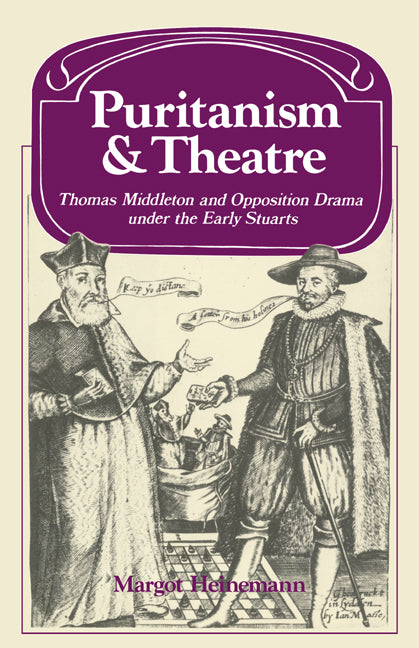
Puritanism and Theatre
This book suggests fresh meanings and implications in Middleton's own writings, and helps towards rethinking the place of drama in the changing life of early Stuart England.
Margot Heinemann (Author)
9780521270526, Cambridge University Press
Paperback / softback, published 7 October 1982
312 pages
21.6 x 13.8 x 1.8 cm, 0.41 kg
The closing of the theatres by Parliament in 1642 is perhaps the best-known fact in the history of English drama. As the Parliamentary Puritans were then in power, it is easy to assume that all opponents of the theatre were Puritans, and that all Puritans were hostile to the drama. The reality was more interesting and more complicated. Margot Heinemann looks at Thomas Middleton's work in relation to the society and social movements of his time, and traces the connections this work may have had with radical, Parliamentarian or Puritan groups or movements. In the light of the recent work of seventeenth-century historians we can no longer see these complex opposition movements as uniformly anti-theatre or anti-dramatist. The book suggests fresh meanings and implications in Middleton's own writings, and helps towards rethinking the place of drama in the changing life of early Stuart England.
Introductory note
1. Time and place
2. Puritanism, censorship and opposition to the theatre
3. Middleton as satirical journalist
4. Early satirical comedies
5. How anti-Puritan are Middleton's city comedies?
6. Money and morals in Middleton's city comedies
7. Middle years: tragi-comedy and moral comedy
8. City employments
9. Hard times and Hengist, King of Kent
10. Political satire: A Game at Chess
11. City tragedy
12. Drama and opposition, 1619–1640
13. From popular drama to leveller style: a postscript
Appendices
Index.
Subject Areas: History [HB]