Freshly Printed - allow 7 days lead
Couldn't load pickup availability
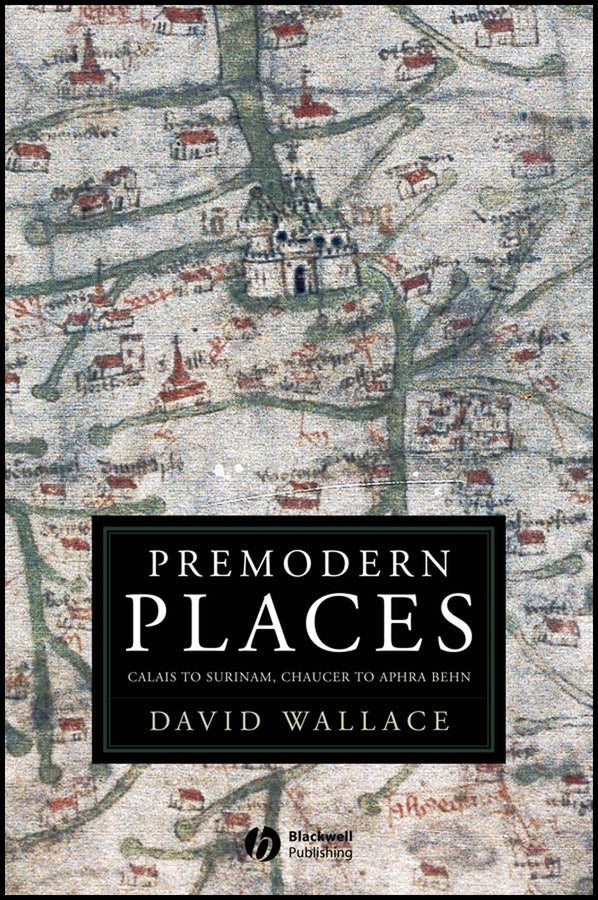
Premodern Places
Calais to Surinam, Chaucer to Aphra Behn
David Wallace (Author)
9781405113939, Wiley
Hardback, published 23 July 2004
352 pages
23.4 x 16 x 3.1 cm, 0.644 kg
“David Wallace’s knowledge of European medieval literature is unequalled. His book is a cornucopia of illuminating details, insights and connections that are simply not to be found anywhere else.” Terry Jones “My Cinderella prize for the year’s most underrated book goes to David Wallace, whose Premodern Places mixes romance and bizarrerie in a study of medieval and Renaissance ideas about geography and locality.” Jonathan Keates, The Spectator 'Book of the Year' feature, 2004 “This is one of the sharpest and most imaginative books of literary criticism I've read in many years.” Peter Hulme, University of Essex “Offering illuminating genealogies for a range of authors and literary texts, Premodern Places radically questions many assumptions about historical as well as geographic boundaries. … this book asks both premodernists and postcolonialists to rethink their disciplines and make urgent connections across space and time.” Ania Loomba, University of Pennsylvania “… a most brilliant representative of Postcolonial Medieval Studies.” José Rabasa, University of California
This book recovers places appearing in the mental mapping of medieval and Renaissance writers, from Chaucer to Aphra Behn.
List of illustrations. Introduction. 1. At Calais Gate. 2. In Flaunders. 3. Dante in Somerset. 4. Genoa. 5. Canaries (The Fortunate Islands). 6. Surinam. Acknowledgments. Index
Subject Areas: Literature: history & criticism [DS]