In Stock - same-working day dispatch
Couldn't load pickup availability
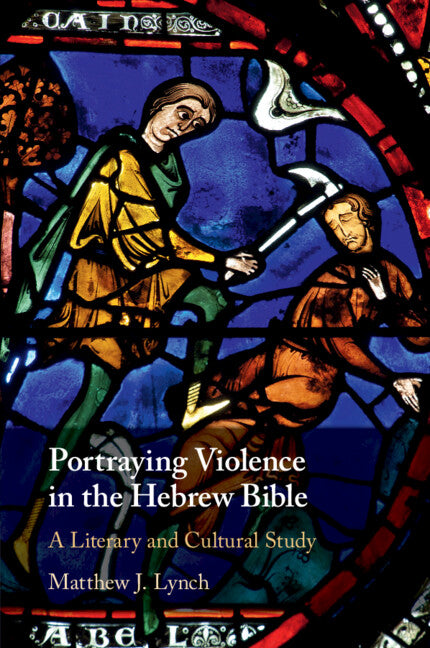
Portraying Violence in the Hebrew Bible
A Literary and Cultural Study
Examines four key ways that writers of the Hebrew Bible conceptualize and critique acts of violence.
Matthew J. Lynch (Author)
9781108714471, Cambridge University Press
Paperback / softback, published 1 September 2022
306 pages
23 x 15.2 x 1.8 cm, 0.46 kg
'Lynch's work allows readers to think deeply about the implications of violence and its effects in biblical times. Thus, I am pleased to recommend Lynch's book to those interested in the topic.' Luis A. Quinones-Roman, Journal of Pentecostal and Charismatic Christianity
Most studies on violence in the Hebrew Bible focus on the question of how modern readers should approach the problem. But they fail to ask how the Hebrew Bible thinks about that problem in the first place. In this work, Matthew J. Lynch examines four key ways that writers of the Hebrew Bible conceptualize and critique acts of violence: violence as an ecological problem; violence as a moral problem; violence as a judicial problem; violence as a purity problem. These four 'grammars of violence' help us interpret crucial biblical texts where violence plays a lead role, like Genesis 4-9. Lynch's volume also offers readers ways to examine cultural continuity and the distinctiveness of biblical conceptions of violence.
Introduction
Part I. Violence and Ecology: 1. A brother's blood on the land
2. The cosmic ecology of violence
3. Covenant and the restraint of violence in creation
Part II. Violence and Moral Speech: 4. Violent deceitfulness in the scheming heart
5. The violence of arrogant speech
Part III. Violence and Justice: 6. The outcry of violence
7. Judicial responses to violence
8. Violence and the divine avenger
Part IV. Violence and Impurity: 9. Violence and the problem of impurity: key texts
10. The rhetoric of violence and impurity
Conclusion
Appendix. Biblical terms for violence.
Subject Areas: Judaism [HRJ], Biblical studies & exegesis [HRCG], Old Testaments [HRCF1], Religion & beliefs [HR]