Freshly Printed - allow 10 days lead
Couldn't load pickup availability
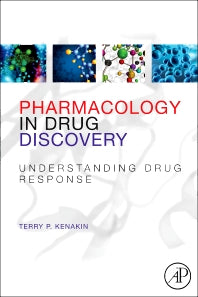
Pharmacology in Drug Discovery
Understanding Drug Response
Aids the reader in making more informed predictions of drug behavior during the drug-discovery process
Terry P. Kenakin (Author)
9780123848567, Elsevier Science
Paperback, published 25 October 2011
260 pages, 25 illustrations
23.4 x 19 x 1.7 cm, 0.54 kg
"…an excellent introductory text…rich on examples and case studies…Although, there are many books that cover these subjects in greater depth, few have been able to integrate knowledge across fields so well and concisely."--British Toxicology Society Newsletter Winter 2012, Issue 41
Pharmacology in Drug Discovery: Understanding Drug Response is designed for all students, recent graduates, and new researchers in the pharmaceutical and biotechnology industries who need to interpret change in physiology induced by a chemical substance. Physiological systems customize chemical signal input to their own needs; therefore the same drug can have different effects in different physiological systems. The field of pharmacology is unique in that it furnishes the tools to analyze these different behaviors and traces them to their root cause. This enables predictions of drug behavior to be made in all systems, an invaluable tool for drug discovery because almost all drugs are developed in test systems far removed from the therapeutic one. This valuable resource provides simple explanations of the ways in which biological systems use basic biochemical mechanisms to produce fine chemical control of physiology, allowing for more informed predictions of drug effects in all systems and forming the basis of the drug-discovery process. Chapters follow a logical progression on how to characterize the pharmacology of any given molecule, and include important terminology, chapter summaries, references, and review questions to aid the reader in understanding and retention of the material.
Chapter 1: Pharmacology: The Chemical Control of Physiology Chapter 2: Drug Affinity and Efficacy Chapter 3: Predicting Agonist Effect Chapter 4: Drug Antagonism: Orthosteric Drug Effects Chapter 5: Allosteric Drug Effects Chapter 6: Enzymes as Drug Targets Chapter 7: Pharmacokinetics I: Permeation and Metabolism Chapter 8: Pharmacokinetics II: Distribution and Multiple Dosing Chapter 9: In Vivo Pharmacology Chapter 10: Safety Pharmacology Chapter 11: Answers to Chapter Questions Chapter 12: Derivations and Proofs
Subject Areas: Pharmaceutical technology [TDCW], Pharmacology [MMG]