Freshly Printed - allow 7 days lead
Couldn't load pickup availability
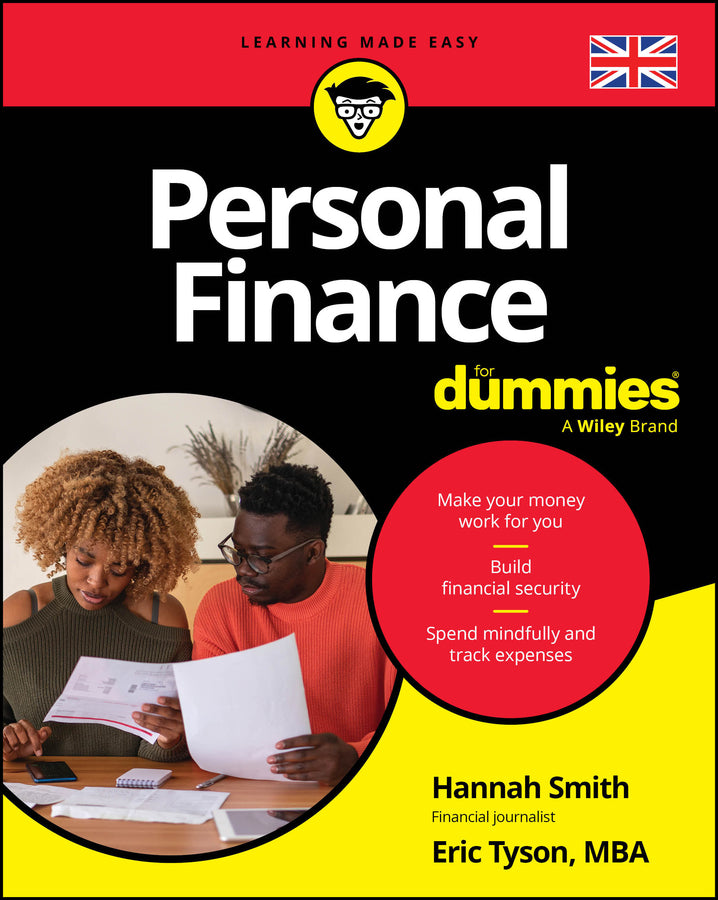
Personal Finance For Dummies, UK Edition
Hannah Smith (Author), Eric Tyson (Author)
9781394354504, Wiley
Paperback / softback, published 7 August 2025
336 pages
22.9 x 18.3 x 2.3 cm, 0.476 kg
Your friendly guide to financial success Managing your money and making informed financial decisions for you and your family can be challenging. You're not alone if you find it difficult to understand tax, plan for retirement, create a workable budget, or protect your wealth from unexpected events. This edition of Personal Finance For Dummies, tailored for a UK audience, offers an easy-to-read guide to improving your financial situation, no matter your income level. You'll learn how to set financial goals, invest wisely, and protect your assets while still enjoying life. Inside the book: Managing your money and building a financially secure future doesn't have to be confusing! Grab a copy of Personal Finance For Dummies, UK Edition for the straightforward, down-to-earth advice you need to help you create the life you've always imagined.
Introduction 1 About This Book 2 Foolish Assumptions 3 Icons Used in This Book 3 Beyond the Book 4 Where to Go from Here 4 Part 1: Getting Started with Personal Finance 5 Chapter 1: Embracing Financial Literacy 7 Understanding Everything Financial Literacy Includes 8 Starting with the basics: Budgeting and transaction accounts 9 Making your money work for you: Investing 9 Protecting your income and assets: Insurance 9 Talking Money at Home 10 Identifying Unreliable Sources of Information 11 Understanding the dangers of free financial content online 11 Recognising the dangers of following financial gurus (and celebrities) 12 Publishers pandering to advertisers 13 Developing Good Financial Habits 14 Chapter 2: Establishing a Financial Foundation 15 Understanding Your Cash Flow 16 Uncovering where your money goes 16 Sizing up your income 17 Using Different Accounts 18 Current accounts 19 Savings accounts 20 Investment accounts 21 Budgeting to Boost Your Savings 22 Understanding and Improving Your Credit Score 23 Deciphering how lenders use credit reports and scores 23 Obtaining your credit reports 24 Chapter 3: Establishing and Achieving Goals 27 Creating Your Own Definition of Wealth 28 Acknowledging what money can’t buy 28 Managing the balancing act 29 Prioritising Your Savings Goals 30 Knowing what’s most important to you 31 Valuing pensions 31 Building Emergency Reserves 33 Saving to Buy a Home or Business 34 Funding Kids’ Educational Expenses 34 Saving for Big Purchases 35 Preparing for Planned Borrowing 35 Preparing for Retirement/Financial Independence 36 Figuring out what you need for retirement/financial independence 38 Understanding retirement building blocks 39 Crunching numbers for your retirement 42 Making up for lost time 43 Part 2: Spending Less, Saving More 45 Chapter 4: Managing Where Your Money Goes 47 Examining Overspending 48 Having access to credit 48 Misusing credit cards 49 Taking out car loans 49 Spending to feel good 50 Assessing Your Spending 52 Tracking spending the “low-tech” way 52 Tracking your spending on websites and apps 55 Chapter 5: Reducing Your Spending 57 The Keys to Successful Spending 57 Living within your means 58 Looking for the best value 58 Making credit cards work for you when you’re shopping 60 Avoiding rent-to-own 60 Smarter Spending 61 Managing food costs 62 Saving on shelter 64 Cutting transportation costs 66 Lowering your energy costs 68 Controlling clothing costs 69 Repaying your debt 70 Making space for fun and recreation 70 Lowering your phone bills 71 Curtailing personal-care costs 72 Chapter 6: Understanding Types of Borrowing 75 Choosing Carefully When You Really Must Borrow 76 Knowing why people typically borrow 76 Making sure you have a plan to repay 77 Understanding why debt consolidation is usually bad news 77 Exploring Types of Borrowing 78 Credit cards 79 Buy now, pay later 80 Secured versus unsecured loans 81 Overdrafts 82 Payday loans and why you should avoid them 82 Cost comparison for borrowing options 83 Chapter 7: Dealing with Debt 85 Using Savings to Reduce Your Consumer Debt 86 Understanding how you gain 86 Debt snowball or debt avalanche? 87 Decreasing Debt When You Lack Savings 87 Reducing your credit card’s interest rate 87 Understanding credit-card terms and conditions 88 Cutting up your credit cards 89 Paying off student loans 90 Exploring Solutions to Debt Problems 91 Sorting it yourself 91 Understanding debt management plans (DMPs) 92 Understanding Debt Relief Orders (DROs) 93 Understanding Individual Voluntary Arrangements (IVAs) 93 Declaring bankruptcy 94 Comparing debt solutions 95 Finding Reputable and Free Sources of Debt Support 97 Stopping the Spending/Consumer Debt Cycle 97 Resisting the credit temptation 98 Identifying and treating a compulsion 99 Chapter 8: Maximising Your Savings 101 Working Out How Much to Save 102 Regular savings versus lump sums 102 Earning the most interest possible 102 Saving for Short-Term Goals 103 Saving for Longer-Term Goals 104 Understanding How Inflation Eats Your Savings 105 Saver Mike’s inflation battle 105 Paying tax on your savings 106 Making the most of ISAs 107 Part 3: Building Wealth Through Investing 109 Chapter 9: Managing and Reducing Your Tax 111 Understanding the Tax You Pay 112 Focusing on your total tax 112 Recognising the importance of your marginal tax rate 113 Understanding the 60 percent tax trap 114 Defining taxable income 114 Analysing recent tax law changes 115 Making the Most of Your Tax-Free Allowances 116 Paying into a pension 117 Deducting self-employment expenses 117 Salary sacrifice schemes 119 Contributing to charities 119 Tax-Friendly Investing 120 Using ISAs to save and invest tax free 120 Dividend, savings, and capital gains tax allowances 121 Backing young companies for tax breaks with EIS and VCTs 122 Estate Planning 122 Managing inheritance tax 122 Wills, living wills, and powers of attorney 124 Where to Go for Help with Tax 125 Obtaining HMRC assistance 125 Finding an accountant 126 Deciding whether you need a financial adviser 126 Looking for tax resources online 126 Dealing with a Tax Investigation 127 Chapter 10: Considering Important Investment Concepts 129 Establishing Your Goals 129 Understanding the Primary Investments 130 Looking at lending investments 130 Exploring ownership investments 132 Shunning Gambling and “Get-Rich-Quick” Vehicles 132 Forsaking futures, options, and other derivatives 132 Ditching day trading 133 Sidestepping get-rich-quick schemes 134 Understanding Investment Returns 134 Sizing Investment Risks 135 Comparing the risks of stocks and bonds 136 Focusing on the risks you can control 137 Discovering low-risk, high-return investments 138 Diversifying Your Investments 138 Spreading the wealth: Asset allocation 139 Allocating money for the long term 140 Sticking with your allocations: Don’t trade 141 Investing lump sums via pound cost averaging 142 Leaving You with Some Final Advice 143 Chapter 11: Understanding Your Investment Choices 145 Slow and Steady Investment: Bonds 145 Building Wealth with Ownership Vehicles 147 Selecting stocks 147 Investing in individual stocks 148 Investing internationally in stocks 149 Owning shares in your employer 150 Investing in funds 150 Generating wealth with property 152 Investing in small business 156 Off the Beaten Path: Investment Odds and Ends 159 Precious metals 159 Bitcoin, Ethereum, and other cryptocurrencies 160 Collectibles (including NFTs) 162 Peer-to-peer lending and crowdfunding 163 Avoiding scams 163 Chapter 12: Investing in Funds 165 Understanding the Benefits of Funds and ETFs 165 Exploring Various Fund Types 167 Fund structures 167 Bond funds 168 Equity funds 169 Mixing bonds and equities: Balanced funds 170 Global funds 170 Index funds 171 Specialty (sector) funds 172 Socially responsible and ESG investing 173 Learning How to Invest in Funds 174 Online investment platforms 174 Apps 174 Stockbrokers 174 Financial advisers 175 Choosing a Managed Portfolio or Going DIY 175 Selecting the Best Funds 176 Understanding fund literature 176 Keeping costs low 177 Adding up how much investing costs 177 Evaluating historic performance 179 Determining your needs and goals 179 Deciphering Your Fund’s Performance 180 Dividends 180 Share price changes 181 Evaluating and selling your funds 181 Chapter 13: Investing for Retirement 183 Why Invest in Pensions 183 Free money from the government 184 Free money from your employer 184 Are pensions safe? 185 Looking at Types of Pensions 185 Workplace pensions 185 Self-employed pensions 186 Defined contribution pensions 187 Defined benefit pensions 187 How much money do I need? 187 Understanding the State Pension 187 Plugging gaps in your National Insurance record 188 Annuities explained 188 Allocating Your Money in Pensions 189 Prioritising pension contributions 190 Setting up a pension 190 Allocating money when your employer selects the investment options 190 Allocating money in plans you design 192 Transferring Pensions 194 Consolidating small pension pots 195 Moving money from an employer’s plan 195 Taking money out of pensions 195 Understanding drawdown 196 Exploring pension alternatives 197 Chapter 14: Investing for Children 199 Investing for Children versus Saving in Cash 199 Exploring Ways to Invest for Children 200 Understanding Junior ISAs and Child Trust Funds 201 Deciding whether to invest for a child through your own ISA 201 Considering pensions for children 202 Estimating University Costs 204 Working Out the Student Finance System 205 Strategising to Pay for Educational Expenses 206 Estimating university costs 206 Setting realistic savings goals 207 Tips for getting loans, grants, and scholarships 207 Chapter 15: Investing in Property: Your Home and Beyond 209 Deciding Whether to Buy or Rent 210 Assessing your timeline 210 Determining what you can afford 210 Calculating how much you can borrow 211 Comparing owning versus renting costs 212 Considering the long-term costs of renting 213 Recognising advantages to renting 214 Financing Your Home 214 Understanding the two major types of mortgage 215 Choosing between fixed- and variable-rate mortgages 216 How willing and able are you to take on financial risk? 216 Avoiding the house deposit blues 217 Considering a 30- to 40-year mortgage 219 Deciding whether to overpay your mortgage 219 Finding the best lender 220 Increasing your approval chances 222 Finding the Right Property 223 Casting a broad net 223 Finding out actual sale prices 224 Researching the area 224 Working with estate agents 224 Presenting yourself as a serious buyer 225 Making an Offer 225 Negotiating 101 226 Getting a survey 226 Appointing a conveyancer 227 Planning for stamp duty and other costs 228 After Your Purchase 228 Remortgaging 228 Considering equity release 229 Selling your house 229 Chapter 16: Working with Financial Planners 231 Surveying Your Financial Management Options 231 Doing nothing 232 Doing it yourself 232 Hiring financial help 232 Deciding Whether to Hire a Financial Planner 234 How a good financial adviser can help 235 Why advisers aren’t for everyone 236 Finding a Good Financial Planner 236 Soliciting personal referrals 237 Seeking advisers through associations 237 Interviewing Financial Advisers: Asking the Right Questions 238 How and what do you charge? 238 Do you also perform tax or legal services? 238 What work and educational experience qualifies you to be a financial planner? 239 Can you provide references from clients with needs similar to mine? 239 Will you provide specific strategies and product recommendations that I can implement on my own if I choose? 240 Learning from Others’ Mistakes 240 Part 4: Insurance: Protecting What You Have 241 Chapter 17: The Three Laws of Buying Insurance 243 Law I: Insure for the Big Stuff; Don’t Sweat the Small Stuff 244 Buy insurance to cover financial catastrophes 244 Take the highest excess you can afford 246 Avoid small-potato policies 246 Law II: Buy Broad Coverage 248 Law III: Shop Around and Buy Direct 250 Finding policies with comparison sites 250 Using insurance brokers or financial advisers 250 Looking at employer and other group plans 251 Dealing with Insurance Problems 251 Knowing what to do if you’re denied cover 251 Getting your due on claims 253 Chapter 18: Insurance on You: Life, Income, and Health 257 Providing for Your Loved Ones: Life Insurance 258 Determining how much life insurance to buy 258 Comparing the types of life insurance 260 Buying term insurance 261 Preparing for the Unpredictable: Income Protection Insurance 263 Understanding income protection insurance 263 Getting to grips with critical illness cover 264 Deciding whether you need cover 265 Determining how much cover you need 266 Identifying other features you need in income protection insurance 266 Deciding where to buy income protection insurance 267 Getting the Care You Need: Health Insurance 267 Choosing the best health plan 268 Buying health insurance 269 Chapter 19: Covering Your Assets 271 Insuring Your Home 271 Buildings insurance: The cost to rebuild 272 Special discounts 272 Contents insurance: For your things 273 Personal liability insurance: Cover for when others are harmed 274 The excess: Your cost with a claim 274 Buying buildings and contents insurance 274 Car Insurance 101 275 Third-party only 275 Third-party, fire, and theft 275 Fully comprehensive 276 Uninsured driver cover 276 Insuring Your Pets 277 The main types of pet insurance policy 277 Ways to save on pet insurance 278 Part 5: the Part of Tens 279 Chapter 20: Survival Guide for Ten Life Changes 281 Starting Out: Your First Job 282 Changing Jobs or Careers 283 Getting Married 285 Buying a Home 286 Having Children 287 Starting a Small Business 289 Caring for Ageing Parents 290 Divorcing 291 Receiving a Windfall 293 Retiring 294 Chapter 21: Ten Free Resources 297 MoneyHelper 297 Pension Wise 298 Citizens Advice 298 FCA ScamSmart 298 Gov.UK 298 StepChange 299 MoneySavingExpert 299 The Open University 299 Which? 300 Boring Money 300 Glossary 301 Index 311
Subject Areas: Finance & accounting [KF]