Freshly Printed - allow 7 days lead
Couldn't load pickup availability
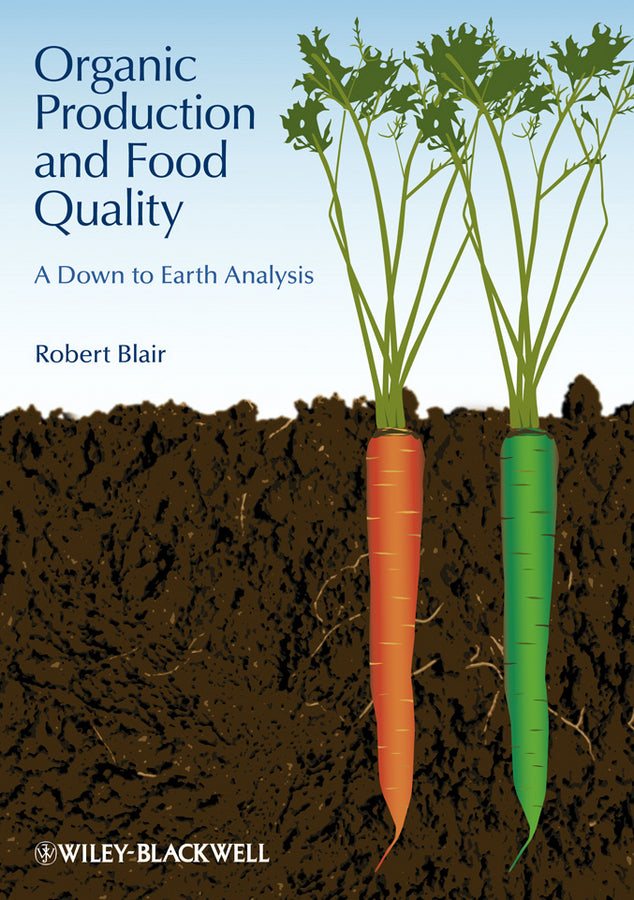
Organic Production and Food Quality
A Down to Earth Analysis
Robert Blair (Author)
9780813812175, Wiley
Hardback, published 16 December 2011
304 pages
25.2 x 17.9 x 1.7 cm, 0.753 kg
"This comprehensive book is welcome in that it not only covers the quality of crops in separate chapters on vegetables, fruit and cereal grains but it also deals, in equal measure, with the quality of meat, milk products and eggs." (The Biologist, March 2014) "Summing Up: Recommended. Upper-division undergraduates through professionals; general readers." (Choice, 1 December 2012) "This book by Professor Blair is a very valuable analysis of how organic food production affects food quality, and the conclusions and suggestions should be of great interest to all sectors of the food industry, including researchers and producers. Hopefully the book will also benefit consumers by encouraging the media and the food industry to present a more accurate picture of the relative quality of conventional and organic foods." (Asian-Australasian Journal of Animal Science, 1 May 2012) "This is a remarkable book . . . Everyone with a serious interest in the differences between organic and conventional food should have this book on their coffee table or bookshelf because it is the most comprehensive and objective library of present evidence." (Prof. John Hodges, Food and Nutrition Sciences) "Dr. Blair's book is a comprehensive and balanced review of the scientific literature related to the organic versus conventional debate. . . . Each chapter provides an unbiased overview of the literature related to a particular food item and lets the reader decide if their preference for or against a particular organic food is supported by research." (Journal of Applied Poultry Research, 1 December 2012)
“Everyone with a serious interest in the differences between organic and conventional food should have this book on their coffee table or bookshelf, because it is the most comprehensive and objective library of present evidence.” (Int. J. Environment & Pollution, 1 May 2013)
"This unique book gives an objective and thorough view of a major issue in health, nutrition, food quality, the environment and food production systems and is of interest to consumers, farmers, nutritionists, medical specialists, environmentalists and businesses in the food chain." (Journal of Tropical Agricultural Association, Winter 2012)
The internet is rife with biased and unsubstantiated claims from the organic industry, and the treatment of issues such as food safety and quality by the media ("if it bleeds, it leads") tends to have a negative impact on consumer perceptions about conventional food. Until recently, more and more consumers in many countries were opting to buy organic food over conventional food, resulting in a radical shift in food retailing. This was due to concerns over chemical residues, food poisoning resulting in recalls, food scares such as "mad-cow" disease, issues like gene-modified (GM foods), antibiotics, hormones, cloning and concerns over the way plants and animals are being grown commercially as food sources. As a result there has been an expansion of the organic industry and the supply of organic foods at farmers' markets, supermarkets and specialty stores. Organic Production and Food Quality: A Down to Earth Analysis is the first comprehensive book on how organic production methods influence the safety and quality of foods, based on an unbiased assessment of the latest scientific findings. The title is a 'must-have' for everyone working within the food industry.
Foreword ix 1 The Shift to Organic Food 1 Background 1 Organic regulations 3 Consumer perceptions 7 Analysis of the topic 9 References 10 2 Consumer Concerns About Food 13 The concerns 14 Consumer concerns and attitudes 16 Food regulations 20 Justification for consumer attitudes about the safety of organic and conventional foods 21 Range of organic foods 22 References 23 3 Vegetable Produce 25 Pest and disease control 25 Documented findings on pesticide residues 27 Other chemical contaminants 33 Other toxic and antinutritional compounds in produce 35 Hormones 35 Can organic produce cause food poisoning? 36 Nutrient concentrations 42 Organoleptic quality 51 Identification of organic produce 53 Food from afar 54 Finally: watch which salad veg you eat 55 Conclusions 55 References 56 4 Fruit 61 Pesticide residues 61 Other risks with fruit 68 Chemical residues 68 Microbial problems 70 Mycotoxins 70 Cloning and gene-modified fruit 71 Nutrient concentrations 72 Appearance and organoleptic qualities 83 Preserves 86 Conclusions 88 References 89 5 Cereal Grains 93 Pesticide residues 93 Chemical residues 96 Other issues relating to grains 97 Mycotoxins: are organic grains less safe? 98 Gene-modified crops 102 Nutritional and organoleptic qualities 103 Wheat 104 Oats 108 Barley 108 Conclusions 108 References 109 6 Meat 111 Chemical and pesticide residues 111 Organic meat 116 Hormones 121 Hormone residue levels in meats. Do government agencies monitor for these? 123 Developing countries 124 Antibiotics 125 Bacterial contamination of meat 127 Cloning 129 Mad-cow disease 131 Contaminated beef products implicated 132 Gene modification 133 Nutritional and organoleptic qualities 135 Beef 135 Pork 141 Poultry 146 Fish 150 Conclusions 157 References 158 7 Milk and Milk Products 163 The hormone issue 163 Raw milk 165 Antibiotic residues 167 Pesticide and chemical residues 168 Nutritional and organoleptic qualities 170 Research findings 170 Consumer findings 175 Conclusions 179 References 180 8 Eggs 183 Cholesterol 184 Salmonella and food-poisoning 187 Contamination with residues 191 Antibiotics 191 Chemical residues 192 Egg quality 198 Research findings 198 Consumer findings 203 Conclusions 203 References 204 9 Is Organic Food Safer? 207 Residues 207 Vegetable produce 207 Fruit 208 Cereal grains 208 Meat 208 Milk 209 Eggs 209 Food poisoning 210 Mycotoxins 211 Other anti-nutrients 211 Nitrate 211 Significance of the findings in relation to health 213 Other research on food and health 216 Health of farmers and farm workers 219 Other approaches 221 Conclusions 222 References 223 10 Is Organic Food More Nutritious and “Tasty”? 227 Reviews 227 Analysis by food group 237 Vegetable produce 237 Fruit 238 Cereal grains 239 Meat 239 Milk 239 Eggs 240 Taste 240 References 240 11 Psychology of Organic Food Choice 243 The safety issue 244 Nutritional quality and taste 244 Environmental issues 248 Image 252 Conclusions 256 References 256 12 Conclusions 259 Reference 263 Appendix 265 Index 267
Subject Areas: Business & management [KJ]