Freshly Printed - allow 4 days lead
Couldn't load pickup availability
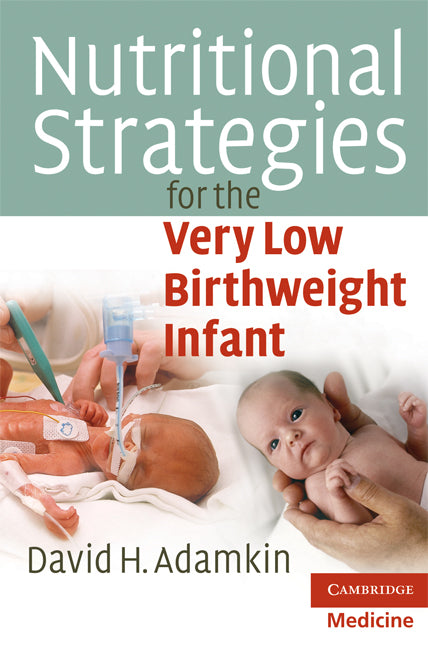
Nutritional Strategies for the Very Low Birthweight Infant
Provides practical guidance on all nutritional strategies for all healthcare professionals caring for premature babies.
David H. Adamkin (Author)
9780521732468, Cambridge University Press
Paperback / softback, published 27 August 2009
203 pages, 7 b/w illus. 28 tables
18.6 x 12.2 x 1.3 cm, 0.28 kg
'… very practical, easy to use …' Pediatric Endocrinology Reviews
The goal of nutritional management in VLBW and ELBW infants is the achievement of postnatal growth at a rate that approximates the intrauterine growth of a normal fetus at the same postconceptional age. In reality, however, growth lags considerably after birth; although non-nutritional factors are involved, nutrient deficiencies are critical in explaining delayed growth. This practical clinically-oriented pocketbook reviews and summarises all available clinical evidence. It enables the reader to implement parenteral or enteral feeding plans, with the goals of reducing postnatal weight loss, earlier return to birthweight, and improved catch-up growth. Both nutrient balance and growth and the impact on neurodevelopment and health outcomes are evaluated. With many tables and algorithms to summarise key data and management strategies, Nutritional Strategies for the Very Low Birthweight Infant is an invaluable guide for all healthcare professionals caring for premature babies.
Dedication
Acknowledgements
Foreword
Glossary
1. Introduction
2. Fluid and electrolytes management (Na, Cl and K)
3. Energy
4. Intravenous carbohydrates
5. Intravenous lipids
6. Early total parenteral nutrition (TPN)
7. Parenteral calcium, phosphorous, magnesium and Vitamin D
8. Parenteral vitamins
9. Trace elements and iron
10. Parenteral nutrition guide
11. Parenteral nutrition-associated cholestasis in VLBW infants
12. Enteral nutrition
13. Enteral feeding guidelines pPracticum
14. Optimizing enteral nutrition: protein
15. Human milk
16. Premature infant formulas
17. Standard infant formulas
18. Soya formulas
19. Protein hydrolysate formulas
20. Enteral calcium, phosphorus, magnesium and Vitamin D
21. Iron
22. Hypercaloric feeding strategy
23. Growth in the neonatal intensive care unit influences neurodevelopmental and growth outcomes
24. Nutritional assessment
25. Post discharge strategies
26. Nutritional management of preterm infants with short bowel syndrome
27. Summary
Index.
Subject Areas: Neonatal medicine [MJWN], Paediatric medicine [MJW], Materno-fetal medicine [MJTF]