Freshly Printed - allow 7 days lead
Couldn't load pickup availability
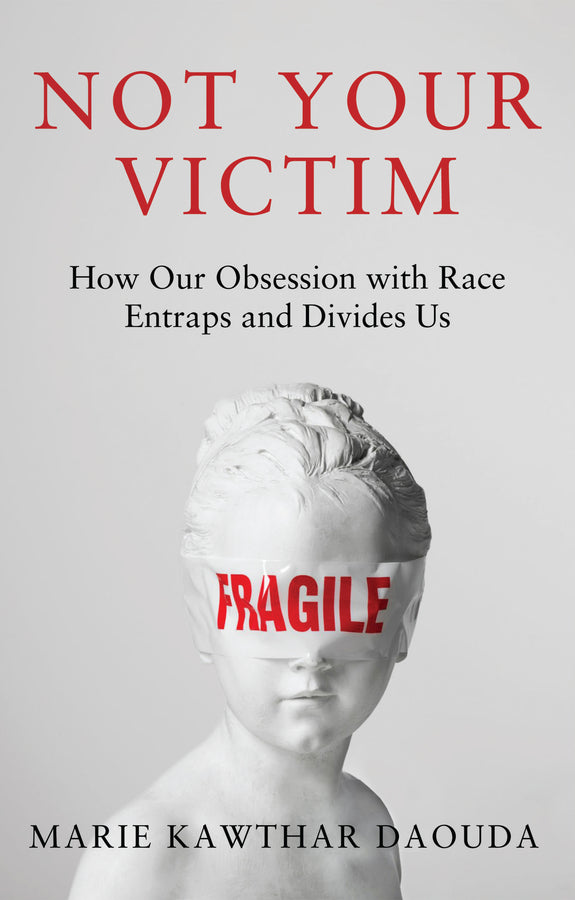
Not Your Victim
How our Obsession with Race Entraps and Divides Us
Marie Kawthar Daouda (Author)
9781509571697, Polity Press
Hardback, published 30 January 2026
192 pages
21.8 x 14.5 x 2.3 cm, 0.363 kg
"The current mania for 'decolonization' puffs itself up as the champion of the victims of the West. So when a dark-hued, Moroccan-born, French-speaking, female immigrant declares her love for (much of) Western civilization, exposes the historical distortions of its 'woke' critics, and warns of their racial divisiveness, she commands attention. Marie Kawthar Daouda's striking witness carries authority, and does it with style."
Lord Nigel Biggar, Professor Emeritus of Moral Theology at the University of Oxford, and author of Colonialism: A Moral Reckoning
"In this brave and brilliant book, Dr Marie Daouda slices through the dogmas of our age with rare moral clarity. Refusing to flatten history into a tale of villains and victims, she offers a richer, more truthful account – one that affirms complexity, agency, and shared inheritance. A vital intervention in our overheated debates on empire and identity."
Inaya Folarin Iman, Director of The Equiano Project
"Fascinating, provocative, and elegantly erudite."
Kathleen Stock, philosopher and author of Material Girls
"Not Your Victim is a bracing, provocative read… peppered with re-inspections of our unconscious assumptions about slavery and empire."
Irish Examiner
"a passionate, erudite and elegant cri de coeur on behalf of faith, freedom and beauty. It is a welcome and necessary rejoinder to the cultural and political elites who would impose the credo of victimhood on the rest of us."
Alka Sehgal-Cuthbert, The Critic
"This is one of the best books of its kind yet published"
Conservative Home
"Brilliant [...] a powerful vision of the transformative power of culture, place and beauty."
Engelsberg Ideas
"An intelligent and courageous critique of how modern identity politics, victimhood culture, and the decolonisation of the curriculum entrap and divide society."
History Reclaimed
Empire and race have become the most discussed – and most problematic – subjects in political and historical discourse. It is now an unquestionable orthodoxy both in academia and in progressive political discourse that European colonial empires – particularly the British – were uniquely evil, the West's 'original sin', and that their legacy continues to underpin systemic racism, injustice, and oppression.
Marie Kawthar Daouda, a Moroccan and French academic who now lives in Britain, argues that this narrative is dangerously wrong. Weaving her personal experience with erudite reflection on history, literature, and politics, she argues that we are all heirs of complex waves of immigration, conquest, and colonization. A closer look at French and British history belies a simplistic worldview wherein all the evil in the world is the result of the peculiarly vicious nature of white, Western colonizers. Indeed, she argues, such a perspective nurtures the very prejudices it claims to fight by valorizing victimhood above individual or collective agency and by denying ethnic minorities any sense of responsibility.
A coruscating attack on the perverse solipsism, moral blindness, and historical illiteracy of 'decolonizing' progressive elites, this book upends our tired debates over colonialism, empire, and immigration. It offers a more nuanced, hopeful vision of our historical self-understanding.
Contents
Introduction: A Strange Island
Chapter 1 Where are you really from?
Chapter 2 The Noble Savage, The French Revolution, and Mrs Jellyby
Chapter 3 Places with no statues
Chapter 4 Iconoclasm, old and new
Chapter 5 Must Rhodes fall
Chapter 6 Tolerance, diversity, and neo-orientalism
Chapter 7 Cultural appropriation and cultural gatekeeping
Chapter 8 The Racism of Cultural Suicide
Chapter 9 The triumph of the victim and the rise of 'empowerment'
Chapter 10: Equality: The tyranny of low expectations
Chapter 11 Western roots
Chapter 12 A Christian identity
Conclusion Growing Roots
Subject Areas: Politics & government [JP]