Special Order - allow 2+ weeks lead
Couldn't load pickup availability
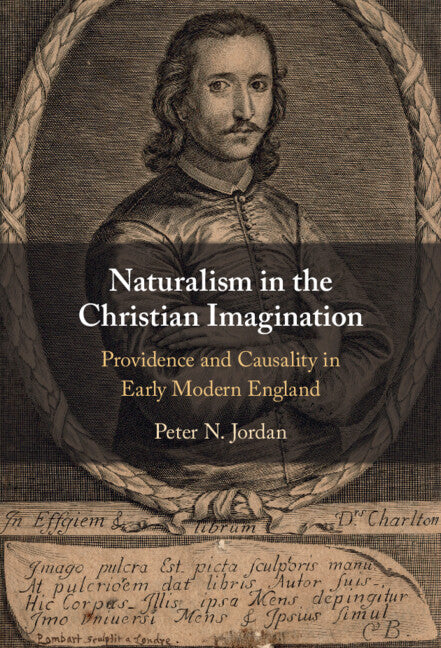
Naturalism in the Christian Imagination
Providence and Causality in Early Modern England
A compelling contribution to 'science and religion' debates, showing how early modern thinkers reconciled naturalism with a providential world view.
Peter N. Jordan (Author)
9781009211987, Cambridge University Press
Hardback, published 14 July 2022
230 pages
23.5 x 15.8 x 1.7 cm, 0.48 kg
'This is a significant piece of scholarship and an important synthesis of the varying understandings of divine providence and causality in early modern England … this is a valuable book on both a historical and theological level, and one that the right audience will find helpful and rewarding.' Cole William Hartin, Reading Religion
Science today is often seen as providing the definitive frame of reference for understanding what goes on in nature. Furthermore, the history of science has frequently been portrayed as the story of steady progress in overturning religious explanation in favour of scientific truth. This narrative has been challenged by those who – like the author of this book – recognise that a naturalistic way of looking at the world, which lies at the heart of modern science, has a far richer relationship to religion than many have allowed. Peter Jordan now takes this recognition in fresh and exciting directions. Focusing on key thinkers in early modern England, who located causality within a divine and providential view of the cosmos, he shows how they were able to integrate ideas which today might be dichotomised as 'scientific' and 'religious'. His book makes a compelling contribution to current science and religion debates and their history.
Part I. Setting the Scene: 1. Explanation before science and religion
2. Providence in Early Modern England
Part II. Expanding the Explanatory Scope of Natural Causality: 3. Chance, lots, and games
4. Prodigies
Part III. Curtailing the Explanatory Ambitions of Naturalistic Philosophies: 5. Atomism
6. Theories of the Earth
Part IV. Conclusion: 7. Explanation after science and religion.
Subject Areas: History of science [PDX], History of ideas [JFCX], History of religion [HRAX]