In Stock - dispatch within 48 hours
Couldn't load pickup availability
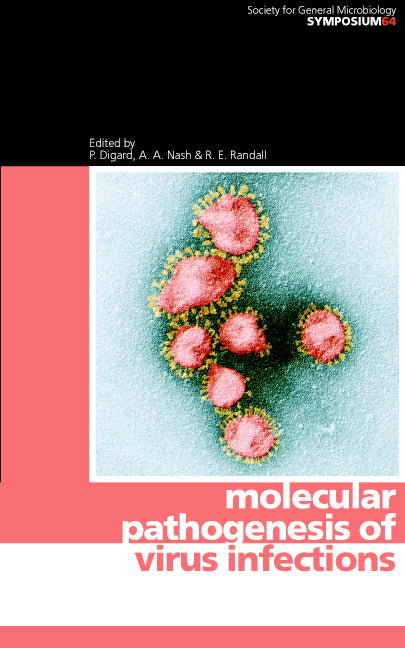
Molecular Pathogenesis of Virus Infections
Covers the central factors that influence the pathogenicity of virus and prion infections.
P. Digard (Edited by), A. A. Nash (Edited by), R. E. Randall (Edited by)
9780521832489, Cambridge University Press
Hardback, published 21 April 2005
358 pages, 30 b/w illus. 9 colour illus. 7 tables
23.4 x 15.7 x 2.2 cm, 0.698 kg
Virus and prion diseases remain a major public health threat, in both developed and developing countries. The worldwide HIV pandemic is but one example of a newly emerged virus disease; other potential threats come from exotic viruses such as SARS, Ebola and Hantaan viruses. Older human viruses such as influenza, papilloma, herpes and the hepatitis viruses still cause major health problems. Furthermore, as well as causing acute infections, some viruses may also establish persistent infections which can lead to the development of chronic diseases, including cancer. This symposium book covers central factors that influence the pathogenicity of virus and prion infections. Topics range from innate and adaptive immune responses and virus evasion of host defences to details of selected virus?host interactions, including those involving dengue virus, HIV, influenza viruses, coronaviruses, hepatitis C virus, herpesviruses, papillomaviruses, African swine fever virus and poxviruses.
Preface
1. Adaptive immune responses J. L. Whitton
2. T-cell responses and dengue haemorrhagic fever G. Screaton and J. Mongkolsapaya
3. The immune response to human immunodeficiency virus type 1 (HIV-1) E. Turnbull and P. Borrow
4. Persistent RNA virus infections C. M. Dixon, L. Breakwell, G. Barry and J. K. Fazakerley
5. Exotic virus pathogenesis S. Nichol
6. Molecular approaches to the pathogenesis of feline coronaviruses C. Dye and S. Siddell
7. The transmissible spongiform encephalopathies J. C. Manson and R. M. Barron
8. Influenza virus pathogenicity R. G. Webster, A. S. Lipatov and E. Hoffmann
9. RNAi as an antiviral mechanism and therapeutic approach R. P. van Rij and R. Andino
10. Neurons and host immunity conspire to maintain herpes simplex virus in a latent state M. L. Freeman, V. Decman and R. L. Hendricks
11. Hepatitis C virus disruption of interferon signalling pathways and evasion of innate intracellular antiviral defences S. M. Lemon and K. Li
12. Human papillomaviruses and their effects on cell cycle control and apoptosis L. Gray, C. Jolly and C. S. Herrington
13. Intracellular antiviral defence mechanisms: the power of interferon-regulated restriction factors O. Haller, F. Weber and G. Kochs
14. Poxvirus immune evasion A. Alcami
15. Evasion of host defence systems by African swine fever virus L. K. Dixon
16. Murid herpesvirus 4 as a model for gammaherpesvirus pathogenesis J. P. Stewart, D. Hughes, L. Roaden and B. Ebrahimi
Index.
Subject Areas: Microbiology [non-medical PSG]