Freshly Printed - allow 10 days lead
Couldn't load pickup availability
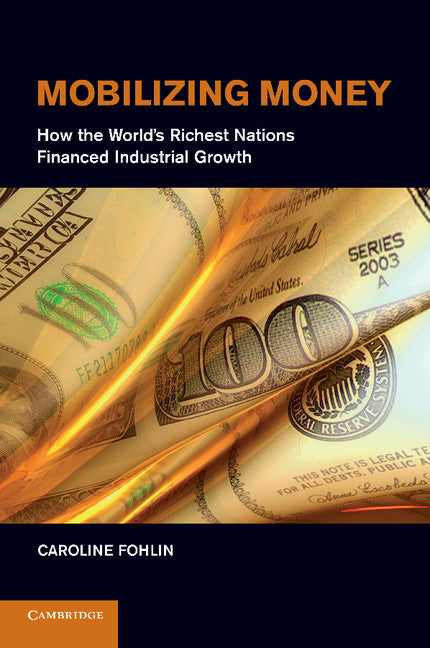
Mobilizing Money
How the World's Richest Nations Financed Industrial Growth
Examines the origins of modern corporate finance systems during the rapid industrialization period leading up to World War I.
Caroline Fohlin (Author)
9781107436763, Cambridge University Press
Paperback / softback, published 21 August 2014
280 pages, 8 b/w illus. 13 tables
22.9 x 15.2 x 1.6 cm, 0.42 kg
'… provocative and stimulating … In Mobilizing Money, Fohlin contributes powerfully to an important moment in rethinking the history of financial systems.' Mark Loeffler, The Journal of Modern History
This book examines the origins of modern corporate finance systems during the rapid industrialization period leading up to World War I; leading to three sets of conclusions. First, modern financial systems are rooted in the past, are idiosyncratic to specific countries and are highly path-dependent. Therefore, to understand current financial institutions, we must take stock of the forces at play in the near and distant past. Second, financial institutions and markets do not create economic growth without significant first steps in industrial development and supporting institutions. Third, and most important from the modern policy standpoint, there is no 'one-size-fits-all' solution to financial system design and industrial development. Having specific types of financial institutions is far less important than developing a strong, stable and legally protected financial system with a rich diversity of institutions and vibrant markets that can adapt to changing needs.
1. Introduction
2. Development of banking and corporate financial systems
3. Organization and performance of early commercial banking systems
4. Corporate governance and bank-firm relationships
5. Corporate finance and the role of bank relationships
6. Classifying financial systems
7. Determinants of financial system design
8. Long-run consequences of financial system design
9. Conclusion.
Subject Areas: International business [KJK], Finance & accounting [KF], Political economy [KCP], International finance [KCLF]