Freshly Printed - allow 10 days lead
Couldn't load pickup availability
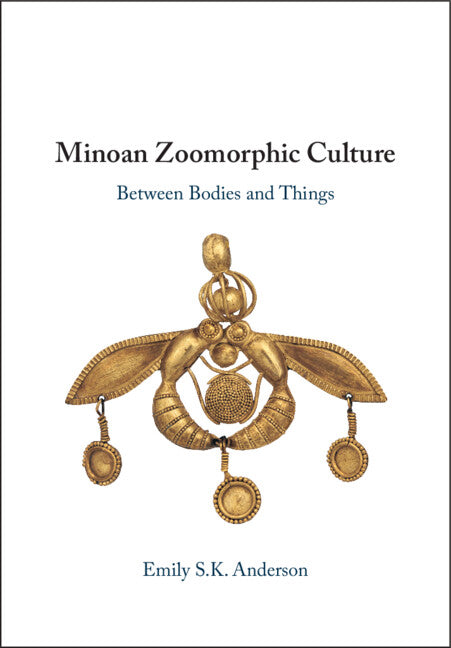
Minoan Zoomorphic Culture
Between Bodies and Things
Examines renderings of animals from the Minoan world not as mere representations but as uniquely real embodiments of animals that made powerful contributions to sociocultural life.
Emily S. K. Anderson (Author)
9781009452038, Cambridge University Press
Hardback, published 6 June 2024
430 pages
26.3 x 18.6 x 2.5 cm, 1.06 kg
'… brings together a huge amount of detailed information on these many beautiful objects and images. Anderson combines various perspectives to deliver new ideas on how one can study 'animalian things' in order to understand how the Minoans interacted, shaped and populated their own lives with animals and fantastic creatures alike.' Marion Uckelmann, Antiquity
Since the earliest era of archaeological discovery on Crete, vivid renderings of animals have been celebrated as defining elements of Minoan culture. Animals were crafted in a rich range of substances and media in the broad Minoan world, from tiny seal-stones to life-size frescoes. In this study, Emily Anderson fundamentally rethinks the status of these zoomorphic objects. Setting aside their traditional classification as 'representations' or signs, she recognizes them as distinctively real embodiments of animals in the world. These fabricated animals-engaged with in quiet tombs, bustling harbors, and monumental palatial halls-contributed in unique ways to Bronze Age Aegean sociocultural life and affected the status of animals within people's lived experience. Some gave new substance and contour to familiar biological species, while many exotic and fantastical beasts gained physical reality only in these fabricated embodiments. As real presences, the creatures that the Minoans crafted artfully toyed with expectation and realized new dimensions within and between animalian identities.
1. Life among the animalian in bronze age Crete and the Southern Aegean
2. Craftiness and productivity in bodily things: the changing contexts of Cretan zoomorphic vessels
3. Stone poets: between lion and person in glyptic and oral culture of bronze age Crete and the Aegean
4. Likeness and integration among extraordinary creatures: rethinking Minoan 'composite' beasts
5. Singular, seriated, similar: helmets, shields and ikria as intuitive animalian things
6. Moving toward life: painted walls and novel animalian presences in Aegean spaces
Concluding thoughts: restless bodies in the Minoan world.
Subject Areas: Classical Greek & Roman archaeology [HDDK]