Freshly Printed - allow 10 days lead
Couldn't load pickup availability
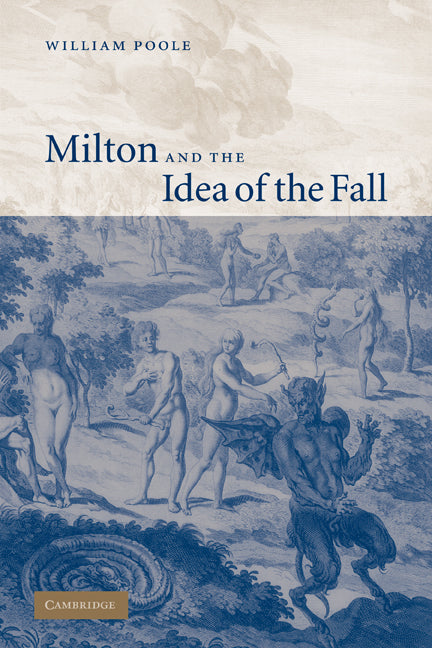
Milton and the Idea of the Fall
A reading of Milton's writing on the Fall of man in its theological and historical context.
William Poole (Author)
9780521120166, Cambridge University Press
Paperback / softback, published 24 September 2009
256 pages
22.9 x 15.2 x 1.5 cm, 0.38 kg
Review of the hardback: 'Milton and the Idea of the Fall is one of those specialist books that open out to change not only the way we think about Milton, but also the way we conceive of the period.' Modern Language Review
In Paradise Lost (1667), Milton produced the most magnificent poetic account ever written of the biblical Fall of man. In this wide-ranging study, William Poole presents a comprehensive analysis of the origin, evolution, and contemporary discussion of the Fall, and the way seventeenth-century authors, particularly Milton, represented it. Poole first examines the range and depth of early modern thought on the subject, then explains and evaluates the basis of the idea and the intellectual and theological controversies it inspired from early Christian times to Milton's own century. The second part of the book delves deeper into the development of Milton's own thought on the Fall, from the earliest of his poems, through his prose, to his mature epic. Poole distinguishes clearly for the first time the range and complexity of contemporary debates on the Fall of man, and offers many insights into the originality and sophistication of Milton's work.
Introduction
Part I. Fallen Culture: 1. The fall
2. Augustinianism
3. The quarrel over original sin 1649–60
4. The heterodox fall
5. The fall in practice
Part II. Milton: 6. Towards Paradise Lost
7. Paradise Lost I: the causality of primal wickedness
8. Paradise Lost II: God, Eden, and man
9. Paradise Lost III: creation and education
10. Paradise Lost IV: fall and expulsion
Conclusion.
Subject Areas: Literary studies: general [DSB]