Freshly Printed - allow 7 days lead
Couldn't load pickup availability
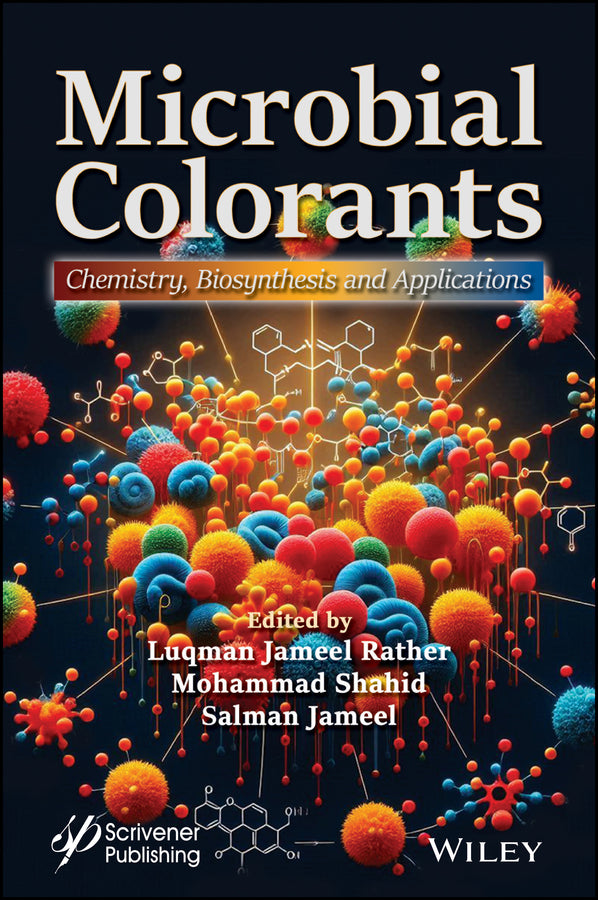
Microbial Colorants
Chemistry, Biosynthesis and Applications
Luqman Jameel Rather (Edited by), Mohammad Shahid (Edited by), Salman Jameel (Edited by)
9781394287857, Wiley
Hardback, published 13 May 2025
576 pages
28 x 19 x 3.3 cm, 1.247 kg
The book is a must-buy for anyone interested in the burgeoning field of microbial colorants, as it provides an extensive exploration of their sources, chemistry, and diverse applications, while addressing crucial aspects of environmental sustainability and regulatory considerations. Microbial Colorants: Chemistry, Biosynthesis and Applications offers a comprehensive and in-depth exploration of microbial colorants, covering their sources, chemical properties, biosynthesis, and a wide range of applications. The volume compiles information on microbial and non-conventional pigment sources as well as environmental sustainability and regulatory aspects surrounding their use. The first half of the book delves into the sources and chemistry of microbial pigments, covering a variety of topics including bacterial pigments, fungal pigments, algal and cyanobacterial colorants, and more. Readers will gain insight into the diverse world of microbial pigments and the science behind their vibrant colors. The second half of the book focuses on the practical aspects of microbial colorants, including extraction and purification techniques, biotechnological approaches to enhance production, environmental sustainability, and regulatory considerations. It also explores the numerous applications of microbial colorants in industries such as food, cosmetics, textiles, and technology. Microbial colorants are gaining increasing attention due to their natural and sustainable properties. As the world seeks eco-friendly alternatives to synthetic dyes and colorants, microbial pigments offer a promising solution. This book aims to bridge the knowledge gap by providing a comprehensive resource for researchers, students, and professionals interested in this emerging field. Readers will find the book: Audience The book is meant for researchers, academics, and industry experts working in fields related to pigment production, chemistry, isolation, and applications in the food and beverage, medicine, and textile industries. The book will be beneficial to synthetic organic chemists who work in the field of drug development.
Preface xix Acknowledgement xxi Part I: Microbial Pigment Sources and Diversity 1 1 Introduction to Microbial Colorants 3 1.1 Background and Significance 3 1.2 Classification of Microbial Pigments 5 1.3 Industrial Applications of Microbial Pigments 14 1.4 Conclusion 23 References 23 2 Bacterial Pigments: Diversity and Biosynthesis Pathways 33 2.1 Introduction 34 2.2 Diversity of Bacterial Pigments 35 2.3 Applications of Bacterial Pigments 44 2.4 Future Research 46 2.5 Conclusion 47 Acknowledgments 47 References 47 3 Fungal Pigments: A Sustainable Alternative to Synthetic Colors 51 3.1 Introduction 51 3.2 What are Fungal Pigments? 52 3.3 Why Fungal Pigments? 52 3.4 Source of Fungal Pigments 53 3.5 Extraction Methods of Fungal Pigments 65 3.6 Applications of Fungal Pigments 67 3.7 Limitations and Challenges 71 3.8 Mycotoxicity Testing 71 3.9 Conclusion 72 References 72 4 Algal and Cyanobacterial Colorants: From Chlorophyll to Phycocyanin 81 4.1 Introduction 81 4.2 Microalgae Pigments 83 4.3 Production and Extraction Methodologies for Enhancement the Pigment Productivity 86 4.4 Industrial Applications and Market Trends of Microalgae Pigments 93 4.5 Sustainability of Microalgae Pigments and Future Perspectives 95 4.6 Conclusion 99 References 100 5 Nonconventional Microbial Sources—Yeast, Actinomycetes, Archaea 107 5.1 Introduction 108 5.2 Nonconventional Microbes 109 5.3 Nonconventional Hosts with Important Industrial Applications 117 5.4 Genetic Engineering Tools for Nonconventional Microbes 118 5.5 Software Packaging Tools for CRISPR Screen Evaluation 121 5.6 Comprehensive Understanding of Genetic Modification Tools on Microbial Nonconventional Platforms 122 5.7 Conclusion 124 References 125 Part II: Chemistry of Microbial Pigments 129 6 Introduction to Chemistry of Microbial Colorants: Structures, Properties, and Biosynthesis 131 6.1 Introduction 132 6.2 Isoprenoid Pigments 132 6.3 Flavins 138 6.4 Tetrapyrrole-Containing Pigments 142 6.5 Alkaloid Pigments 148 6.6 Polyketide Pigments 156 6.7 Phenol-Containing Pigments 161 6.8 Melanins 162 6.9 Siderophores 164 6.10 Conclusion and Future Prospectives 169 References 169 7 Microbial Pigment Extraction and Purification Techniques 177 7.1 Introduction 177 7.2 Solid–Liquid Extraction Techniques 178 7.3 Purification of Microbial Pigments 185 7.4 Polishing Operations 187 7.5 Conclusions 187 Declaration of Generative AI in Scientific Writing 188 Acknowledgements 188 References 188 8 Extraction and Purification of Microbial Pigments: Eco-Friendly Techniques and Applications 193 8.1 Introduction 193 8.2 Classification of Microbial Pigments 195 8.3 Extraction Techniques 200 8.4 Purification Techniques 205 8.5 Applications 206 8.6 Challenges and Future Perspectives 211 8.7 Conclusions 212 References 213 9 Chlorophylls: The Verdant World of Photosynthetic Pigments 223 9.1 Introduction 223 9.2 Photosynthesis Types 225 9.3 Photosynthetic Micro-Organisms 226 9.4 Structural Diversity of Chlorophyll 226 9.5 Bacteriochlorophylls (BChl) 230 9.6 Chlorophyll Biosynthetic Pathway 232 9.7 Enzymes Implicated in Chlorophyll Pathways 233 9.8 The Function of Chlorophylls in Microbes 233 9.9 Biotechnological Applications of Microbial Chlorophylls 234 9.10 Prospects for Research and Applications 235 9.11 Conclusion 235 References 236 10 Phycobiliproteins: Algal and Cyanobacterial Pigments Radiating Vivid Colors 241 10.1 Introduction 241 10.2 Phycobiliproteins- Types and the Structural Architecture 242 10.3 Biosynthesis of Phycobiliprotein 244 10.4 Phycobiliproteins: Production Modus Operandi 245 10.5 Applications of Phycobiliproteins (PBPs) 252 10.6 Conclusion 254 References 255 11 From Cells to Pigments: A Comprehensive Overview of Microbial Flavin Production and Applications of the Yellow Pigments 261 11.1 Introduction 262 11.2 Sources of Natural Yellow Pigment 263 11.3 Biosynthesis of Microbial Yellow Pigment 264 11.4 Synthesis Optimization of Microbial Yellow Pigment 266 11.5 Applications of Yellow Pigment 267 11.6 Conclusion and Future Aspect 269 References 270 12 Polyketides: Complex Pigments From Microbes with Medicinal Potential 275 12.1 Introduction 275 12.2 Polyketide Biosynthesis 276 12.3 Polyketide Pigment from Insects 277 12.4 Polyketide Pigment from Microbes 277 12.5 Conclusion 283 References 283 13 Amino Acid–Derived Pigments: Microbial Mastery in Coloration 287 13.1 Introduction 288 13.2 Different Types of Amino Acid–Derived Pigments 288 13.3 Technical Challenges and Possible Solutions 297 13.4 Circular Economy and Waste Valorization 298 13.5 Conclusion 298 References 299 14 Cyclic Peptides and Betalains: Microbial Pigments Unveiling Nature’s Structural Elegance and Colorful Palette 305 14.1 Introduction 305 14.2 Cyclic Peptides 306 14.3 Betalains 318 14.4 Elucidation Techniques for Determining Molecular Structure 325 14.5 Conclusions and Future Perspectives 328 References 329 15 Indigoid Pigments: Unveiling the Blues and Violets of Microbial Artistry 345 15.1 Introduction 345 15.2 Chronicles of Discovery of Indigoid Pigments 346 15.3 Diversity of Indigoid Pigments 348 15.4 Characteristics of Indigoid Pigments 350 15.5 Sources of Natural Indigoid Pigments 350 15.6 Extraction Technique of Indigoid Pigment from Plant Sources 352 15.7 Biosynthesis of Indigoid Pigments 353 15.8 Applications and Uses 356 15.9 Challenges and Future Perspectives 358 15.10 Conclusion 359 References 359 Part III: Applications and Sustainable Impacts 367 16 Microbial Pigments in Cosmetics and Personal Care 369 16.1 Introduction 370 16.2 Analysis of Current Market Trends in the Cosmetics Industry 370 16.3 The Impact of Synthetic Pigments on the Health of Cosmetics 371 16.4 Plant-Derived Pigments 372 16.5 Microbial-Derived Natural Pigments 373 16.6 Utilization of Microbial Pigments for Cosmetic Purposes 379 16.7 Conclusion 380 References 381 17 Microbial Pigments in Fashion, Art, and Packaging 385 17.1 Introduction 385 17.2 Microbial Pigments 386 17.3 Use of Microbial Pigments in Fashion and Textile 388 17.4 Use of Microbial Pigments in Art 390 17.5 Use of Microbial Pigments in Packaging 390 17.6 Conclusions 391 References 391 18 Microbial Colorants for Eco-Friendly Textile Coloration 397 18.1 Textile Industry Overview 398 18.2 Synthetic Dyes in Textile Dyeing and Printing 399 18.3 Potential of Microbial Colorants in Textile Dyeing 403 18.4 Potential of Microbial Colorants in Textile Printing 407 18.5 Emerging Dyeing and Printing Techniques 408 18.6 Final Remarks and Future Perspectives 410 Declaration of Generative AI in Scientific Writing 411 Acknowledgments 411 References 412 19 Microbial Colorants for Sustainable Dyeing and Printing of Textiles 417 19.1 Introduction 417 19.2 Colorants Used in Textile Industry 419 19.3 Dyeing Procedure 423 19.4 Microbial Pigments in Textile Printing 434 19.5 Challenges and Opportunities for the Industrial Application of Microbial Pigments 441 19.6 Conclusion 442 References 442 20 Microbial Colorants in Technological Advancements: From Sensors to Dye-Sensitized Solar Cell 447 20.1 Introduction 447 20.2 Microbial Colorants in Colorimetric Sensors 448 20.3 Microbial Colorants in Dye-Sensitized Solar Cells 460 20.4 Conclusion 482 References 483 21 Microbiological Colorants in Fabrication of Dye-Sensitized Solar Cells and Sensors 487 21.1 Introduction 488 21.2 Importance of Microbial Colorants 490 21.3 Literature Review 491 21.4 Conclusion 496 References 497 22 Environmental and Sustainability Aspects of Microbial Pigment Production 499 22.1 Introduction 499 22.2 Why it is Important to Consider Sustainability Aspects? 500 22.3 What Domains of Sustainability are to Consider? 502 22.4 Different Stages of Microbial Pigment Production and their Sustainable Aspects 505 22.5 Pigment from Plant vs Microorganisms 518 22.6 Life Cycle Assessment of Microbial Pigment Production 520 22.7 Different Sustainable Aspects of Microbial Pigment in Different Industries 522 22.8 Conclusion and Future Prosperity 525 References 527 Index 535
Luqman Jameel Rather, Shazia Shaheen Mir and Zeenat Islam
Iqra Hakeem, Ayesha Ubaid, Mohan Kamthan, Mohammad Abid and Asghar Ali
Taiyaba Nimra Ansari, Sanjeeda Iqbal and Aastha Shrivastava
Tugce Mutaf-Kılıc and Suphi S. Oncel
Shruthi Prakash H. P., Sangeetha Gowda K. R. and Sunil S. More
P. Vitha Ramesh, Sangeetha Gowda K. R. and Sunil S. More
Mariana B. N. Alves and Jorge F. B. Pereira
Gazi Farhan Ishraque Toki, Rony Mia and Rezaul Karim Khan Alave
Mohamed Mendili and Ayda Khadhri
Ajay Nair, Archana S. Rao, Bibi Ayesha, Hima A. Salu, Qurba Ashraf, Aisiri S. Hebbar, Yuktha K., Paras Khadyal, Poulamee S., Veena S. M. and Sunil S. More
Shashwata Mainak, Nilendu Basak, Ankita Chatterjee, Ekramul Islam and Atif Aziz Chowdhury
Poorniammal R., Prabhu S. and Dufossé L.
Taniya Roy, Nilendu Basak, Shashwata Mainak and Ekramul Islam
A Z M Mofasser, Md Imran Howlader, Md Mahbubul Alam, Nadim Ibn Sayed and Rony Mia
A Z M Mofasser, Nadim Ibn Sayed, Md Imran Howlader and Rony Mia
Poorniammal R., Prabhu S., Jernisha J. and Dufossé L.
Shahid Adeel, Zafer Ozomay, Meral Ozomay, Guzal Massadikova and Sidra Nasir
Alexandre M. S. Jorge and Jorge F. B. Pereira
Md. Mazharul Haque, Tamjida Islam, Iffat Ara Anannya, Noor-E-Farzana Annesha and Mohammad Tajul Islam
Tamjida Islam, Iffat Ara Anannya, Yousuf Mahmud, Sayef Ahmed and Mohammad Tajul Islam
Manisha Sheoran
Noor-E-Farzana Annesha, Iffat Ara Anannya, Md. Mazharul Haque and Mohammad Tajul Islam
Subject Areas: Biology, life sciences [PS]