Freshly Printed - allow 7 days lead
Couldn't load pickup availability
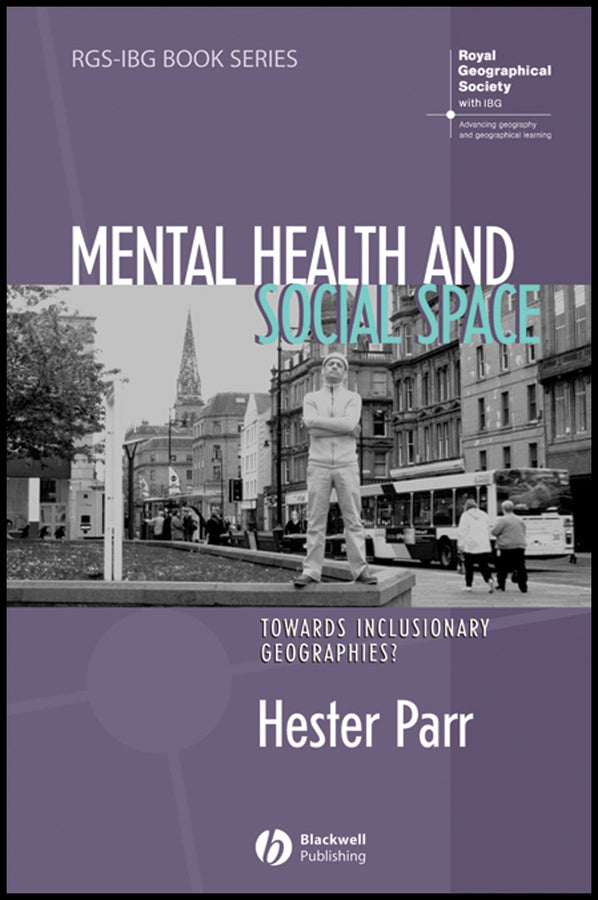
Mental Health and Social Space
Towards Inclusionary Geographies?
Hester Parr (Author)
9781405168939, Wiley
Hardback, published 10 January 2008
228 pages
23.6 x 15.9 x 2.3 cm, 0.472 kg
"Hester Parr's book delivers a welcome and unusually close-up engagement with the practiced geographies of mental health." (Area, December 2010) "This inspiring book offers a highly original account of the social spaces created and inhabited by people with mental health problems. Hester Parr paints a vivid picture, which foregrounds hopeful possibilities for empowerment and integration. It will be invaluable to anyone seeking to understand mental (ill) health in the twenty-first century." "Parr’s efforts to advance a 'cautious optimism”'about the lived social geographies of people with mental health problems, based on rich empirical material and thoughtful conceptual articulation, make this an essential read for anyone interested in the changing social geographies of mental health. The book also has considerable relevance for broader debates about social inclusion and active citizenship in contemporary Western societies." “Parr has … redefine[ed] ‘the mental patient’, a crucial undertaking if social citizenship for people with mental illness is to become an enduring reality.” Metapsychology “This book could appeal to psychologists who enjoy relevant work in other disciplines, who find ideas of people like Freud and Foucault interesting, and who value small case studies.” PsycCritiques
Liz Bondi, University of Edinburgh
Robert Wilton, McMaster University
Through a series of case studies this book brings to the fore the voices, lives, and capacities of people with mental health problems as well as the difficulties they face. It effectively demonstrates the ways people with mental health problems are active in re-scripting versions of social recovery through their use of very different community spaces.
List of figures. Series editors' preface. Preface and acknowledgements. 1 Geographies of difference: understanding mental (ill) health and social space. 2 Placing mental health: community, inclusion and citizenship. 3 Cultural landscapes: rural communities and mental health. 4 Therapeutic natures? urban gardening, citizenship and social inclusion. 5 Artistic spaces: the arts and mental health. 6 Virtual communities: the Internet and on-line geographies of self-help. Conclusion: innovative geographies of mental health. References. Index.
Subject Areas: Geography [RG]