Freshly Printed - allow 7 days lead
Couldn't load pickup availability
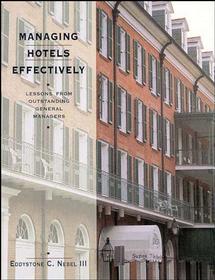
Managing Hotels Effectively
Lessons from Outstanding General Managers
Eddystone C. Nebel (Author)
9780471289098, Wiley
Hardback, published 1 August 1991
464 pages
23.9 x 19.9 x 3.6 cm, 1.114 kg
A must-read for aspiring hospitality industry leaders Managing Hotels Effectively: Lessons from Outstanding General Managers is the essential text for anyone working in or aspiring to the hospitality industry. Expert discussion from industry leaders drives home the importance of service, strategic planning, and effective leadership while giving readers a glimpse into the complex mechanics of running a successful hotel. From organizational structure and staffing to communications, revenues, and day-to-day activities, this book provides an informative look into the myriad duties of the general manager.
Preface xvii Acknowledgements xxi Introduction xxiii The Gm Research xxiii HE Gms xxiv Unifying Theme xxvii References xxviii Chapter 1 The Environment of The Hotel Business 1 THE GLAMOUR OF IT ALL 2 The Hotel as History 3 The Hotel as Excitement 4 The Hotel as Theater 7 A City Within a City 8 A Vocation 8 THE PACE OF A HOTEL 9 Hotel Cycles 10 Open for Business 8,760 Hours per Year 10 Scope of Operations 12 The Unpredictability of Problems 14 The Immediacy of Problems 16 The Need for Dedication 18 THE COMPETITIVE ENVIRONMENT 18 Hotels Are Commodities 19 Permanent Overbuilding 20 Rooms Are Perishable Products 21 Forecasting Demand 22 CONCLUSION 24 REFERENCES 26 QUESTIONS 26 Chapter 2 Service, People, and Profits in the Hotel Business 28 SERVICE COUNTS 28 Service Is tangible 31 Setting Service Standards 32 Service Consistency 35 Atitudes Toward Service 36 PEOPLE SERVING PEOPLE 36 Guests 37 Employees 39 Managers 46 OWNERS, PROFITS, AND MANAGERS 48 Absentee Owners 48 Corporate Input 50 Profits Versus Service 50 Profits During Good Times and Bad 52 CONCLUSION 53 REFERENCES 55 FURTHER READING 55 QUESTIONS 55 Chapter 3 An Overview of Strategic Planning 57 THE NATURE OF STRATEGIC PLANNING 57 Strategic Planning Defined 57 Distinguishing Characteristics of Strategic Planning 58 THE STRATEGIC PLANNING HIERARCHY 59 Strategic Planning and the Corporate Organization 60 Corporate-Level Strategic Planning 61 Business-Level Strategic Planning 61 Functional Level Strategic Planning 62 Strategic Planning and the Individual Hotel 62 THE STRATEGIC PLANNING PROCESS 63 Overview of the Strategi Planning Process 64 Setting Organizational Goals 66 Formulating a Strategic Plan 70 Strategy Implementation 76 Evaluating Strategic Plan 78 The Tine Horizon of Strategic Planning 79 CONCLUSION 80 REFERENCES 82 QUESTIONS 82 Chapter 4 Planning in Hotels 84 THE HOTEL PLANNING CONTEXT 84 The Hotel Planning Time Horizon 86 The GM's Role in Strategic Planning 87 SETTING HOTEL GOALS AND OBJECTIVES 89 Determining Markets to Serve 90 Setting Service and Quality Standards 91 Other Goals and Objectives 93 Productivity Goals 93 Human Resource Goals 95 Profitability Goals 95 Developing a Hotel's Culture 97 FORMULATING A STRATEGIC PLAN 98 An Aggressive Strategic Plan 100 A Time for Retrenchment and Turnaround 105 CONCLUSION 109 REFERENCES 109 QUESTIONS 110 Chapter 5 Hotel Organization 111 AN OVERVIEW OF ORGANIZATIONAL DESIGN 111 The Elements Of Organizational Structure 112 Specialization 112 Departmentalization 115 Authority 118 Line Versus Staff Authority 118 Span of control 119 Coordination of Activities 122 Static Principles of Organizational Design 125 Chain of Command 125 Unity of Command 127 Delegation 128 THE HOTEL FUNCTIONAL ORGANIZATIONAL DESIGN 130 A Mid-Sized Hotel's Organizational Design 130 The Rooms Department 130 The Food and Beverage Department 133 Sales and Marketing 134 Personnel 135 Accounting 135 A Large Hotel's Organizational Design 137 Strengths of the Functional Organization 139 Weaknesses of the Functional Organization 139 CONCLUSION 141 REFERENCES 142 QUESTIONS 142 Chapter 6 Coordinating the Activities of a Hotel 144 THE NEED FOR INTERDEPARTMENTAL COORDINATION 144 THE EXECUTIVE OPERATING COMMITTEE 146 OTHER HOTEL COMMITTEES AND MEETINGS 150 The Variety of Hotel Committees and Meetings 151 Meetings and Communications 151 CONCLUSION 156 REFERENCES 156 QUESTIONS 157 Chapter 7 Hotel Staffing 157 THE HOTEL STAFFING SYSTEM 159 Job Design 159 Employee Selection 160 Training and Development 165 Performance Appraisal 168 Employee Compensation 170 CONCLUSION 170 REFERENCES 171 QUESTIONS 171 Chapter 8 Motivation 173 UNDERSTANDING PEOPLE 173 MOTIVATION AND WORK 175 Assumptions About People 176 A Changing View of Workers 177 The Motivational Process 179 INDIVIDUAL NEEDS 180 Theory X and Theory Y 180 A Needs Hierarchy 182 The Need for Achievement 185 Worker Satisfaction and Dissatisfaction 187 MOTIVATIONAL PROCESS 189 An Expectancy Theory of Motivation 190 Goal Setting and Management by Objectives 195 Equity as Part of the Motivational Process 198 Behavior Modification 200 JOB SATISFACTION AND JOB PERFORMANCE 201 Does Satisfaction Lead to Performance? 202 Does Performance Lead to Satisfaction? 202 Some Practical Considerations 203 Views of Hotel GMs 205 CONCLUSION 205 REFERENCES 207 QUESTIONS 208 Chapter 9 Communication IN HOTELS 210 THE INTENSITY OF COMMUNICATIONS IN HOTELS 210 THE KEY ROLE PLAYED BY COMMUNICATIONS 213 TIPS FOR BETTER COMMUNICATION 216 It's Easy to Get into Trouble 217 Misunderstanding Slow Service 219 Ms CAUGHT IN THE ACT OF COMMUNICATING 220 Putting Yourself in the Other Person's Shoes 221 Rushing to Judgment 221 No Such Thing as an Interruption 221 You Can Learn Only When Someone Else Is Talking 224 If You Do All the Talking You'll Also Have to Do All the Thinking 226 CONCLUSION 226 REFERENCES 227 QUESTIONS 228 Chapter 10 Leading People 229 THE IMPORTANCE OF LEADERSHIP 229 Leadership in Hotels 230 What Is Leadership? 232 LEADERSHIP TRAITS AND SOURCES OF POWER 233 Leadership Traits 233 Sources of Leader Power 234 LEADER BEHAVIOR 236 Authoritarian Versus Participative Leadership 237 Pros and Cons of Authoritarian and Participative Leadership 238 Factors Affecting Leadership Style 239 GM Leadership Behavior: Authoritarian Versus Participative 240 Consideration and Initiating Structure 243 The Management Grig 243 Factors Affecting Leadership Style 244 GM Leadership Behavior: Task Versus People 245 GMs Attention to Detail and Follow-up as a Leadership Trait 248 CHOOSING A LEADERSHIP STYLE 248 flower Maturity Affects Initiating Structure and Consideration 249 Choosing a Leadership Style 249 How GMs Act 250 How to Choose Between an Authoritarian and a Participative Leadership Style 251 Choosing a Decision-Making Leadership Style 251 GMs and Decision Making 254 CONCLUSION 256 REFERENCES 258 FURTHER READING 259 QUESTIONS 259 Chapter 11 Leading Organizations 261 AMERICAN DOMINANCE CHALLENGED 261 CHARACTERISTICS OF A JAPANESE BUSINESS 263 Theory Z 265 TYPE Z ORGANIZATIONS 265 Why Type Z Firms Are Top Performers 267 THE ART OF JAPANESE MANAGEMENT 268 Interdependence and Junior-Senior Relationships 268 An American Example of Japanese Management 268 Superordinate Goals 269 JAPANESE MANAGEMENT IN THE HOTEL BUSINESS 271 Turnover and Its Consequences 271 Specialized Career Paths 272 Holistic Relations and Trust 273 Collective Decision Making and Collective Responsibility 273 IN SEARCH OF (AMERICAN) EXCELLENCE 276 Attitudes Toward People 277 Values and Meaning 278 Management by Wandering Around 281 Hotel GMs Searching for Managerial Excellence 282 SOME THOUGHTS ABOUT AMERICAN LEADERS 285 Strategy 1: Attention Through Vision 286 Strategy 2: Meaning Through Communication 286 Strategy 3: Trust Through Positioning 287 Strategy 4: Self-development 286 CONCLUSION 291 REFERENCES 292 FURTHER READINGS 292 QUESTIONS 293 Chapter 12 An Overview of Controlling Hotel Operations 294 FEEDBACK CONTROL 295 Simple Feedback-Control Process 295 Where Feedback Control Cannot Be Used 296 Feedback Control in Hotels 296 CONTROL TACTICS 298 Results Accountability Controls 298 Specific-Action Controls 299 Personnel Control 300 CHOOSING THE RIGHT CONTROL STRATEGY 301 Specific-Action Controls 301 Results Control 304 Personnel Control 305 CONCLUSION 307 REFERENCES 307 QUESTIONS 308 Revenues Chapter 13 Controlling Results: Hotel Revenues and Costs 309 THE BEGINNING FORECAST 311 Occupancy Forecast 311 Department Forecasts 314 FORGING THE ANNUAL BUSINESS PLAN 317 Group Consensus at The Regal Hotel 317 Making Difficult Choices at The St. Charles Hotel 322 The Final Business Plan 323 MONTHLY CONTROL CYCLE 323 The Thirty- To Ninety-Day Forecast 323 The Monthly Forecast 324 The Profit and Loss Forecast 329 The Ten-Day Planning and Control Cycle 331 CONCLUSION 336 REFERENCES 337 QUESTIONS 337 Chapter 14 Control: Getting Employees To Do Things Right and To Do the Right Things 338 SPECIFIC-ACTION CONTROLS: GETTING EMPLOYEES TO DO THINGS RIGHT 338 Introductory Training: The "Dos" and "Don'ts" of Working for a Living 339 Doing Things Right on the Job: Housekeeping Room Attendants 341 Specific-Action Controls for Managers 343 Systems of Specific-Action Controls 346 Direct Supervision as a Form of Specific-Action Controls 348 PERSONNEL CONTROL: GETTING PEOPLE TO DO THE RIGHT THINGS 349 Telephone Training: Simple Training for a Critical Skill 349 Guest-Relations Training 350 Total Employee Training 354 Employee Relations Programs 356 Employee Programs 356 Employee Surveys 359 Employee Turnover 360 CONCLUSION 361 REFERENCES 364 QUESTIONS 364 Chapter 15 The Ms' Background an Personal Characteristics 336 The GMs' Backgrounds 367 Formal Education 367 Strengths and Weaknesses of the GMs' Formal Education 370 Choice of a Hotel Career 371 Types of Experience and Career Progression 372 Major Career-Decision Points 375 Future Ambitions 378 PERSONAL CHARACTERISTICS OF THE GM 378 GMs' Outlook About Their Jobs 379 Tough Job Decisions 379 Recent High and Low Points in the GMs' Lives 381 Likes and Dislikes of Being a GM 382 Views About Family 383 Self-evaluation 383 Others' Evaluation's 384 PERSONAL CHARACTERISTICS OF THE IDEAL GM 385 Needs and Drives 386 Attitudes and Values 387 Interpersonal Orientation 388 Temperament 389 Cognitive Orientation 390 CONCLUSION 392 REFERENCES 395 FURTHER READINGS 395 QUESTIONS 396 Chapter 16 The Day-to-Day Activities of Outstanding Hotel Managers 397 THE CHAME LENGES LENGES OF THE GM'S JOB 398 Job Demands and Relationship Demands 398 Short Run Demands 398 Intermediate-Run Demands 399 Long-Run Demands 400 The Roles a GM Must Play 401 Managerial Roles as Operational Controller 402 Managerial Roles as Organizational Developer 404 Managerial Roles as Business Maintainer 405 The GM as Information Focal Point 405 WATCHING A HOTEL GM MANAGE 406 A Typical Day 407 Characteristics of Managerial Work 412 Hotel GMs Perform a Great Amount of Work (Mintzberg's number 1/Kotter's number 1) 413 Hotel GMs Perform a Wide Variety of Activities (Mintzberg's number 2/Kotter's number 2, 3, 4) 413 Hotel GMs Make Many Small Decisions on Current Issues (Mintzberg's number 3/Kotter's number 5) 415 Hotel GMs Have Extensive Dealings With the Outside World (Mintzberg's number 4/Kotter's number 6 and 7) 416 Hotel GMs Spend Their Work Days in Intensive Verbal Communication (Mintzberg's number 5 / Kotter's number 8) 417 Hotel GMs Allocate Their Time by Reacting to the Events That Take Place Around Them (Mintzberg's number 6/Kotter's number 9) 418 Additional Aspects of Managerial Work 423 Conclusion 425 References 427 Further Readings 427 Questions 428 Appendix 429 General Manager Questions 429 Divisional Head Questions 430 Index 433
Subject Areas: Travel & holiday [WT]