Freshly Printed - allow 10 days lead
Couldn't load pickup availability
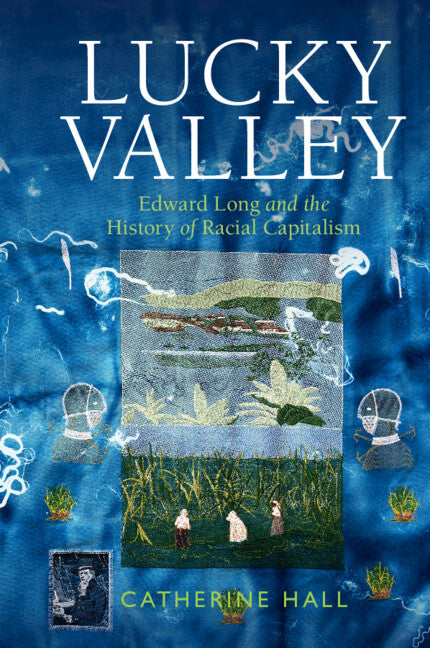
Lucky Valley
Edward Long and the History of Racial Capitalism
Reveals how Edward Long's History of Jamaica helped to shape ideas of White and Black as essentially different and unequal.
Catherine Hall (Author)
9781009098854, Cambridge University Press
Hardback, published 22 February 2024
350 pages
23.5 x 15.8 x 3 cm, 0.98 kg
'Slaveholders, merchants, traders, and others involved in Atlantic plantation colonies practiced racial oppression in the service of profit. Lucky Valley demonstrates how that system worked. One legacy of this system is continued racial oppression, and Hall argues that Long and his writing were central in creating this end.' Katherine Johnston, Journal of Modern History
Why does Edward Long's History of Jamaica matter? Written in 1774, Long's History, that most 'civilised' of documents, attempted to define White and Black as essentially different and unequal. Long deployed natural history and social theory, carefully mapping the island, and drawing on poetry and engravings, in his efforts to establish a clear and fixed racialized hierarchy. His White family sat at the heart of Jamaican planter society and the West India trade in sugar, which provided the economic bedrock of this eighteenth-century system of racial capitalism. Catherine Hall tells the story behind the History of a slave-owning family that prospered across generations together with the destruction of such possibilities for enslaved people. She unpicks the many contradictions in Long's thinking, exposing the insidious myths and stereotypes that have poisoned social relations over generations and allowed reconfigured forms of racial difference and racial capitalism to live on in contemporary societies.
I. Growing up English: 1. A gentleman's son
2. The young Englishman
II. The Lineaments of Racial Capitalism: 3. The plantation
4. The merchant house
5. Reproducing capital: the Long family
III. Making a Slave Society: 6. Colonizing geographies
7. Colonizing the state
8. Theorizing racial difference
Epilogue.
Subject Areas: British & Irish history [HBJD1]