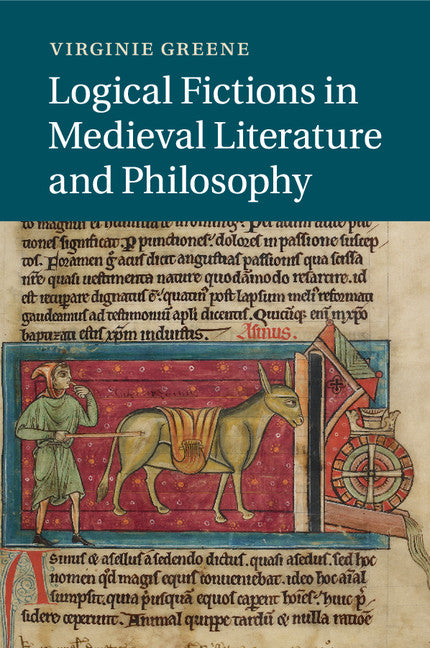
Freshly Printed - allow 10 days lead
Couldn't load pickup availability
Logical Fictions in Medieval Literature and Philosophy
This book examines the ways in which traditions of philosophy and logic are reflected in major works of medieval literature.
Virginie Greene (Author)
9781107660175, Cambridge University Press
Paperback / softback, published 23 March 2017
308 pages, 2 tables
23 x 15.2 x 1.6 cm, 0.45 kg
In the twelfth and thirteenth centuries, new ways of storytelling and inventing fictions appeared in the French-speaking areas of Europe. This new art still influences our global culture of fiction. Virginie Greene explores the relationship between fiction and the development of neo-Aristotelian logic during this period through a close examination of seminal literary and philosophical texts by major medieval authors, such as Anselm of Canterbury, Abélard, and Chrétien de Troyes. This study of Old French logical fictions encourages a broader theoretical reflection about fiction as a universal human trait and a defining element of the history of Western philosophy and literature. Additional close readings of classical Greek philosophers Plato and Aristotle, and modern analytic philosophy including the work of Bertrand Russell and Rudolf Carnap, demonstrate peculiar traits of Western rationalism and expose its ambivalent relationship to fiction.
Introduction
Part I. Logical Fables: 1. Abélard's donkey: the nonexistent particular
2. The literate animal: naming and reference
3. The fox and the unicorn: naming and existence
Part II. Figures of Contradiction: 4. The opponent
5. The fool who says no to God
6. The man who says no to reason
Part III. Fathers, Sons, and Friends: 7. Aristotle or the founding son
8. Abélard or the fatherless son
9. The dialectics of friendship
Conclusion
Bibliography.
Subject Areas: Western philosophy: Medieval & Renaissance, c 500 to c 1600 [HPCB], Medieval history [HBLC1], Literary studies: classical, early & medieval [DSBB]