Freshly Printed - allow 7 days lead
Couldn't load pickup availability
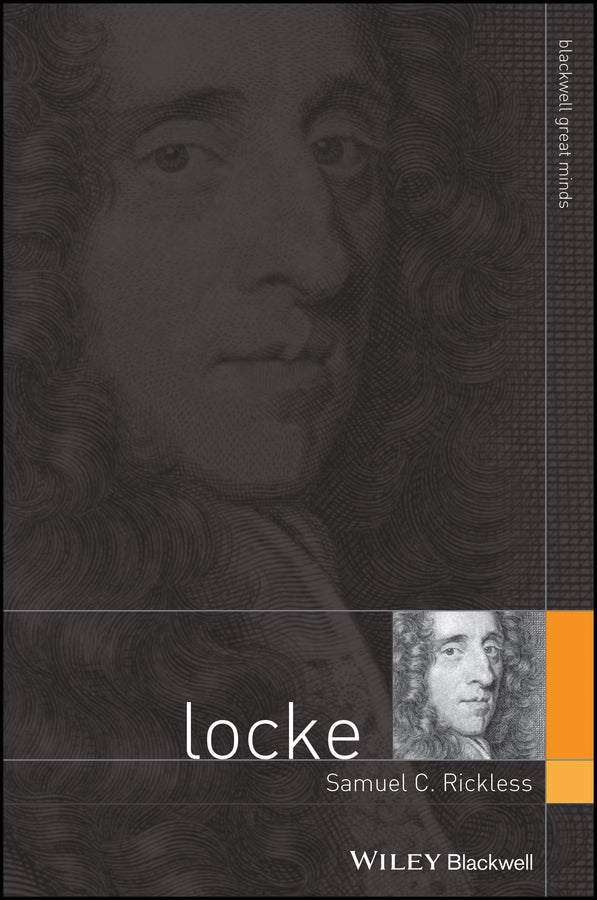
Locke
“Clearly and engagingly written, this book provides students with the best sort of model for writing about the history of philosophy. Rickless shows both how to put a philosopher’s views in historical context, and how to subject them to rigorous philosophical assessment. The top choice for short introductions to Locke’s philosophy.” —Edwin McCann, University of Southern California —David Owen, University of Arizona
“An excellent and elegantly written introduction to Locke’s philosophy that is both comprehensive and concise.”
Samuel C. Rickless (Author)
9781405189361, Wiley
Paperback / softback, published 7 May 2014
240 pages
23.1 x 15.4 x 1.3 cm, 0.308 kg
“Recommended. Lower-level undergraduates through researchers/faculty; general readers.” (Choice, 1 July 2015)
In a focused assessment of one of the founding members of the liberal tradition in philosophy and a self-proclaimed “Under-Labourer” working to support the scientific revolution of the seventeenth century, the author maps the full range of John Locke’s highly influential ideas, which even today remain at the heart of debates about the nature of reality and our knowledge of it, as well as our moral and political rights and duties.
preface ix abbreviations xi 1 locke’s life 1 2 the nature and role of ideas 13 3 the negative project: against innatism 23 4 the positive project: ideational empiricism 39 4.1 simple ideas 40 4.2 sensation and reflection 43 4.3 complex ideas 46 4.4 abstract ideas 56 4.5 challenges to ideational empiricism: the ideas of infinity and substratum 61 5 substances 70 5.1 body, matter, space, and vacuum 70 5.2 spirit 75 6 qualities 83 7 mental operations 98 7.1 actions and passions 98 7.2 will and willing 101 7.3 voluntariness and involuntariness 103 7.4 freedom, necessity, and determination of the will 104 7.5 a problem 110 8 relations 113 8.1 identity and diversity 114 8.2 moral relations 128 9 language 133 9.1 language and meaning 134 9.2 the imperfections and abuses of language 140 9.3 nominal essence, real essence, and classification 143 10 knowledge and belief 152 10.1 the official account of knowledge 152 10.2 the degrees of knowledge 156 10.3 anti-dogmatism and anti-skepticism 159 10.4 faith and religious enthusiasm 164 11 moral philosophy 169 11.1 morality and God's will 169 11.2 natural law 172 11.3 punishment and slavery 176 11.4 property 180 11.5 family 187 12 political philosophy 195 12.1 political society 196 12.2 legitimate rule 197 12.3 varieties of illegitimate rule 207 12.4 toleration 209 index 215
Subject Areas: Philosophy [HP]