Freshly Printed - allow 10 days lead
Couldn't load pickup availability
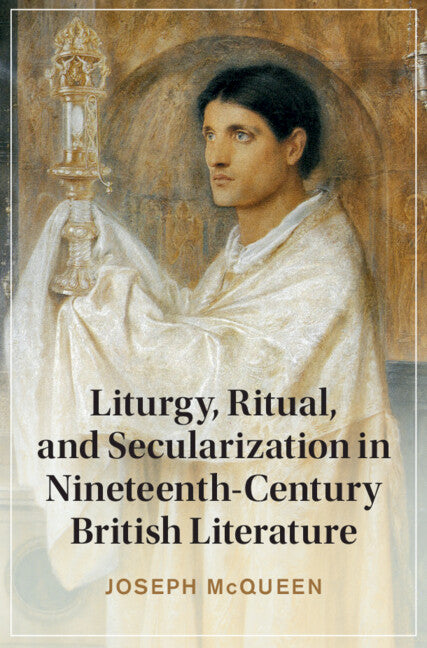
Liturgy, Ritual, and Secularization in Nineteenth-Century British Literature
A paradigm-shifting account of how nineteenth-century writers drew on liturgy to invest the material with spiritual and ethical meaning.
Joseph McQueen (Author)
9781009435956, Cambridge University Press
Hardback, published 21 November 2024
262 pages
23.5 x 15.9 x 2 cm, 0.51 kg
'Highly recommended.' L. A. Brewer, Choice
Simultaneously spiritual and material, liturgy incarnates unseen realities in concrete forms – bread, wine, water, the architectural arrangement of churches and temples. Nineteenth-century writers were fascinated with liturgy. In this book Joseph McQueen shows the ways in which Romantic and Victorian writers, from Wordsworth to Wilde, regardless of their own personal beliefs, made use of the power of the liturgy in their work. In modernity, according to recent theories of secularization, the natural opposes the supernatural, reason (or science) opposes faith, and the material opposes the spiritual. Yet many nineteenth-century writers are manifestly fascinated by how liturgy and ritual undo these typically modern divides in order to reinvest material reality with spiritual meaning, reimagine the human as malleable rather than mechanical, and enflesh otherwise abstract ethical commitments. McQueen upends the dominant view of this period as one of scepticism and secularisation, paving the way for surprising new avenues of research.
1. Mediating the modern: Wordsworth's Liturgical Subjectivity
2. Memory and revolution: ritual time in Wordsworth's Prelude
3. Tractarian liturgies: John Keble, Charlotte Yonge, and the deification of ordinary life
4. Realist liturgies: enfleshing ethics in the novels of George Eliot and Mary Ward
5. Liturgical aestheticism: Walter Pater's sacralization of the body
6. Against immanence: Oscar Wilde's liturgical constructivism
Epilogue.
Subject Areas: Literary studies: c 1800 to c 1900 [DSBF]