Special Order - allow 2+ weeks lead
Couldn't load pickup availability
Literature, Technology, and Modernity, 1860–2000
Nicholas Daly considers the way human/machine encounters have been imagined from the 1860s onwards.
Nicholas Daly (Author)
9780521123846, Cambridge University Press
Paperback / softback, published 17 December 2009
172 pages
22.9 x 15.2 x 1 cm, 0.26 kg
Review of the hardback: 'Literature, Technology, and Modernity, 1860–2000 is inventive, resourceful, and well-grounded in the social and cultural history of the hundred and forty year period the book covers. Daly's book is a great read …' Modernism/Modernity
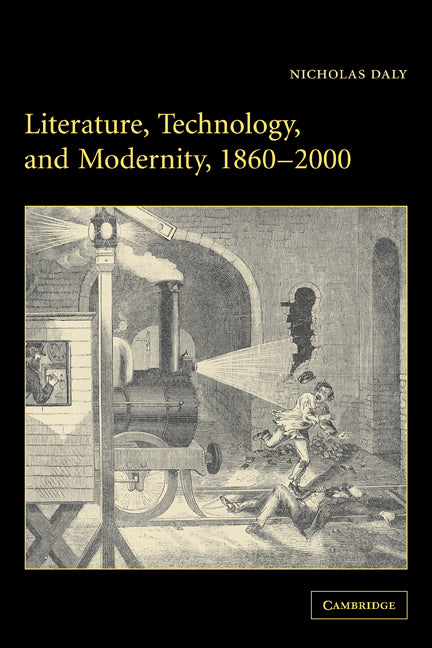
Industrial modernity takes it as self-evident that there is a difference between people and machines, but the corollary of this has been a recurring fantasy about the erasure of that difference. The central scenario in this fantasy is the crash, sometimes literal, sometimes metaphorical. Nicholas Daly considers the way human/machine encounters have been imagined from the 1860s on, arguing that such scenes dramatise the modernisation of subjectivity. Daly begins with Victorian railway melodramas in which an individual is rescued from the path of the train just in time, and ends with J. G. Ballard's novel Crash in which people seek out such collisions. Daly argues that these collisions dramatise the relationship between the individual and the industrial society, and suggests that the pleasures of fictional suspense help people to assimilate the speeding up of everyday life. This book will be of interest to scholars of modernism, literature and film.
Acknowledgements
List of illustrations
Introduction
1. Sensation drama, the railway and modernity
2. Sensation fiction and the modernisation of the senses
3. The Boerograph
4. 'It': the last machine and the invention of sex appeal
5. Crash: flesh, steel, and celluloid.
Subject Areas: Literary studies: from c 1900 - [DSBH], Literary studies: c 1800 to c 1900 [DSBF]