Freshly Printed - allow 10 days lead
Couldn't load pickup availability
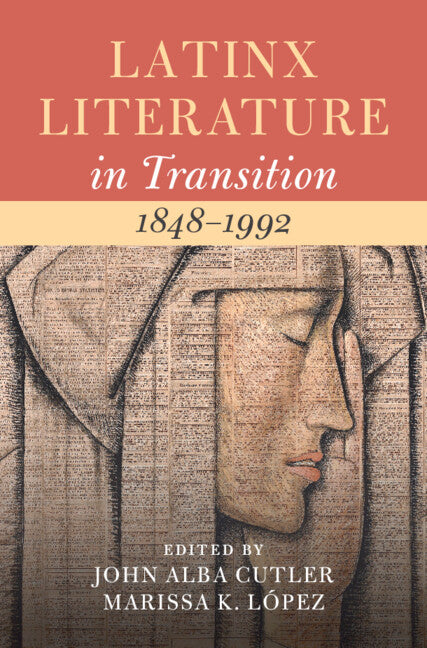
Latinx Literature in Transition, 1848–1992: Volume 2
Collecting cutting-edge scholarship, the book shows how Latinidad has been forged in the crucible of American modernities.
John Alba Cutler (Edited by), Marissa López (Edited by)
9781009314169, Cambridge University Press
Hardback, published 17 April 2025
422 pages
22.9 x 15.2 x 2.4 cm, 0.793 kg
This book introduces scholars and students of literature to previously neglected or unknown works of literature-such as José Rodríguez Cerna's chronicles and Leonor Villegas de Magnón's memoir of the Mexican Revolution-as well as new approaches to canonical texts by Maria Amparo Ruiz de Burton, Julia de Burgos, Tomás Rivera, and Gloria Anzaldúa. It challenges how previous generations of scholars have understood American modernity by rejecting a standard, historical organization and instead unfolding in clusters of essays related to key terms-space, being, time, form, and labor-corresponding to the overlapping legacies of Spanish and US colonialism and expansion that frame Latinx experience. This volume showcases the diversity of US Latinx communities and cultures, including work on Mexican/Chicanx, Central American, and Caribbean figures and highlighting the evolution of scholarship on Afro-Latinx creative expression and Latinx representations of indigeneity.
Part I. Space: 1. José Garcia Villa's sojourn in New Mexico: rethinking the geographies of Latinidad Paula C. Park
2. Latinx internationalism, French orientalism, and a Nuyorican Morocco Sarah M. Quesada
3. Centro America in San Francisco: diasporic literariness at the end of the long nineteenth century Gabriela Valenzuela
4. Bridges, backs, and barrios: radical women of color feminisms and the critique of modern space Felice Blake
Part II. Being: 5. Brown modernism from María Cristina Mena to Gloria Anzaldúa Renee Hudson
6. The Spanish-indigenous binary and anti-Blackness as literary inheritance Sheila M. Contreras
7. The camaraderie of influence: intersectional trauma in Down These Mean Streets Trent Masiki
8. Spiritual service: rereading religion and labor in … y no se lo tragó la tierra and Face of an Angel Marcela Di Blasi
Part III. Time: 9. Death and afterlives of the silver dollar café in Chicanx cultural production Ariana Ruíz
10. Passing Time: Latinx racialization, modernist satire, and the captivity narrative Evelyn Soto
11. Romancing Latinidad: race, resistance, and Latinx theater history Armando García
12. Singing apocalypse: on Corridos, catastrophe, and the poetics of reconstitution Jonathan Leal
Part IV. Form: 13. Entre Balas y Rugidos: translating the Leonor Villegas de Magnón archive into a digital exhibit Melinda Mejía
14. Modernism's workshops: printing Latinx literary modernities in New York City Kelley Kreitz
15. Lyrical mobilities: William Carlos Williams and Julia de Burgos in the Latinx grain María del Pilar Blanco
16. Bullets, guns, and tattoos: debility in the US Central American literature of Salomón de la Selva and Héctor Tobar Tatiana Argüello and Andrew Ryder
Part V. Labor: 17. Seeking Parteras in the archive: Latinx literature in transition and the labor of labor Erin Murrah-Mandril
18. The work of war: Latinx literature, racial schismatics, and possible solidarities Eric A. Vázquez and Ariana Vigil
19. Farmworker culture in literature and film, or Tomaìs Rivera's Brown Noir Curtis Marez
20. The specter of neoliberalism: labor, activism, and commodity abstraction in early Chicano/a literature Carlos Gallego.
Subject Areas: Literary studies: general [DSB]