In Stock - dispatch within 48 hours
Couldn't load pickup availability
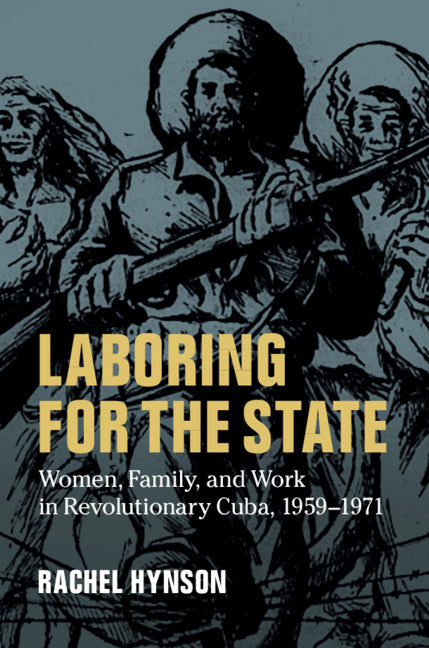
Laboring for the State
Women, Family, and Work in Revolutionary Cuba, 1959–1971
The Cuban revolutionary government engaged in social engineering to redefine the nuclear family and organize citizens to serve the state.
Rachel Hynson (Author)
9781107188679, Cambridge University Press
Hardback, published 23 January 2020
332 pages, 14 b/w illus.
23.5 x 15.8 x 2.2 cm, 0.61 kg
'Rachel Hynson has crafted a sophisticated study that highlights the Cuban revolutionary government's limited reach into the intimate lives of its citizens … this is a richly researched and well-crafted study.' Tiffany Sippial, New West Indian Guide
Contrary to claims that socialism opposed the family unit, Rachel Hynson argues that the revolutionary Cuban government engaged in social engineering to redefine the nuclear family and organize citizens to serve the state. Drawing on Cuban newspapers and periodicals, government documents and speeches, long-overlooked laws, and oral histories, Hynson reveals that by 1961, and increasingly throughout this decade, revolutionary citizenship was earned through labor. While men were to work outside the home in state-approved jobs, women found their citizenship tied to affording the state control over their reproduction and sexual labor. Through all four campaigns examined in this book - the projects to control women's reproduction, promote marriage, end prostitution, and compel men into state-sanctioned employment - Hynson shows that the state's progression toward authoritarianism and its attendant monopolization of morality were met with resistance and counter-narratives by citizens who so opposed the mandates of these campaigns that Cuban leadership has since reconfigured or effaced these programs from the Revolution's grand narrative.
Introduction: socialist morality, the nuclear family, and state labor
1. In the hands of physicians: abortion, birth control, and claims to women's labor
2. 'The husband must protect the wife and the latter obey the husband': operation family, wedding palaces, and nuclear families
3. From the streets to the home: the re-education and resistance of female prostitutes
4. The elasticity of truth: creating male heads of household through forced labor
Epilogue: the erasure and legacies of four early revolutionary campaigns.
Subject Areas: Gender studies: women [JFSJ1], 20th century history: c 1900 to c 2000 [HBLW], History of the Americas [HBJK]