Freshly Printed - allow 10 days lead
Couldn't load pickup availability
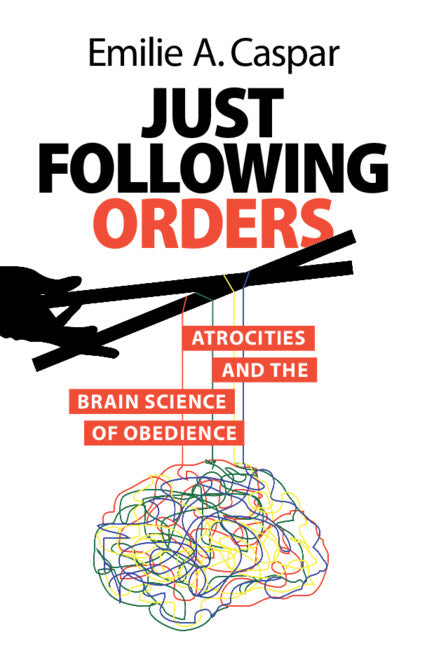
Just Following Orders
Atrocities and the Brain Science of Obedience
Discover how the brain is wired for obedience and how this can lead to humans committing brutal acts of violence.
Emilie A. Caspar (Author)
9781009385435, Cambridge University Press
Hardback, published 25 July 2024
261 pages
23.6 x 16 x 1.9 cm, 0.493 kg
'Emilie Caspar's book resurrects Milgram's agentic shift theory of obedience. Combining the results of laboratory studies with interviews with participants in the mass killings in Cambodia in the 1970s and Rwanda in 1994, Caspar argues that we should believe perpetrators who say they were just following orders. Her interviewees often explain themselves with versions of this claim. Participants in her new shock-giving obedience experiments often say the same. And brain recordings from these participants - based on functional magnetic resonance imaging (fMRI) studies - show different patterns for ordered and for free choice shock giving - suggesting that participants are in a different state when acting under orders.' Clark McCauley, Lawfare
How can obedience and carrying out orders lead to horrific acts such as the Holocaust or the genocides in Rwanda, Cambodia, or Bosnia? For the most part, it is a mystery why obeying instructions from an authority can convince people to kill other human beings, sometimes without hesitation and with incredible cruelty. Combining social and cognitive neuroscience with real-life accounts from genocide perpetrators, this book sheds light on the process through which obedience influences cognition and behavior. Emilie Caspar, a leading expert in the field, translates this neuroscientific approach into a clear, uncomplicated explanation, even for those with no background in psychology or neuroscience. By better understanding humanity's propensity for direct orders to short-circuit our own independent decision-making, we can edge closer to effective prevention processes.
Introduction: understanding genocide as a means to prevention
1. Listening to the perpetrators of genocide
2. A brief history of the experimental research on obedience
3. How do we take ownership and responsibility over our own actions?
4. Moral emotions under obedience
5. Just giving orders? In the brain of those who command
6. Desolation is everywhere
7. Conclusion: How ordinary people stand up against immorality
Epilogue: A hopeful horizon.
Subject Areas: Social, group or collective psychology [JMH]