Freshly Printed - allow 8 days lead
Couldn't load pickup availability
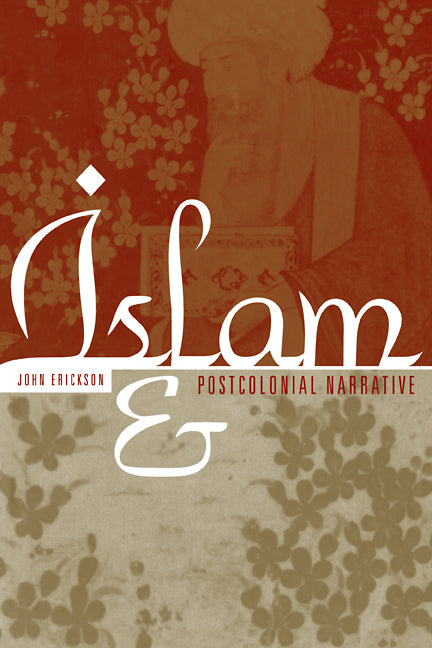
Islam and Postcolonial Narrative
In Islam and Postcolonial Narrative, John Erickson examines four major authors from the 'third world'.
John Erickson (Author)
9780521101158, Cambridge University Press
Paperback / softback, published 12 February 2009
220 pages
22.9 x 15.2 x 1.3 cm, 0.33 kg
"...an original contribution to its place as a textbook wherever this literature is studied." Research in African Literatures
In Islam and Postcolonial Narrative, John Erickson examines four major authors from the 'third world' - Assia Djebar, Adelkebir Khatibi, Tahar ben Jelloun and Salman Rushdie - all of whom have engaged in a critique of the relationship between Islam and the West. Erickson analyses the narrative strategies they deploy to explore the encounter between Western and Islamic values and reveals their use of the cultural resources of Islam, as well as their intertextual exchanges with other third-world writers. Erickson argues against any homogenising mode of writing labelled 'postcolonial' and any view of Islamic and Western discourses as monolithic or totalising. He reveals the way these writers valorise expansiveness, polyvalence and indeterminacy as part of an attempt to represent the views of individuals and groups that live on the cultural and political margins of society.
Preface
1. Introduction: creating new discourses from old
2. Women's voices and woman's space in Assis Djebar's L'Amour, la fantasia
3. Tahar Ben Jelloun's Sandchild: voiceless narratives, placeless places
4. 'At the threshold of the untranslatable': Love in Two Languages of Abdelkebir Khatibi
5. The view from underneath: Salman Rushdie's Satanic Verses
Concluding: breaches and forgotten openings
Notes
Bibliography
Index.
Subject Areas: Literary studies: fiction, novelists & prose writers [DSK]