Freshly Printed - allow 8 days lead
Couldn't load pickup availability
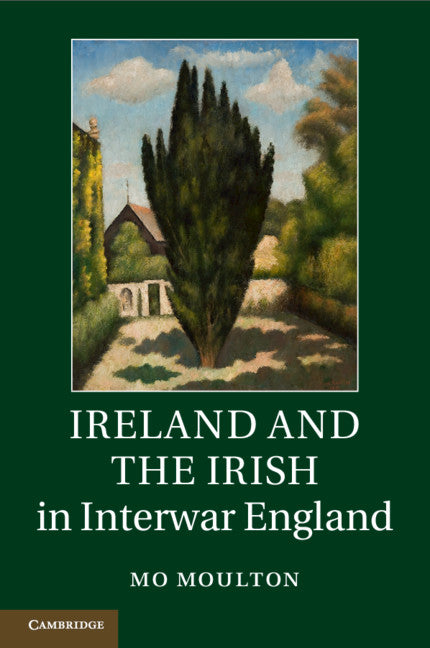
Ireland and the Irish in Interwar England
This social history argues that the relocation of Irishness from politics to personal and civic life underpinned England's interwar stability.
Mo Moulton (Author)
9781107632387, Cambridge University Press
Paperback / softback, published 20 May 2021
336 pages
23 x 15 x 2.5 cm, 0.56 kg
'Mo Moulton's survey of the political and social aftermath of the Anglo-Irish War of 1919–21 asks challenging questions about how this conflict continued to resonate in subsequent decades. … Moulton traces the 'bittersweet' story of a kind of multiculturalism, which provided Britain with stability, but at the price of stigma and uneasy assimilation.' Lucy Delap, History Today
To what extent did the Irish disappear from English politics, life and consciousness following the Anglo-Irish War? Mo Moulton offers a new perspective on this question through an analysis of the process by which Ireland and the Irish were redefined in English culture as a feature of personal life and civil society rather than a political threat. Considering the Irish as the first postcolonial minority, they argue that the Irish case demonstrates an English solution to the larger problem of the collapse of multi-ethnic empires in the twentieth century. Drawing on an array of new archival evidence, Moulton discusses the many varieties of Irishness present in England during the 1920s and 1930s, including working-class republicans, relocated southern loyalists, and Irish enthusiasts. The Irish connection was sometimes repressed, but it was never truly forgotten; this book recovers it in settings as diverse as literary societies, sabotage campaigns, drinking clubs, and demonstrations.
Introduction: the return of the repressed island
Part I. The Anglo-Irish War: 1. The dirtiness of this 'trouble': fighting the Anglo-Irish War
2. The postwar international order and the mobilization of public opinion
3. A different home front: Irish nationalists in England
4. 'Strangers in blood' at a funeral: the Treaty of 1921 and the Irish Civil War
Part II. Irishness in Interwar England: 5. Politics and the Anglo-Irish relationship
6. The cultural persistence of Irishness
7. A decaying world in exile: the Anglo-Irish and other loyalists
8. The Irish in England and the failure of ethnic politics
9. Immigration and accommodation in Irish England
10. The end of an era: 1939 and the salience of Irishness
Conclusion: the first decolonization?
Bibliography.
Subject Areas: Social & cultural history [HBTB], 20th century history: c 1900 to c 2000 [HBLW], British & Irish history [HBJD1]