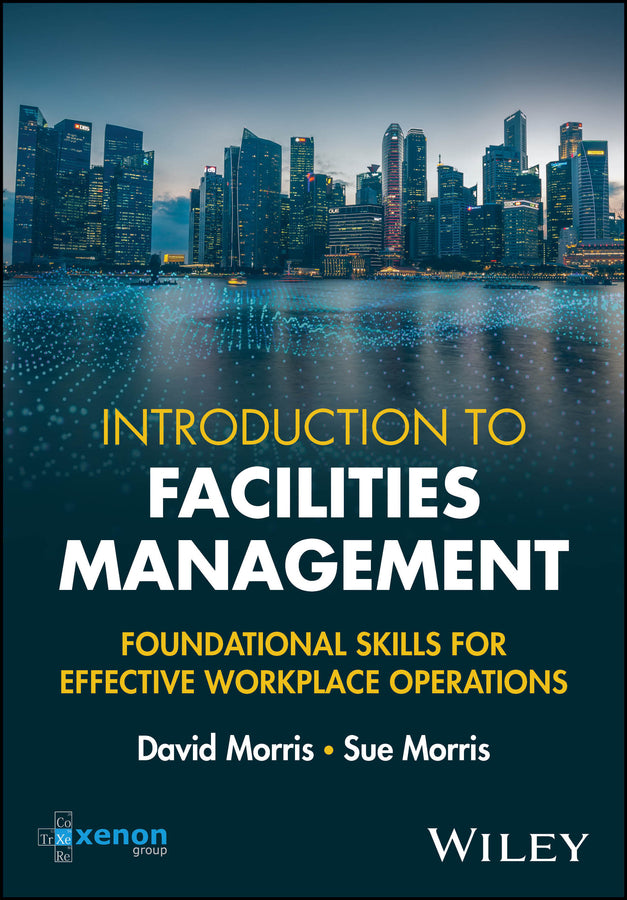
Freshly Printed - allow 7 days lead
Couldn't load pickup availability
Introduction to Facilities Management
Foundational Skills for Effective Workplace Operations
David Morris (Author), Sue Morris (Author)
9781394316045, Wiley
Paperback / softback, published 2 October 2025
160 pages
24.3 x 17 x 3.2 cm, 0.284 kg
Provides the essential skills required for effective facilities management Facilities Management (FM) plays a vital role in ensuring the smooth operation of workplaces, balancing strategic goals with day-to-day operational needs. Introduction to Facilities Management is a structured and comprehensive introduction to the key functions of FM, equipping professionals with the foundational skills necessary to excel in this evolving field. Covering a wide range of essential topics, this comprehensive guide enables readers to understand the diverse responsibilities of FM and apply practical knowledge to workplace challenges. Introduction to Facilities Management is designed for those new to the industry, offering a clear and practical exploration of FM’s core principles and functions. It bridges the gap between theory and practice by incorporating real-world scenarios and examples, helping learners develop the confidence to tackle operational challenges. By covering key areas such as workplace safety, resource management, and service coordination, the highly experienced authors provide a solid foundation for those pursuing professional qualifications, including the IWFM Level 3 Mandatory Units. Written for professionals aiming to enhance their skills and contribute to workplace efficiency and organisational success, Introduction to Facilities Management: With a focus on day-to-day operational effectiveness, Introduction to Facilities Management: Foundational Skills for Effective Workplace Operations is ideal for individuals working in Facilities Management at a junior level, as well as students pursuing industry qualifications. It is a valuable resource for those studying workplace operations, property management, and organisational efficiency in vocational training programs and professional development courses.
Preface vii Part I Understanding the Basics of Facilities Management 1 1 What Is Facilities Management? 3 2 Facilities Management Support Services 17 3 Maintenance Strategies 21 4 Service Delivery Models 27 5 Management Functions Within Facilities Management 35 Part II Developing Relationships with Clients, Customers and Other Stakeholders 41 6 Clients, Customers, Users and Other Stakeholders 43 7 The Interests of the Various Stakeholder Groups 47 8 Assessing Customer Needs and Customer Satisfaction 57 9 Management Data for Monitoring Customer Satisfaction 67 10 The Causes of Customer Dissatisfaction 77 11 Resolving Customer Satisfaction Issues 83 12 Customer Perceptions and Communication 85 Part III An Introduction to Specifications, Procurement and Contracts 89 13 What Are Specifications of Service? 91 14 Identifying Requirements and Drafting Specifications 95 15 Quotations, Tendering and Framework Agreements 105 16 Ensuring the Integrity of Procurement Processes 117 17 Contracts and Contractual Arrangements 121 18 Different Types of Contract 131 19 Managing Contracts 137 20 Managing Poor Goods and Service Delivery 143 Conclusion 148
Acknowledgements viii
Defining Facilities Management 3
How FM Supports an Organisation 6
Meeting End-user Requirements 6
Reducing Costs 8
Maintaining Business Continuity 8
Ensuring Legal and Regulatory Compliance 10
Supporting Corporate Social Responsibility (CSR) 13
Premises Support 17
Business Support 18
Staff Support 18
Maintenance 21
Reactive or Unplanned Maintenance 22
Preventative Maintenance 22
The Cost-effectiveness of Different Maintenance Strategies 23
In-house Service Delivery 27
Outsourced Service Delivery 27
The Pros and Cons of Different Service Delivery Models 29
Advantages and Disadvantages of an In-House Delivery Method 29
Outsourcing 29
Advantages of Outsourcing 30
Disadvantages of Outsourcing 31
Pros and Cons of Specific Outsourcing Options 33
People Management 35
Health and Safety Management 36
Budget Management 37
Project Management 37
Contract Management 37
Customer Relationship Management 38
The Different Roles Within Facilities Management 38
Clients, Customers and Users 43
Other Stakeholders 44
Cost and Financial Performance 48
Legal and Statutory Compliance 49
Performance Against the Contract and Service Specification 50
Risk Management and Business Continuity 51
Determining Stakeholder Interests and Requirements 52
Linking Interests to Stakeholders 52
The Information Required by Different Groups 53
Analysis of Data 68
Drawing Conclusions from the Data 71
Other Data We Can Use 74
Resource Issues 79
Process Issues 80
Equipment Issues 80
Cost Effectiveness Issues 81
Resource Issues 83
Process Issues 83
Equipment Issues 84
Cost Effectiveness Issues 84
Customer Perceptions 86
Types of Specifications 91
Identifying Requirements 95
Drafting Specifications 97
The Content of a Specification 97
Standard Specifications 98
Contract Specifications 100
A Step-by-step Guide to Writing a Specification 100
The Structure of the Specification 101
Quotations 105
Tendering 108
Tendering Within the Public Sector – Find a Tender Service 113
e-Procurement 114
Framework Agreements 116
Quotations 117
Tenders and Framework Agreements 117
The Elements of a Contract 121
What Is a Contract? 121
The Contract Essentials 122
Basics of a Contract 127
Failings That Could Invalidate a Contract 128
NEC4 FM Suite of Contracts 133
Service Level Agreements, Information Flows and Reporting Processes 137
Service Level Agreements 137
Monitoring SLAs 138
Performance Monitoring 139
Failure in Service Delivery 143
Implementing Sanctions 146
The Use of Penalties (and Rewards) 146
Not Placing Additional Work 147
Withdrawal of Permits to Work (PTW) 147
Index 149
Subject Areas: Civil engineering, surveying & building [TN]