Freshly Printed - allow 7 days lead
Couldn't load pickup availability
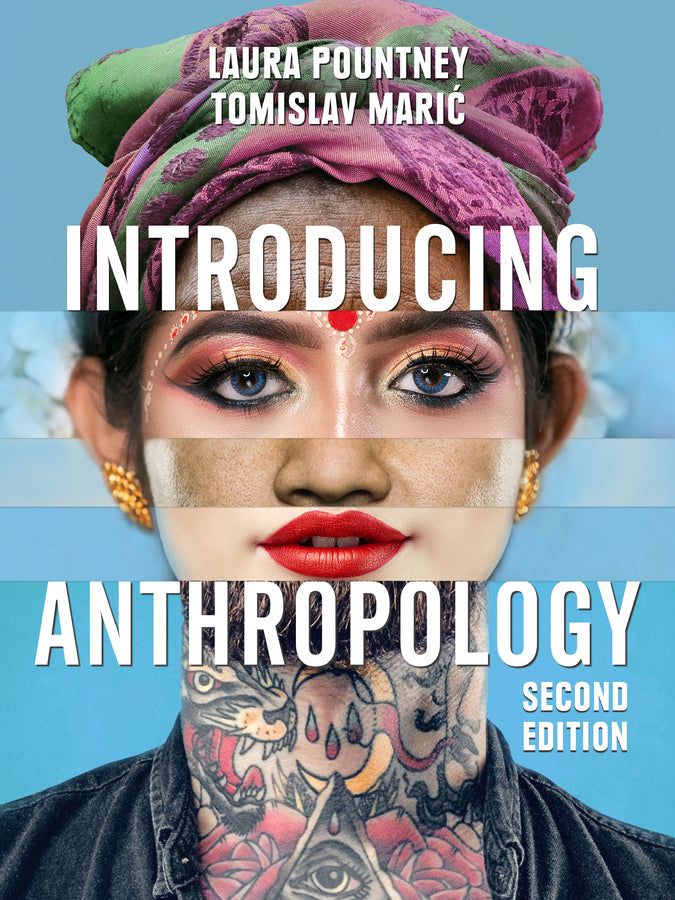
Introducing Anthropology
What Makes Us Human?
Laura Pountney (Author), Tomislav Marić (Author)
9781509544141, Polity Press
Paperback / softback, published 23 April 2021
368 pages
24.4 x 19.1 x 2 cm, 0.907 kg
This new edition of Introducing Anthropology updates a formidable and thought-provoking inquiry into what makes us human, and highlights how students can knowledgeably take part in important but sometimes difficult conversations that help shape a more just and sustainable world. "A classroom text written by teachers for teachers. I cannot recommend it highly enough." "Now, more than ever, we need to gain an empathetic understanding of the peoples with whom we share our planet. This makes anthropology essential to basic education. Fortunately, this book provides an excellent introduction to the subject replete with fascinating illustrations and insights that convey just how absorbing and interesting this task can be. It is one of those books one immediately wishes everyone would read." PRAISE FOR THE PREVIOUS EDITION “A lively and comprehensive introduction to a broad range of anthropological themes, peppered with ethnographic examples showcasing the diversity of human lives and societies, this book fills a gap and not only reveals the knowledge contributions of anthropology but also gives a hint of its magic.” “A thorough introduction to anthropology which is as engaging as it is informative. A must-read for all students starting in the subject, as well as an excellent book for those who simply want to know more about the subject matter and methods of anthropology.”
Edward Liebow, Executive Director, American Anthropological Association
David Shankland, Director, Royal Anthropological Institute
Daniel Miller, University College London
Thomas Hylland Eriksen, University of Oslo
Dave Latham, Birmingham Metropolitan College
The perfect starting point for any student new to this fascinating subject, offering a serious yet accessible introduction to anthropology. Across a series of fourteen chapters, Introducing Anthropology addresses the different fields and approaches within anthropology, covers an extensive range of themes and emphasizes the active role and promise of anthropology in the world today. The new edition foregrounds in particular the need for anthropology in understanding and addressing today's environmental crisis, as well as the exciting developments of digital anthropology. This book has been designed by two authors with a passion for teaching and a commitment to communicating the excitement of anthropology to newcomers. Each chapter includes clear explanations of classic and contemporary anthropological research and connects anthropological theories to real-life issues at the local and global levels. The vibrancy and importance of anthropology is a core focus of the book, with numerous interviews with key anthropologists about their work and the discipline as a whole, and plenty of ethnographic studies to consider and use as inspiration for readers' own personal investigations. A clear glossary, a range of activities and discussion points, and carefully selected further reading and suggested ethnographic films further support and extend students' learning. Introducing Anthropology aims to inspire and enthuse a new generation of anthropologists. It is suitable for a range of different readers, from students studying the subject at school-level to university students looking for a clear and engaging entry point into anthropology.
Preface Who is This Book For? What Makes Us Human? Culture: Universality and Diversity Ethnographic Research How to Use This Book Acknowledgements 1 What Makes Us Human? Key issues and debates How Did Humans Evolve? Cultural Evolution How Do Humans Vary? The Concept of Race and a Critique of the Concept Conclusion 2 Research Methods Key issues and debates Ethnography Digital Anthropology Conclusion 3 The Body Key issues and debates Body Modifications and Decorations Body Types Anthropological Theories of the Body Symbolic Classification and the Body: The Body and Society Conclusion 4 Ways of Thinking and Communicating Key issues and debates Classification Explaining Events Language Nonverbal Communication Human Communication before Writing: Oral Traditions How Are Modern Technologies Affecting Communication? Conclusion 5 Social Relations Key issues and debates Social Class, Caste, Gender, Age Kinship Marriage Patterns Kinship Relationships with Nonhuman Species and Objects The Effect of Technological Advances on Definitions of Kinship Using Objects to Express Social Relations. The Spread of Capitalism Conclusion 6 Engaging with Nature Key issues and debates Cultural Practices in Relation to the Environment The Nature versus Culture Debate The Relationship between Humans and Animals Anthropology and Climate Crisis Conclusion 7 Personhood Key issues and debates Development of the Western Philosophical Concept of Personhood Examples of Concepts of Personhood How is Personhood Expressed and Understood by Anthropologists? Personhood and Boundaries. Conclusion 8 Identity Key issues and debates How Do Anthropologists Understand Identification? Social Memory: ‘Folk’ Memory-Making Language Music Shaping Group Identities Conclusion 9 Ritual Key issues and debates Types of Ritual Functions of Rituals Anthropological Approaches to Ritual Political Rituals Rites of Passage Conclusion 10 Gender Key issues and debates Gender and Biology Feminism Queer Theory Gender, Relationships and Power Alternative Gender Identities Conclusion 11 Boundaries Key issues and debates Boundaries and Bodies Boundaries between Ethnic Groups Boundaries between Humans and Cyborgs Conclusion 12 Globalization Key issues and debates The History of Globalization How Do Anthropologists Study Globalization? Anthropology of Tourism The Impact of Globalization Creolization Does Globalization Lead to Homogeneity? Globalization and Migration Consequences of the Global Economy Local and Global Impacts of Globalization Conclusion 13 The Role of Material Culture Key issues and debates What Is Material Culture? Archaeology, Anthropology and the Role of Material Culture Are Digital Objects Material? Aesthetics: The Culturally Constructed Nature of Beauty How Do Material Objects Symbolize Relationships? Theories of Material Culture Material Objects Used to Communicate and Negotiate Identity The Representation of Material Culture Conclusion 14 Applied Anthropology Key issues and debates What is Applied Anthropology? Advocacy in Anthropology Applied Anthropology and Public Health Ethics and Applied Anthropology The American Anthropological Association Examples of Applied Anthropology Anthropologists’ Testimonies and Case Studies Conclusion Key Terms References Ethnographic Films Websites Index
Subject Areas: Archaeology [HD]