Freshly Printed - allow 7 days lead
Couldn't load pickup availability
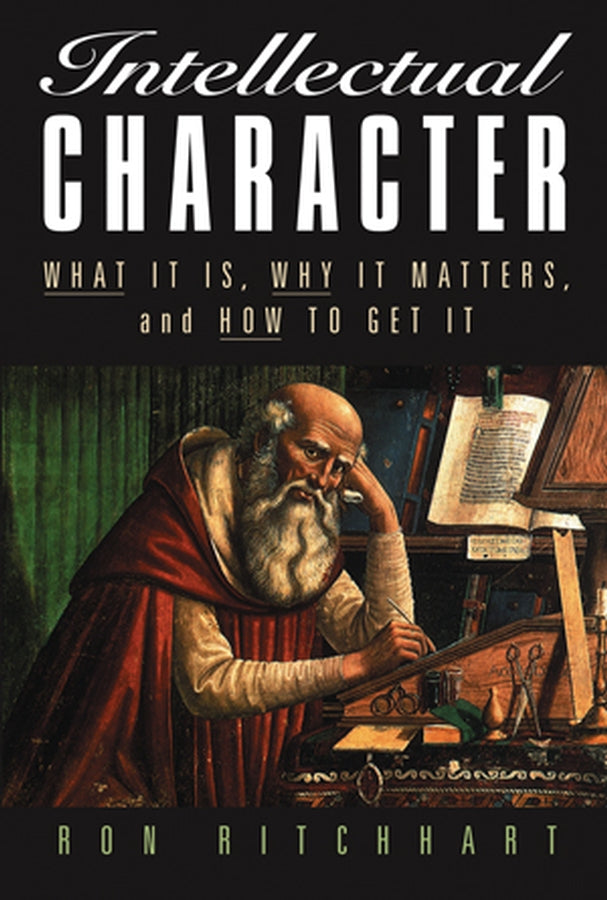
Intellectual Character
What It Is, Why It Matters, and How to Get It
"Ron Ritchhart will engage and regale you with a very different way of looking at good thinking and flexible intelligence, what they are, where they come from, and how perhaps learning and education could help people to get more of them."--from the Foreword by David Perkins, professor of education, Harvard Graduate School of Education "An invaluable guide for fostering thoughtful students and thoughtful classrooms."--Howard Gardner, John H. and Elisabeth A. Hobbs Professor of Cognition and Education, Harvard Graduate School of Education
Ron Ritchhart (Author)
9780787972783, Wiley
Paperback / softback, published 3 September 2004
336 pages
22.6 x 15.2 x 2.3 cm, 0.386 kg
What does it really mean to be intelligent? Ron Ritchhart presents a new and powerful view of intelligence that moves beyond ability to focus on cognitive dispositions such as curiosity, skepticism, and open mindedness. Arguing persuasively for this new conception of intelligence, the author uses vivid classroom vignettes to explore the foundations of intellectual character and describe how teachers can enculturate productive patterns of thinking in their students. Intellectual Character presents illustrative, inspiring stories of exemplary teachers to help show how intellectual traits and thinking dispositions can be developed and cultivated in students to promote successful learning. This vital book provides a model of authentic and powerful teaching and offers practical strategies for creating classroom environments that support thinking.
List of Tables, Figures, and Exhibits xiii Foreword: Six Intellectual Characters in Search of an Author xv Preface xxi Acknowledgments xxvii The Author xxix Part One: The Case for Intellectual Character 1 Failing at Smart: Or What’s an Education For? 3 2 Rethinking Smart: The Idea of Intellectual Character 12 3 Acting Smart: How Thinking Dispositions Close the Ability-Action Gap 33 Part Two: Fostering Intellectual Character in Our Schools 4 First Days, First Steps: Initiating a Culture of Thinking 55 5 Thinking Routines: Creating the Spaces and Structures for Thinking 85 6 Language and Thinking: Prompting, Priming, and Patterning 115 7 Thought-Full Environments: Sustaining a Culture of Thinking 145 Part Three: Moving Toward the Ideal of Intellectual Character 8 Beyond Technique: Where Teaching for Intellectual Character Begins 179 9 Three Lessons: What to Keep in Mind about Teaching for Intellectual Character 209 10 Some Practical Advice: How to Get Started Teaching for Intellectual Character 229 Appendix 249 Notes 267 References 283 Index 293
David Perkins
Subject Areas: Education [JN]