Freshly Printed - allow 7 days lead
Couldn't load pickup availability
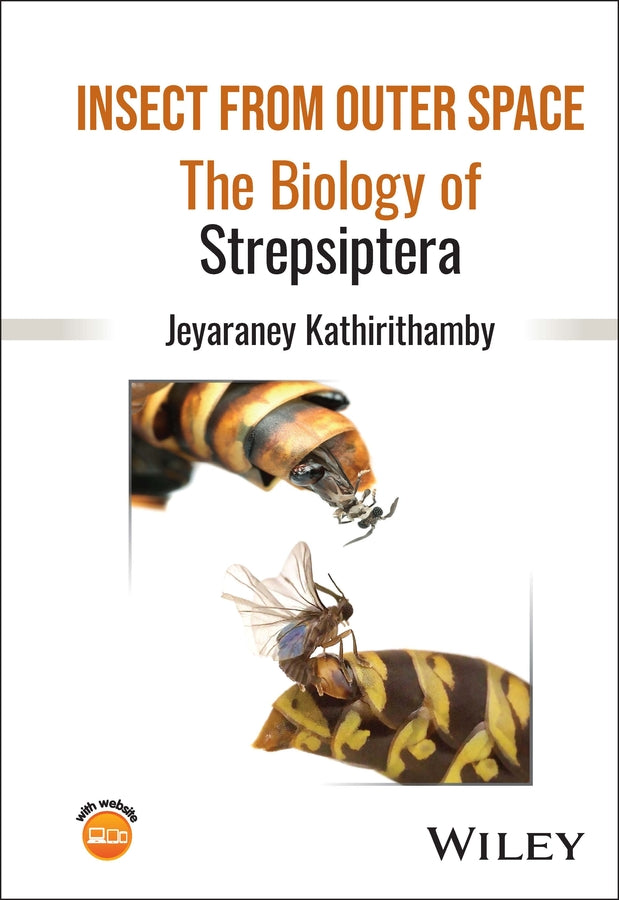
Insect from Outer Space
The Biology of Strepsiptera
Jeyaraney Kathirithamby (Author)
9781118406519, Wiley
Hardback, published 14 August 2025
496 pages
24.4 x 17 x 3.3 cm, 1.275 kg
Comprehensive account of Strepsiptera biology, including their taxonomy, morphology, fine structure, physiology, and behaviour, ranging from genes to phylogeny Beautifully illustrated in full color throughout, with original up-to-date material from the author’s research collection, Insect from Outer Space: The Biology of Strepsiptera is the first book to provide a comprehensive guide to the unique biology of an intriguing group of parasitoids that, until relatively recently, have remained something of a mystery in terms of both phenotype and genotype. The author explores the exciting biology and life history of these extraordinary insect parasitoids. In addition, the book provides a history of each family, and an account of the questions surrounding the evolution of Strepsiptera, explaining their position within the phylogeny of insects. Written by a leading international expert in the field, this book includes information on: Insect from Outer Space: The Biology of Strepsiptera is an essential reference work for entomologists and biologists alike who seek to unravel the secrets of these extraordinary creatures. The text is also an excellent learning resource for graduate and undergraduate students because the unique biology of Strepsiptera answers a wide range of biological questions.
Preface xiii About the Companion Website xvii 1 Order Strepsiptera 1 1.1 Introduction 1 1.2 Are Strepsiptera Parasites or Parasitoids? 10 1.3 Trichotomous Hypothesis of Insect Parasitoids 11 1.4 Metamorphosis 14 References 16 2 History of Strepsiptera 23 References 33 3 Collection 39 3.1 Introduction 39 3.2 Stylopised Leaf- and Planthoppers 39 3.3 Stylopised Eusocial Wasps 40 3.4 Stylopised Grasshoppers/Crickets/Mantids 41 3.5 Stylopised Silverfish 42 References 43 4 Phylogeny 45 4.1 Phylogenetic Position on the Tree of Life 45 4.2 Phylogeny of Strepsiptera 49 4.3 Mitochondrial Genomes 53 References 56 5 Fossil Species 63 5.1 Introduction 63 5.2 Families: Protoxenidae, Phthanoxenidae and Cretostylopidae 67 5.3 Family Mengeidae 69 5.4 Planidia from Cretaceous Amber 71 5.5 Planidium from Eocene Baltic Amber 72 5.6 Males in Eocene Baltic Amber 72 5.7 Males in Compressed Shale 73 5.8 Male in Fushun Amber 76 5.9 Males in Miocene Amber 76 5.10 Male in Madagascar Copal 80 5.11 Fossil Strepsiptera and Their Hosts 80 5.12 Biology of Fossil Strepsiptera 81 References 82 6 First Instar Free- Living Planidium 87 6.1 Introduction 87 6.2 History 89 6.3 Biology and Life History 90 6.4 Birth of Planidia 93 6.5 Locomotion 93 6.6 Entry into Host 94 6.7 Host Defence 97 6.8 Moulting After Host Entry 97 6.9 Dispersal 98 6.9.1 Phoretic Transmission 98 6.9.2 Mass/Direct Release 101 6.10 Planidia Found in Unusual Destinations 101 References 102 7 Endoparasitic Larval Stages 111 7.1 Introduction 111 7.2 Apolysis Without Ecdysis 111 7.3 Life History 115 7.3.1 Endoparasitic Second Instar Larva 115 7.3.2 Endoparasitic Third Instar Larva 115 7.3.3 Endoparasitic Fourth Instar Larva 116 7.4 Internal Development 118 7.5 Emergence and Extrusion Through Host Cuticle 121 7.6 Avirulence 121 7.7 Immune Defence 123 7.7.1 Masquerading as ‘Self’ 123 References 126 8 Pupal Stage 133 8.1 Introduction 133 8.2 Free – Living Puparium of Male and Female Mengenillidae 133 8.3 Partially Endoparasitic Male Puparium of Stylopidia 136 8.4 Pre-formed ‘Line of Weakness’ in Male Puparium of Stylopidia 137 8.5 Development of the Eye in Male Pupa of Stylopidia 140 8.6 Development of the Reproductive System in Male Pupa of Stylopidia 141 8.7 Absence of the Pupal Instar in Female Stylopiformia 141 References 145 9 Adult Male 149 9.1 Introduction 149 9.2 Biology and Life History 152 9.2.1 Head 152 9.2.2 Eyes 153 9.2.3 Thorax 157 9.2.4 Abdomen 161 9.2.5 Reproductive System 163 9.3 Emergence of Free- Living Male from the Puparium 167 9.3.1 Contractions 167 9.3.2 Frontal Sac 167 9.3.3 Mandibles 168 References 169 10 Free- Living Female Mengenillidae and Neotenic Female Stylopidia 177 10.1 Introduction 177 10.2 Free- Living Female Mengenillidae 179 10.3 Endoparasitic, Neotenic Female Stylopidia 180 10.3.1 Reproductive System in Stylopidia 184 10.4 Metamorphic Transformation of the Cephalothorax 186 10.4.1 Developmental Process in Stylopidia 192 10.5 Multiple Cuticles of the Endoparasitic, Neotenic Female Stylopidia 195 10.6 Brood Canal System in Stylopidia 196 10.6.1 Invagination in the Brood Canal of Stylops 198 10.7 Birth of Planidia in Mengenillidae and Stylopidia 199 10.8 Nassonov’s Glands 199 10.8.1 Structure of Nassonov’s Glands 199 10.8.2 Pheromone 202 10.8.3 Structure of the Pheromone 203 References 204 11 Mating 213 11.1 Introduction 213 11.2 Maturation of Male and Female 213 11.3 Female ‘Calling’ Behaviour and Attraction 214 11.4 Adult Male Emergence and Behaviour Before Mating 217 11.5 Behaviour of Male During Mating 218 11.6 Insemination 219 11.6.1 Traumatic Insemination in Mengenillidae 223 11.6.2 Brood Canal Insemination in Stylopidia 223 11.7 Receptor Systems and Signals During Sexual Communication 225 11.7.1 Antennae and Maxillary Palps 225 11.7.2 Tarsi 225 11.7.3 Hairs on Aedeagus 226 11.8 Reproductive Synchrony 226 References 228 12 Basal Extant Families: Family Bahiaxenidae 235 12.1 Introduction and Taxonomy 235 Reference 235 13 Family Mengenillidae 237 13.1 Introduction 237 13.2 Taxonomy 242 13.3 Biology and Life History 245 13.4 Birth and Emergence of Planidia from a Free- Living, Neotenic Female 247 13.4.1 Neotenic Female that Remains in the Puparium 247 13.4.2 Birth and Emergence of Planidia from a Female that Remains in the Puparium 248 13.5 Hosts 249 13.6 Entomophagous Parasites 250 13.7 Nematode Parasites 251 References 252 14 Suborder Stylopidia: Family Corioxenidae 257 14.1 Introduction 257 14.2 Taxonomy 257 14.3 Extrusion of the Cephalotheca and Cephalothorax 260 14.4 Emergence of Male 262 14.5 Unusual Insemination 262 14.6 Emergence of Planidia 263 14.7 Unusual Life Cycle and Super-stylopisation in Blissoxenos 264 14.8 Dispersal of Planidia 267 14.9 Morphological Changes of Stylopised Corioxenidae 267 14.10 Corioxenidae as Biocontrol Agents 268 References 268 15 Infraorder Stylopiformia: Myrmecolacidae 273 15.1 Introduction 273 15.2 Taxonomy 281 15.3 Heterotrophic Heteronomy 285 15.4 Behaviour of Stylopised Ants 288 15.5 Host- Seeking Behaviour of Planidia with Dimorphic Hosts 290 15.6 Cryptic Diversity 291 15.7 Partitioning of Genetic Diversity and Patterns of Host Specificity 292 15.8 Biogeography 299 15.9 Origin of Caenocholax in United States 300 15.10 Multi-parasitism 301 15.11 Myrmecolacidae as Biocontrol Agents 301 References 303 16.1 Family Lychnocolacidae 313 16.1.1 Introduction 313 References 314 16.2 Family Bohartillidae 316 16.2.1 Introduction 316 References 317 17 Family Stylopidae 319 17.1 Introduction 319 17.2 Taxonomy 322 17.3 Prevalence of Stylopisation 324 17.4 Morphological Changes in Stylopised Hosts 324 17.5 Pheromone 327 17.6 Behavioural Changes in Stylopised Hosts 329 17.7 Protandry 330 17.8 Phoretic Transmission 333 17.9 Host- seeking by Planidia 337 17.10 Super-stylopisation 337 17.11 Multi-parasitisim 338 17.12 Cryptic Species and Host Specificity 339 References 341 18 Family Xenidae 351 18.1 Introduction 351 18.2 Taxonomy 354 18.3 Inquilines 359 18.4 Life Cycle of Xenos in Relation to Colony Cycle of Host 360 18.5 Infective Stages of Host 364 18.6 Stylopisation of Polistes in Native and Invasive Ranges 365 18.7 Prevalence 366 18.8 Morphological Changes in Styopised Hosts 369 18.9 Behavioural Changes in Stylopised Hosts 372 18.9.1 Extranidal Aggregations 372 18.9.2 Extended Phenotype 375 18.10 Voltinism 376 18.11 Extension of Life Cycle of Stylopised Host 378 18.12 Virulence 381 18.13 Encapsulation 383 18.14 Effect of Stylopisation on Status Badges 384 18.15 Cuticular Hydrocarbons in Stylopised Hosts 385 18.16 Mechanism of Transfer of Planidia to Nests 385 18.16.1 Phoretic Transmission 386 18.16.2 Mass/Direct Release 390 18.17 Super-stylopisation 391 18.18 Co- Habitation 392 18.19 Phylogeny, Cryptic Species and Host Specificity 392 References 394 19 Family Elenchidae 417 19.1 Introduction and History 417 19.2 Taxonomy 419 19.3 Biology and Life History 421 19.4 Morphological Changes in Stylopised Hosts 423 19.5 Super-stylopisation 424 19.6 Mulit-parasitism 425 19.7 Cryptic Species and Host Specificity 425 19.8 Elenchus as Biocontrol Agents 426 19.9 Wolbachia Endosymbionts 426 References 428 20 Family Halictophagidae 435 20.1 Introduction 435 20.2 Taxonomy 436 20.3 Biology and Life History 441 20.4 Morphological Changes in Stylopised Hosts 444 20.5 Super-stylopisation 444 20.6 Multi-parasitism 444 20.7 Halictophagidae as Biocontrol Agents 445 20.8 Wolbachia Endosymbionts 446 References 449 Index 459
Subject Areas: Veterinary medicine [MZ]