Freshly Printed - allow 7 days lead
Couldn't load pickup availability
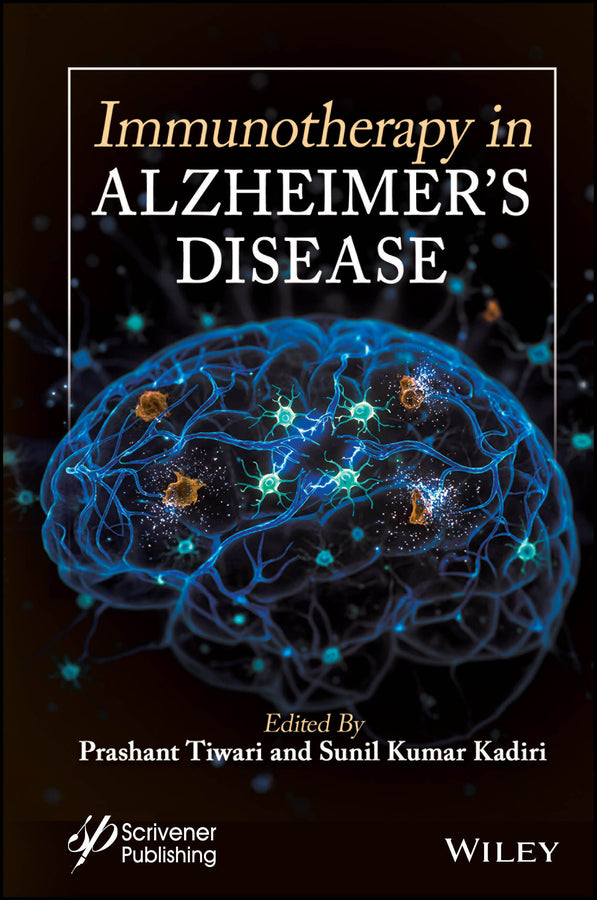
Immunotherapy in Alzheimer's Disease
Prashant Tiwari (Edited by), P Tiwari (Author), Sunil Kumar Kadiri (Edited by)
9781394336210, Wiley
Hardback, published 13 July 2026
720 pages
25 x 15 x 1.5 cm, 0.666 kg
Discover a groundbreaking path forward in the fight against dementia with this vital resource, which bridges the gap between costly drug discovery and the transformative potential of harnessing the immune system to finally target the underlying mechanisms of Alzheimer’s disease. Alzheimer’s disease, which is characterized by a progressive loss of memory and cognitive function, is the most prevalent type of dementia in adults. Despite being widespread, there is currently no permanent treatment for this condition. Current drugs provide only symptomatic relief with serious adverse consequences. The process of discovering new medications in this field is costly and time-consuming, so despite effort on the part of the scientific and pharmaceutical communities, few Alzheimer’s medications have been created. This book offers a comprehensive exploration of how the immune system can be harnessed to combat one of the most challenging neurodegenerative disorders of our time. It examines the scientific foundations of immunotherapy, including antibody-based strategies, vaccine development, and modulation of innate and adaptive immune responses. It highlights the interplay between amyloid and tau pathology, neuroinflammation, and microglial activation, providing readers with a clear understanding of the mechanisms driving therapeutic innovation. Beyond the laboratory, this volume bridges preclinical research with clinical applications, addressing safety, efficacy, and regulatory considerations. Case studies, emerging technologies, and future directions are presented to illustrate both the promise and the challenges of immunotherapy in Alzheimer’s care. Designed for neuroscientists, pharmacologists, clinicians, and biotechnology professionals, the book serves as a vital resource for those seeking evidence-based insights into cutting-edge therapeutic approaches that may transform the landscape of Alzheimer’s treatment.
Preface xxvii 1 Immunotherapy: Unveiling Myths, Shaping Reality, Charting Ideas, and Mapping the Future 1 1.1 Introduction 2 2 Amyloid-β Immunotherapy: Bridging Gaps in Alzheimer's Strategies 49 2.1 Introduction 50 3 Advancing Strain-Specific Immunotherapy for Alzheimer's Disease and Tauopathies: Opportunities and Challenges 79 3.1 Introduction 80 4 Synergistic Approaches: Natural Products, Small Molecules, and Immunotherapy in Brain Disorder Management 119 4.1 Introduction 120 5 Deciphering the Role of Cytokines in Neuroinflammation: Implications for Therapeutic Targeting 161 5.1 Introduction 163 6 Therapeutic Potential of TREM-1 Modulation in Alzheimer's Disease 185 6.1 Introduction 186 7 Personalized Immunotherapy in Brain Disorders: Precision Medicine Insights 209 7.1 Introduction 210 8 Hematological Considerations in Immunotherapy for Alzheimer's Disease 247 8.1 Introduction 248 9 Innovative Strategies for Genetic Predispositions in Alzheimer's: Immunotherapy and Gene Therapy Integration 273 9.1 Introduction to Alzheimer's Disease 274 10 Facilitating Synaptic Repair: Immune System Involvement 305 10.1 Introduction to Synaptic Repair 306 11 Exploring Ion Channel-Linked Strategies in Immunotherapy for Neurological Disorders 341 11.1 Introduction 342 12 Strategies for Inflammation Control: Modulating Microglial Responses 385 12.1 Introduction 386 13 Revolutionizing Neuroprotection: Innovative Lysosomal Targeting Strategies 433 13.1 Introduction 434 14 Ensuring Safety: Immunotherapy and Adverse Effect Management in Cerebrospinal Fluid 461 14.1 Introduction 462 15 Phytosomes and Blood Barrier Integrity: Implications for Immunotherapy Sustainability 493 15.1 Introduction 494 16 Therapeutic Insights: Acetylcholinesterase Inhibitors and Immunotherapy for Alzheimer's Disease 521 16.1 Introduction 522 17 Hormonal Regulation in Immunotherapy for Brain Disorders: Insights and Innovations 559 17.1 Introduction 560 18 Challenges and Opportunities of Tuberoinfundibular Axis in Brain Disorder Immunotherapy 589 18.1 Introduction 590 19 Immunotherapy in Alzheimer's Disease: Regulatory Considerations and Current Clinical Trial Landscape 635 19.1 Introduction 636 References 661
K. Trideva Sastri, Dinesh Murugan M., Meghana G.S. and Balamuralidhara V.
1.2 Understanding Immunotherapy in Alzheimer's Disease 5
1.3 Unveiling the Myths Surrounding Immunotherapy 8
1.4 Shaping the Reality of Immunotherapy 11
1.5 Charting Ideas: Emerging Trends in Immunotherapy 13
1.6 Mapping the Future of Alzheimer's Care with Immunotherapy 24
1.7 Overcoming Barriers in Translating Research to Clinical Practice in Immunotherapy Treatment of Alzheimer's Disease 26
1.8 Conclusion 28
P. K. Sahu, S. K. Prusty, M. Khandai and D. S. Panda
2.2 AD Pathogenesis 51
2.3 Advances in AD Treatment 52
2.4 Advantages and Challenges 67
2.5 Bridging Gaps in Alzheimer's Strategies 68
2.6 Conclusion 70
2.7 Future Directions 70
Sindhu Priya E. S., Sandhya Vasanth, Tahreen Taj, Mohammed Ameen M. P., Seleshya S. Danam and M. Vijay Kumar
3.2 Background on Alzheimer's Disease and Tauopathies 82
3.3 Current Immunotherapy Approaches for Alzheimer's Disease 86
3.4 Rationale for Strain-Specific Immunotherapy 90
3.5 Opportunities in Strain-Specific Immunotherapy 92
3.6 Innovative Techniques in Strain-Specific Targeting 93
3.7 Preclinical and Clinical Studies: Current Status and Findings 94
3.8 Future Directions and Emerging Trends 104
Prashant Tiwari, Sunil Kumar Kadiri, Neha Minocha and Astha Singh
4.2 Natural Products in Brain Disorder Management 123
4.3 Small Molecules in Brain Disorder Management 132
4.4 Immunotherapy in Brain Disorder Management 137
4.5 Synergistic Approaches 139
4.6 Emerging Trends and Innovations in Synergistic Approaches for Brain Disorder Management 145
4.7 Challenges 146
4.8 Future Directions 148
4.9 Conclusion 151
Kushagra Nagori, Rashnita Sharma, Anshita Shukla, Reena Deshmukh, Rashi Banchhor, Kartik T. Nakhate, Madhulika Pradhan, Krishna Yadav, Mukesh Kumar Sharma and Aakash Gupta
5.2 CY Families and Their Role in Neuroinflammation 164
5.3 Cellular Sources of CY in the CNS 166
5.4 Mechanisms of CY Signaling in the CNS 170
5.5 Anti-Inflammatory CY: Regulation and Therapeutic Potential 172
5.6 CY Dysregulation in Specific Neurodegenerative Disorders 173
5.7 Therapeutic Targeting of CY 175
5.8 Conclusion 176
Pragati A. Dongare, Deepak Khobragade, Surendra Agrawal and Mrunali Potbhare
6.2 TREM-1: Structure and Function 190
6.3 TREM-1 in Neuroinflammation and AD 192
6.4 Potential Mechanisms of TREM-1 Modulation in AD Therapy 194
6.5 Therapeutic Strategies Targeting TREM-1 in AD 196
6.6 Preclinical and Clinical Studies on TREM-1 in AD 198
6.7 Challenges and Future Perspectives 199
6.8 Conclusions 201
Bhaskar Pal, Kushal Roychoudhuri and Moitreyee Chattopadhyay
7.2 Overview of Precision Medicine 211
7.3 Immunotherapy Technologies 213
7.4 Personalized Immunotherapy Targeting Cancer-Specific Neoantigen 221
7.5 Role of Emerging Biomarkers for Personalized Immunotherapies 222
7.6 Challenges and Limitations of Recent Biomarkers to Identify Response to Immune Therapies 223
7.7 Use for Brain Diseases 224
7.8 Technology Innovation 228
7.9 Clinical Trials 229
7.10 Challenges and Limitations 231
7.11 Future Direction 232
7.12 Conclusion 233
Ritu Raj Kumar, Rohit Pandey, Sonakshi Antal, Shobha Rani and Md. Sarfraj Alam
8.2 Patient-Centered Perspectives in Immunotherapy for Alzheimer's Disease 256
8.3 Future Directions in Immunotherapy for Alzheimer's Disease 261
8.4 Conclusion 263
Shukla Rajendra Kumar, Shah Nishi, Bohra Bhavna, Saxena Bhagawati and Gupta Richa
9.2 Global Statics of Alzheimer's Disease 275
9.3 Pathophysiology of Alzheimer's: Amyloid Plaques, Neurofibrillary Tangles, and Neuroinflammation 275
9.4 Current Diagnostic Challenges and the Need for Innovative Approaches 280
9.5 Gene Therapy: Harnessing Genetic Engineering for Alzheimer's 280
9.6 Immunotherapy: A Promising Frontier in Alzheimer's Treatment 284
9.7 Integrating Immunotherapy and Gene Therapy: A Synergistic Approach 290
9.8 Preclinical and Clinical Trials: Progress and Challenges 292
9.9 Conclusion: The Road Ahead for Alzheimer's Treatment 294
Gaurav Mude, Mohammad Tauqeer Sheikh, Shantilal Singune, Sanjay Nagdev and Junaid Tantray
10.2 The Immune System and the Central Nervous System (CNS) 307
10.3 Microglia: Sentinels and Sculptors of Synaptic Networks 310
10.4 Astrocytes and Synaptic Support 313
10.5 Peripheral Immune Cells in Synaptic Repair 315
10.6 Molecular Signals Mediating Immune-Synapse Communication 317
10.7 Fractalkine and Other Key Signaling Pathways 319
10.8 Neuroinflammation: Double-Edged Sword 320
10.9 Synaptic Dysfunction in Neurodegenerative Diseases 322
10.10 Therapeutic Strategies Targeting Immune Pathways 324
10.11 Cell-Based Approaches to Promote Synaptic Healing 326
10.12 Biomaterials and Immunomodulation 328
10.13 Challenges and Risks in Manipulating Immune Responses 331
10.14 Future Directions in Synaptic Repair Research 333
Hariprasad M.G., Sourav Guha and Moqbel Ali Moqbel Redhwan
11.2 Neurodegenerative Diseases and Their Pathophysiology 344
11.3 Ion Channels and Their Types: Overview 349
11.4 Types of Ion Channels in Neurons 355
11.5 Ion Channels Present in Different Parts of Neurons 357
11.6 Role of Ion Channels in Neuronal Excitability, Signaling, and Plasticity 359
11.7 Immune Signaling in Neurodegeneration 361
11.8 Immunotherapy 362
11.9 Immunotherapy in Neurodegenerative Diseases 363
11.10 Immunotherapy Approaches in Neurodegenerative Diseases 364
11.11 Inhibiting Pathogenic Immune Signaling 366
11.12 Intersection of Immunotherapy and Ion Channels 367
11.13 Immunotherapeutic Agents Targeting Ion Channels in Neurodegenerative Disorders 368
11.14 Challenges and Limitations of Immunotherapy in Neurodegenerative Disorders 370
Faizan Khalid, Ashwini Deshpande and D. S. N. B. K. Prasanth
12.2 Microglial Activation and Its Role in Inflammation 389
12.3 Pathophysiological Implications of Microglial Dysregulation 391
12.4 Molecular Targets for Modulating Microglial Responses 394
12.5 Pharmacological Strategies 396
12.6 Nonpharmacological Interventions 406
12.7 Emerging Approaches and Future Directions 416
12.8 Challenges and Limitations 419
12.9 Conclusions 422
Ahana Hazra, Rideb Chakraborty, Naureen Afrose, Pratibha Bhowmick and Mithun Bhowmick
13.2 Tackling of Neurodegeneration 435
13.3 CNS-Targeting Treatments for Lysosomal Keeping Diseases: Current Advancements and Challenges 440
Pankaj Malhotra, Neha Minocha, Prashant Tiwari, Sunil Kumar Kadiri and Sampriti Paul
14.2 Role of Immunotherapy in Neurological Disorder 468
14.3 Mechanisms of Adverse Effects in Immunotherapy 474
14.4 Diagnostic Strategies for Adverse Effects 476
14.5 Management of Immunotherapy in CSF Disorders 479
14.6 Future Development 480
14.7 Conclusion 484
Akanksha and Sajeev Kumar B.
15.2 Considerations for Drug Delivery to the Brain 503
Rashmi Madhariya, Vikas Kumar, Prince Nikhil Rathore and Alpana Ram
16.2 Acetylcholinesterase Inhibitors (AChEIs) 526
16.3 Treatment for ADs Using Immunotherapy 535
16.4 Comparative Insights: AChEIs vs. Immunotherapy 547
16.5 Conclusion 549
Meghana G. S., Chinmayee U. Gowda, K. Trideva Sastri and Balamuralidhara V.
17.2 Hormonal Influence on Immune Function 563
17.3 Hormones and Brain-Immune Crosstalk 567
17.4 Innovations in Hormonal Regulation for Immunotherapy 571
17.5 Synergistic Effects of Combining Hormone Therapy with Immunotherapies 574
17.6 Tailored Approaches for Gender-Specific and Age-Specific Interventions 576
17.7 Challenges and Limitations 576
17.8 Future Directions 578
17.9 Conclusion 581
Pranita Jirvankar, Deepak Khobragade, Surendra Agrawal, Mrunali Potbhare, Prashant Tiwari and Sunil Kumar Kadiri
18.2 Hypophyseal Portal System: A Key Neurovascular Link 591
18.3 Functional Significance of the Hypophyseal Portal System 595
18.4 Clinical Implications of the Hypophyseal Portal System 596
18.5 Clinical Relevance of TIA Dysfunction 597
18.6 Role of the Tuberoinfundibular Axis (TIA) in Neuroendocrine Regulation 600
18.7 Significance of the Tuberoinfundibular Axis (TIA) in Brain Disorder Immunotherapy 603
18.8 Neuroanatomy and Function of the Tuberoinfundibular Axis 606
18.9 Role of the Tuberoinfundibular Axis (TIA) in Hormonal Homeostasis 612
18.10 Dopamine and Prolactin Regulation in the Tuberoinfundibular Axis 616
18.11 Immune System Interactions with the Tuberoinfundibular Axis 617
18.12 Role of Cytokines in Modulating Dopaminergic Activity 621
18.13 Blood-Brain Barrier and Immune Cell Infiltration in the Tuberoinfundibular Axis 623
18.14 Opportunities for Therapeutic Interventions 624
18.15 Potential of Gene Therapy and Cell-Based Approaches 625
18.16 Case Studies and Current Research Trends 626
18.17 Future Perspectives and Research Directions 626
18.18 Conclusion 627
Mangal Jyoti Das and Pratap Kumar Sahu
19.2 Immunotherapy in Alzheimer's Disease 637
19.3 Regulatory Considerations 640
19.4 Current Clinical Trial Landscape 644
19.5 Challenges 656
19.6 Conclusion 658
19.7 Future Directions 659
Index 669
Subject Areas: Clinical & internal medicine [MJ]