Freshly Printed - allow 10 days lead
Couldn't load pickup availability
Illuminating the Word in the Early Middle Ages
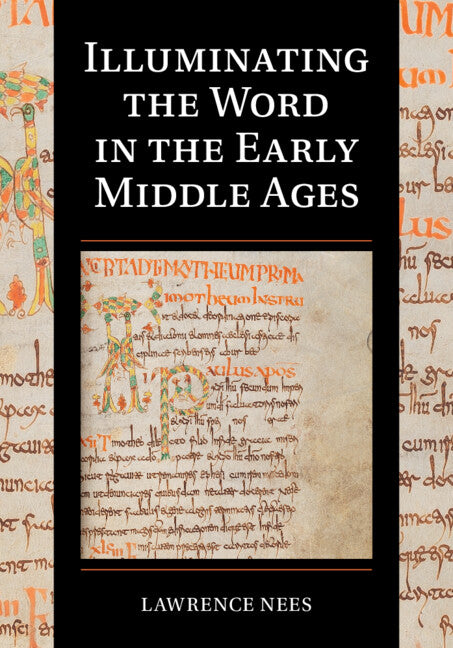
This richly illustrated study shows how modern systems of textual presentation grew from techniques developed in the medieval period.
Lawrence Nees (Author)
9781009193863, Cambridge University Press
Hardback, published 5 October 2023
590 pages
25.3 x 18.2 x 3.2 cm, 1.33 kg
'… a magisterial and provocative book by one of the leading medieval art historians - full of ideas, original, crisply written, and sumptuously illustrated. Its implications will no doubt productively fuel debate for a long time. For this early medievalist at least, it was a study to savour.' James T. Palmer, SELIM. Journal of the Spanish Society for Medieval English Language and Literature
This richly illustrated study addresses the essential first steps in the development of the new phenomenon of the illuminated book, which innovatively introduced colourful large letters and ornamental frames as guides for the reader's access to the text. Tracing their surprising origins within late Roman reading practices, Lawrence Nees shows how these decorative features stand as ancestors to features of printed and electronic books we take for granted today, including font choice, word spacing, punctuation and sentence capitalisation. Two hundred photographs, nearly all in colour, illustrate and document the decisive change in design from ancient to medieval books. Featuring an extended discussion of the importance of race and ethnicity in twentieth-century historiography, this book argues that the first steps in the development of this new style of book were taken on the European continent within classical practices of reading and writing, and not as, usually presented, among the non-Roman 'barbarians'.
1. The new medieval book and its heritage
2. The St Petersburg Gregory Manuscript and its ornament
3. Seeing and reading: the grammatical and rhetorical structure of text and image
4. Decorated words in Late Antiquity: roots of illumination
5. Illuminated manuscripts from Luxeuil and Bobbio
6. Early insular manuscripts in relation to the beginnings of book illumination
7. The beginnings of book illumination and the ethnic paradigm in modern historiography
8. Conclusion: the transformation of the book.
Subject Areas: Literary studies: general [DSB]