Freshly Printed - allow 7 days lead
Couldn't load pickup availability
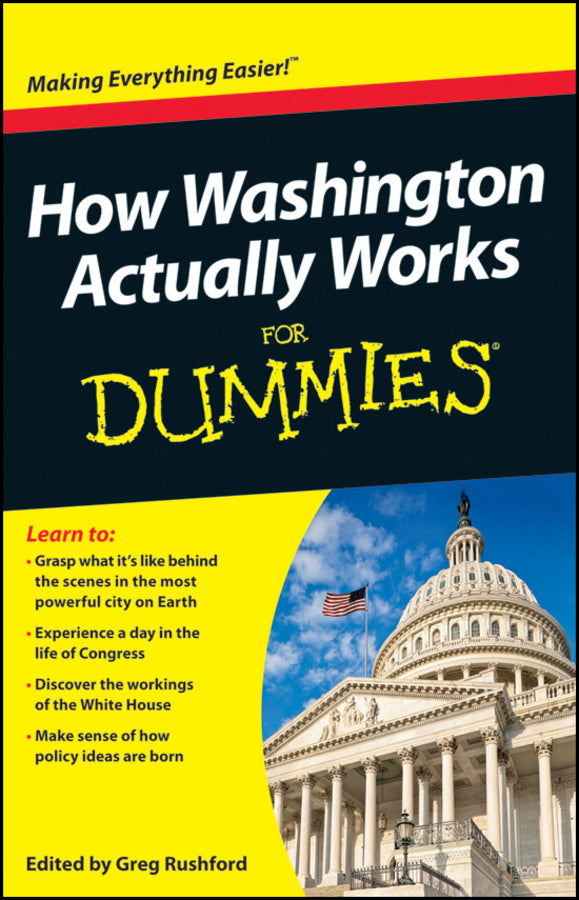
How Washington Actually Works For Dummies
Greg Rushford (Edited by)
9781118312957, Wiley
Paperback / softback, published 21 August 2012
128 pages
21.3 x 13.7 x 1.3 cm, 0.136 kg
Get the inside scoop on the most powerful city on Earth Washington, D.C.: Capital of the Free World; the most powerful city on Earth. No other country, company, or international organization can compare with the reach and wealth of the federal government. Policymaking — the art of deciding what programs to support, what laws to pass, or what regulations to write — is at the core of what Washington does and is what everyone, from the President on down, wants to influence. How Washington Actually Works For Dummies isn't a dry explanation of the American system of government but a playbook for how Washington really works: who has a seat at the table, how the policymaking process works, and how one survives. It takes you inside the political process in Washington, discusses changes in recent decades, and explains how the parts fit together. You find out: In a presidential election year when economic issues are center stage and the candidates will go head to head in policy debates, there’s no better time to discover the ins and outs of how policy is actually made.
Introduction 1 About This Book 2 Conventions Used in This Book 2 Foolish Assumptions 2 Icons Used in This Book 3 Where to Go from Here 3 Chapter 1: A Brief History of Washington 5 Becoming the National Capital 5 Putting D.C on the map 6 Building Georgetown and Alexandria 6 Sitting far from the early seats of power 7 Meeting in Mount Vernon and Annapolis 8 Wheeling and dealing 9 Designing the national capital 11 Watching the City Develop 12 Growing the Government in the 20th Century 14 The Roosevelt Years: The New Deal and World War II 14 From the Cold War to the new millennium 15 Eyeing D.C Today 16 Charting a changing demographic 16 Touting a recession-proof economy 17 Respecting D.C.’s rankings 18 Identifying the Washington Establishment 19 Putting the President and Congress in their place 20 Focusing on federal bureaucrats 20 Spotting the lobbyists 21 Recognizing other voices in the debate 21 Trying to figure out who really runs the show 21 Ignoring the establishment at your own peril 22 Chapter 2: The People behind the Curtain: Federal Bureaucrats 23 Embracing the Bureaucracy 24 Filling Plum Positions: Career Officials versus Appointees 25 Appreciating the Power of the Executive Office of the President 26 Running the Nation’s Business in the Cabinet and Departments 30 Filling in the Gaps with Agencies from A–Z 31 What to Wear, or How to Spot Federal Workers 32 Chapter 3: Professional Persuaders: Lobbyists 35 Exercising the Right to Petition 36 Identifying Interest Groups 37 Large corporations 37 Trade associations 39 Labor unions 41 Issue-oriented organizations 41 Other interest groups 42 Realizing the Role Played by Lobbying and Consulting Firms 42 Bringing Legal Firms into the Lobbying Mix 43 Regulating the Lobbying Industry 44 Defining a lobbyist 44 Considering the case of foreign agents 46 Following the gifting rules 48 Lobbying via Social Media 50 Chapter 4: Other Voices in the Debate: Outsiders, Gatecrashers, and Wallflowers 51 Figuring Out What Think Tanks Do 52 Trying to influence policy debates 52 Representing a cause or agenda 53 Employing former public servants 54 Informing the public 54 Analyzing the Efforts of Activists and NGOs 55 Feeling the Influence of Foreign Governments 57 Interacting with International Organizations 59 All Press Is Good Press: The Media 61 Spotting the many players 61 National, local, and foreign media outlets 61 Specialist media outlets 62 24-hour outlets: Cable news and social media 63 Breaking news in a cutthroat environment 63 Influencing policy (for better or worse) 65 Chapter 5: Congress 67 Browsing the Basic Responsibilities of Congress 67 Wielding the power of the purse 68 Overseeing the executive branch 68 Carrying out other constitutional duties 69 Studying the Structure of Congress 70 Spotlighting the Senate 70 Homing in on the House 70 Spotting the legislative leaders 71 Appreciating the Committee Process 73 Helping legislators gain expertise 73 Serving as a source of power 74 Bringing a Bill — and Possibly a Law — to Life 76 Investigating the Importance of Money 78 Focusing on campaign fundraising 78 Playing with PACs and special interests 79 Becoming beholden to financial supporters 79 What do you get for your money? 80 Chapter 6: The Presidency 81 The Workings of the White House 81 Fulfilling the duties of office 82 Constitutional duties 82 Self-imposed duties 84 Knowing his limitations: Can one man change Washington? 84 Using the bully pulpit 85 Relying on his support team 86 Governing from the bubble 87 Campaigning and Policymaking 89 Donating money and influencing policy 89 Concentrating disproportionate power in swing states 90 Dealing with party politics 91 A Day in the Life 92 Chapter 7: Policymaking 95 Realizing That Anyone Can Think Up New Policy 95 Getting Ideas to the Policymakers 96 Recognizing the policy triangle 96 Putting the idea on the decision-makers’ agenda 97 Employing Advocacy to Influence Policy Decisions 98 Defining our terms: Advocacy and lobbying 98 Distinguishing indirect and direct advocacy 100 Building an advocacy message 101 Practicing a powerful delivery 101 Getting a reality check from Washington insiders 103 Turning Bills into Laws 103 Writing Regulations to Support the Laws 107 Wielding Influence beyond Laws and Regulations 108 Spotting Checks and Balances in Policy Implementation 108 Congressional oversight: Keeping the executive branch in check 109 The interagency process 110 Untangling the Policy Web: The Power of Washington Insiders 112 Chapter 8: Ten Ways to Participate in Washington Policymaking 113 Be Informed 113 Run for Congress (Or Join a Staff) 114 Join the Bureaucracy 115 Contact Your Member of Congress 115 Join an Interest Group 117 Be an Activist for a Day 117 Be a Lobbyist for a Day 118 Submit Public Comments 119 Be a Citizen Journalist 119 Join the Washington Establishment 120
Subject Areas: Politics & government [JP]