Special Order - allow 2+ weeks lead
Couldn't load pickup availability
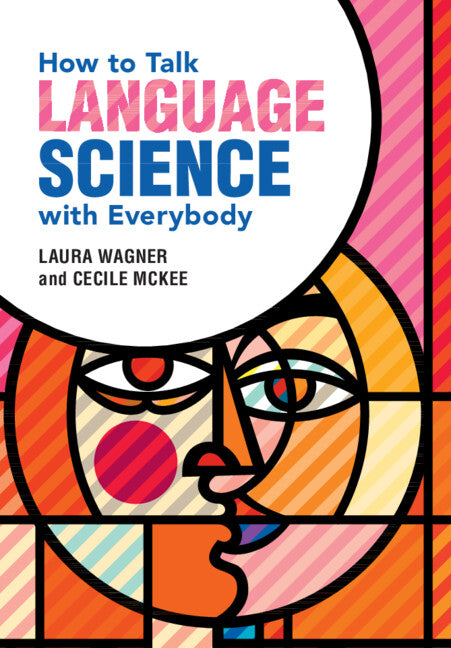
How to Talk Language Science with Everybody
This is an indispensable guide to engaging the general public in language sciences, Illustrated with a wide-range of real-life examples.
Laura Wagner (Author), Cecile McKee (Author)
9781108794923, Cambridge University Press
Paperback / softback, published 29 June 2023
282 pages
24.4 x 16.9 x 1.5 cm, 0.49 kg
'This book illustrates the best of lingcomm practice; it is informed by linguistic research as well as by insights from related fields, including psychology, education, and anthropology. It also illustrates the best of the lingcomm community more broadly; it is accessible to those new to the practice, encouraging in tone, and passionate about introducing more people to how great linguistics is (a fact taken as given in this book).' Lauren Gawne, Language
Do you want to talk about the linguistic research that you think is important but you don't know where to start? Language is a topic that is relevant to everyone, and linguists are often asked to speak publicly about their research, to a range of lay audiences in the media, politics, festivals and fairs, schools, museums and public libraries. However, relaying this vital information in an engaging way can often feel like an insurmountable task. This accessible guide offers practical advice on how to talk about language to a range of non-academic audiences. It draws on the linguistics behind effective communication to help you have cooperative conversations, and to organize your information for a diverse range of people. It is illustrated with a wealth of examples from real-life scenarios, and includes chapter-by-chapter worksheets, enabling you to make your own fun and interesting language science activities to share with others.
Preface
1. Why bother
2. You can be the expert
3. Cooperative conversations
4. Conversational goals
5. Know why audience
6. Creating relevance by generating interest
7. Creating relevance by making connections
8. Quality and credibility
9. Incomplete is not incorrect
10. Learn to listen
11. Information structure
12. The curse of knowledge
13. Start with examples
14. What's new? Jargon
15. From given to new: scaffolding
16. Three-legged stool approach
17. Dealing with a range of audiences
18. Where can I go?
19. Being a good partner
20. Finale
Appendix.
Subject Areas: Educational: English language & literacy [YQC], Language teaching theory & methods [CJA], Linguistics [CF]