Freshly Printed - allow 7 days lead
Couldn't load pickup availability
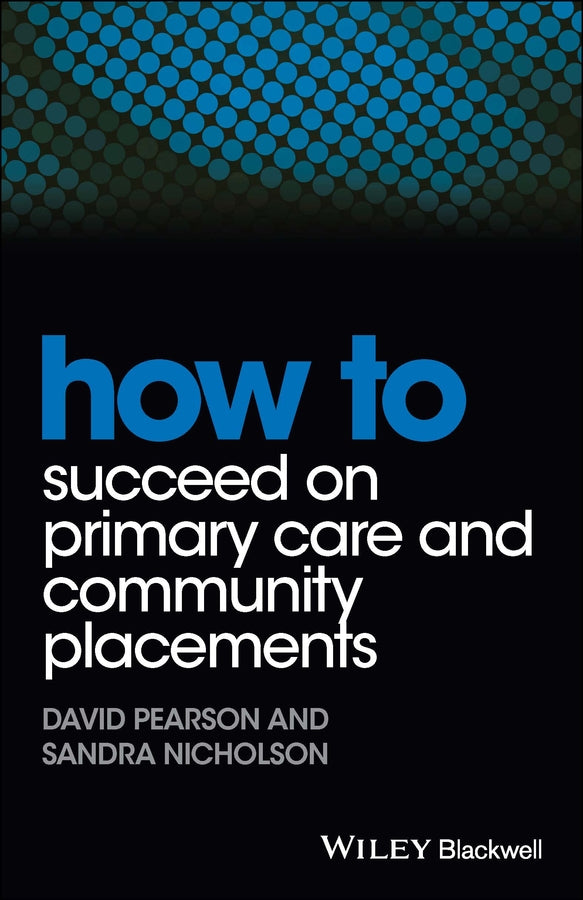
How to Succeed on Primary Care and Community Placements
David Pearson (Author), Sandra Nicholson (Author)
9781118343449, Wiley
Paperback / softback, published 25 December 2015
240 pages
21.6 x 14 x 1 cm, 0.327 kg
How to Succeed on Primary Care and Community Placements offers practical advice on how to get the most from your time on community visits, within patient consultations, and with the practice team. It highlights the unique opportunities and challenges you will face on placement, from using clinical information systems, to home visits and long term patient relationships, and how to take advantage of new ways of learning with web-based tools, mobile devices and social networking.
Key features include:
• Learning outcomes at the start of each chapter with links to web-based learning, case examples, and tasks to undertake whilst on placement
• An evidence-based, practical approach to improving learning, teaching, assessment and feedback in community settings
Written by a team of experienced community-based medical education specialists, it is ideal for all medical students, whether on early clinical placements or later in training, and for tutors and preceptors looking for novel ways to engage their students.
Contributors x Introduction xi Acknowledgements xv Chapter 1: What to learn in community settings 1 Introduction 1 Early years 3 What to learn during early patient contact 4 Professionalism and personal growth 5 Patient perspectives on health and healthcare 8 Social and psychological aspects of health 9 Learning clinical method (history taking and examination) 11 Clinical and procedural skills 13 Middle clinical years 14 Later clinical years 22 Learning in the community ‘out of hours’ 25 Further opportunities 26 Summary 29 References 29 Further resources 30 Chapter 2: Learning the public health aspects of medicine 32 Public health perspectives 32 Health promotion 35 Primary and secondary disease prevention 36 Behaviour change: health promotion and prevention for individuals 38 Public health and health education 39 Summary 41 References 41 Chapter 3: Preparing for and learning on primary care and community placements 42 Introduction 42 Preparing for your community placements 45 When you arrive on placements 47 Your responsibilities at the end of your placement 59 Summary 60 References 61 Chapter 4: Active learning in the consultation 62 Introduction 62 Learning objectives learning plans 63 Learning consultation skills 64 Understanding the consultation 65 The art of consultation 66 Engaging with patients introductions information consent 67 Working with patients 68 Active learning in the consultation 71 Student‐led consultations 76 Problems pitfalls and suggested solutions 77 Complex consultations for the later clinical years 79 Summary 82 References 83 Chapter 5: What to learn from the primary healthcare team 85 Introduction 86 Professional behaviour in a team 87 What the PHCT does 90 Learning with and from the primary healthcare team 95 Learning from the practice nurses 98 Learning from the pharmacy team 100 Primary health team meetings 105 Learning from mistakes 106 Patients and public involvement in your education 107 Summary 109 References 109 Further resources 110 Chapter 6: Learning medicine in community settings 111 Learning from community visits 112 Learning from doctor’s home visits 113 Visiting residential care and nursing homes 115 Learning from community mental health teams 116 Long‐term mental healthcare in the community 119 Community mental health for the elderly 120 Community maternity and child health services 121 Community sexual health services 122 Palliative and end of life care 123 Summary 126 References 126 Further resources 127 Contents vii Chapter 7: Clinical information systems opportunities to learn 128 What are clinical information systems? 128 Why learn about clinical information systems? 129 Clinical information systems in community practice 130 Making the most of the CIS in learning and teaching 130 What do clinical information systems offer in the diagnosis and management of acute illnesses? How do they support your learning of these conditions? 132 How do clinical information systems support the management of long‐term conditions? How can they support your learning about this vital area of medicine? 134 Learning from clinical guidelines 138 How can clinical information systems support the learning of prescribing (and patient safety)? 139 Family medicine using clinical information systems to learn public health aspects – what do you need to know? 141 Clinical information systems: supporting learning about communication with patients and colleagues 143 Using clinical information systems in supporting assessment 144 Clinical information systems: problems and pitfalls 145 Clinical information systems: projects audit and research 148 Summary 149 References 150 Chapter 8: Supporting learning in primary care using social media and other technologies 151 Social media in your primary care placements 152 When media becomes social media 153 Social media landscape 154 Your online profile and digital professionalism 155 Your digital footprint 155 Doctors and patients online 156 Digital literacy and information literacy 157 Social media sites: Facebook Twitter Blogs Wikis YouTube Slideshare/Prezi Scoop.it/Pinterest 159 Summary 164 References 165 Further resources 166 Chapter 9: Assessment feedback and quality assurance 167 Assessment in your primary care placement 168 Assessments in medical courses what should you expect? 169 What types of assessment should you expect on your primary care placements? 171 Contents ix How can you best use your time on primary care placements to survive (or even excel) in your medical school assessments? 174 Some potential strengths of assessment in primary care 177 Opportunities for self‐assessment in primary care settings 181 Some final thoughts: why authenticity in assessment matters 181 Feedback within your primary care placement 182 Types of feedback in primary care placements 184 Giving and receiving feedback 187 Giving something back – your responsibility to offer feedback 188 Summary 191 References 192 Chapter 10: Conclusions: Looking to the future 194 Reference 197 Index 198
With Ann O’Brien
With Ann O’Brien
With Maria Hayfron‐Benjamin
With Catie Nagel
With Will Spiring and Ann O’Brien
With Ann O’Brien and Will Spiring
With Jane Kirby
With Jonathon Tomlinson
With Mark Williamson
Subject Areas: Medicine: general issues [MB]