Freshly Printed - allow 7 days lead
Couldn't load pickup availability
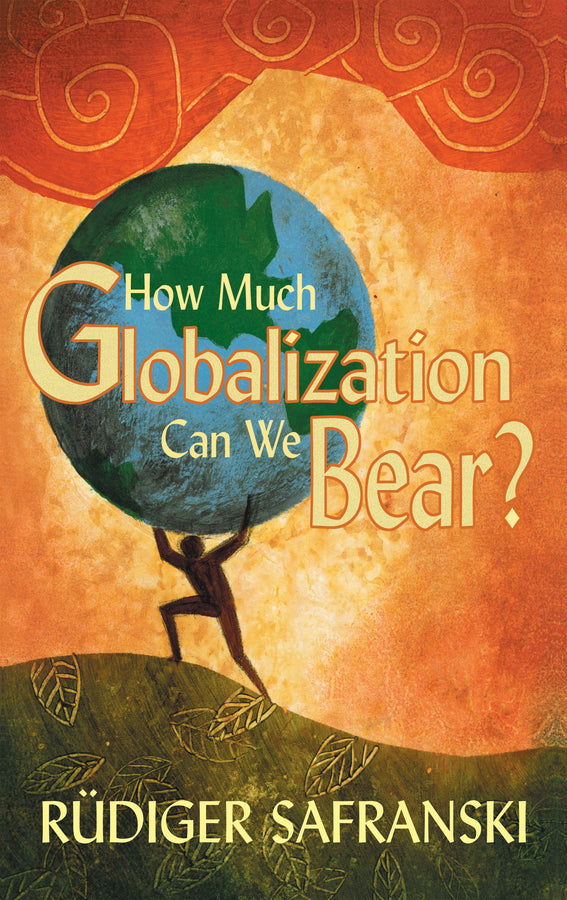
How Much Globalization Can We Bear?
Rüdiger Safranski (Author), Patrick Camiller (Translated by)
9780745633886, Polity Press
Hardback, published 20 November 2005
100 pages
22.4 x 14.5 x 1.2 cm, 0.218 kg
"A slightly eccentric, but very enjoyable, account of globalization." "We might wonder whether anything new remains to be said on globalization. Reading Rüdiger Safranski's account of the issue, it becomes immediately obvious, maybe surprisingly, that the answer can be highly affirmative."
Australian Journal of Political Science
Peter Wagner, European University Institute and University of Warwick
According to current debates, ’individualization’ has frequently been proposed as the conceptual counterpart to ’globalization’. It has often seemed that nothing would be left once these processes have fully unfolded, other than individual human atoms dispersed on a globe without any political, economic or cultural structures. Regardless of whether this description is based on any good and valid observation, nobody drew the conclusion that suddenly emerges as evident after reading Rüdiger Safranski’s lucid and timely exploration of the issue: globalization, if it occurs, means a radical change in the human condition. It brings human being in direct confrontation with the world in its totality. Almost unnoticed in broader debate, the scenario of globalization entails a return - in new a radical guise - of the time-honoured question of the ways of being-in-the-world of human beings. In this compelling new book, the philosopher Rüdiger Safranski grapples with the pressing problems of the global age: ‘Big Brother’ states, terrorism, international security and the seeming impossibility of ‘world’ peace. He suggests that the era ofglobalization should not be thought of as that epoch in world history in which all human beings will see themselves in the same, indistinct situation. There will always be, Sanfranski argues, some need for understanding one’s own situation by drawing boundaries and conceptualizing ‘otherness’ and individuality.
Preface: Understanding Globalization: Between Sociology and Philosophy (Peter Wagner). 1. First nature, Second Nature. 2. Globalization. 3. Globalism. 4. Making Enemies. 5. World Peace?. 6. The Global and the Other Totality. 7. The Individual and the Immune System. 8. Jungle and Clearing. 9. False Glows. 10. Creating Space. Notes.
Subject Areas: Geography [RG]