Freshly Printed - allow 10 days lead
Couldn't load pickup availability
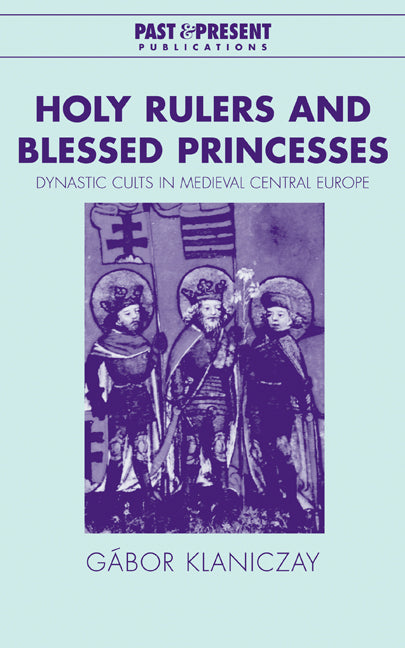
Holy Rulers and Blessed Princesses
Dynastic Cults in Medieval Central Europe
A study of medieval Hungarian and central European royal saints.
Gábor Klaniczay (Author), Eva Pálmai (Translated by)
9780521420181, Cambridge University Press
Hardback, published 14 March 2002
512 pages, 91 b/w illus.
22.9 x 15.2 x 3.3 cm, 0.92 kg
'This book … is a valuable contribution to the study of sanctity in medieval Hungary.' The Journal of Ecclesiastical History
Medieval dynasties frequently relied upon the cult of royal saints for legitimacy. After the early medieval emergence of this type of sainthood, in the central Middle Ages most royal dynasties had saints in their family: Edward the Confessor, Olaf, Canute, Louis IX, Charlemagne, the Emperor Henry II, and Wenceslas are some of the best-known examples. Within this context the saints of the Hungarian ruling dynasty - the Arpadians - constitute a remarkable sequence: St Stephen, St Emeric, St Ladislas, St Elizabeth, St Margaret and other central European blessed princesses, whose convents mirrored the Court of Heaven. This sequence of dynastic saints provide an example of the late medieval evolution of royal and dynastic sainthood. Building upon a series of case studies from Hungary and central Europe, Gábor Klaniczay proposes a synthesis of the multiple forms and transformations of royal and dynastic sainthood in medieval Europe.
List of illustrations
List of genealogical tables
Acknowledgements
List of abbreviations
Introduction
1. From god-king to sacral kingship
2. Martyr kings and blessed queens of the Early Middle Ages
3. Rex iustus: the saintly institutor of Christian kingship
4. The chaste prince and the athleta patriae
5. Saintly princesses and their 'heavenly courts'
6. The cult of dynastic saints as propaganda: the Angevin-Luxemburg synthesis
Conclusion
Appendices
Bibliography
Index.
Subject Areas: Early history: c 500 to c 1450/1500 [HBLC], European history [HBJD]