Freshly Printed - allow 10 days lead
Couldn't load pickup availability
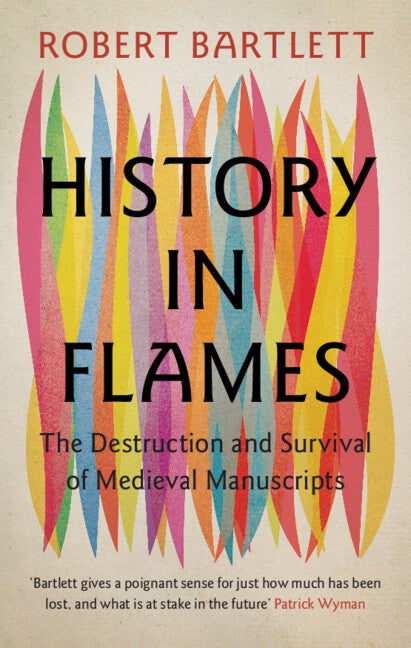
History in Flames
The Destruction and Survival of Medieval Manuscripts
Medieval manuscripts are vulnerable. This book explores cases of their large-scale destruction, as well as attempts to preserve them.
Robert Bartlett (Author)
9781009457156, Cambridge University Press
Hardback, published 22 August 2024
220 pages
22.4 x 14.6 x 1.9 cm, 0.44 kg
'Although the history of the destruction of the medieval Western textual record is bleak, this book by Bartlett will enlighten readers from generalists to specialists. … Highly recommended.' R. T. Ingoglia, Choice
To what extent does our knowledge of the past rely upon written sources? And what happens when these sources are destroyed? Focusing on the manuscripts of the Middle Ages, History in Flames explores cases in which large volumes of written material were destroyed during a single day. This destruction didn't occur by accident of fire or flood but by human forces such as arson, shelling and bombing. This book examines the political and military events that preceded the moment of destruction, from the Franco-Prussian War and the Irish Civil War to the complexities of World War II; it analyses the material lost and how it came to be where it was. At the same time, it discusses the heroic efforts made by scholars and archivists to preserve these manuscripts, even partially. History in Flames reminds us that historical knowledge rests on material remains, and that these remains are vulnerable.
Preface
1. Our Knowledge of the Past
2. Libraries and Archives
3. What Has Been lost?
4. A Narrow Escape: Beowulf
5. 'Away With the Learning of the Clerks!'
6. Strasbourg, 24 August 1870: The Garden of Delights
7. Bulin, 30 June 1922: The Public Record Office of Ireland
8. Naples, 30 September 1943: The State Archive
9. Hanover, 9 October 1943: The Ebstorf Map
10. Chartres, 26 May 1944: The Municipal Library
Conclusion.
Subject Areas: European history [HBJD]