Freshly Printed - allow 7 days lead
Couldn't load pickup availability
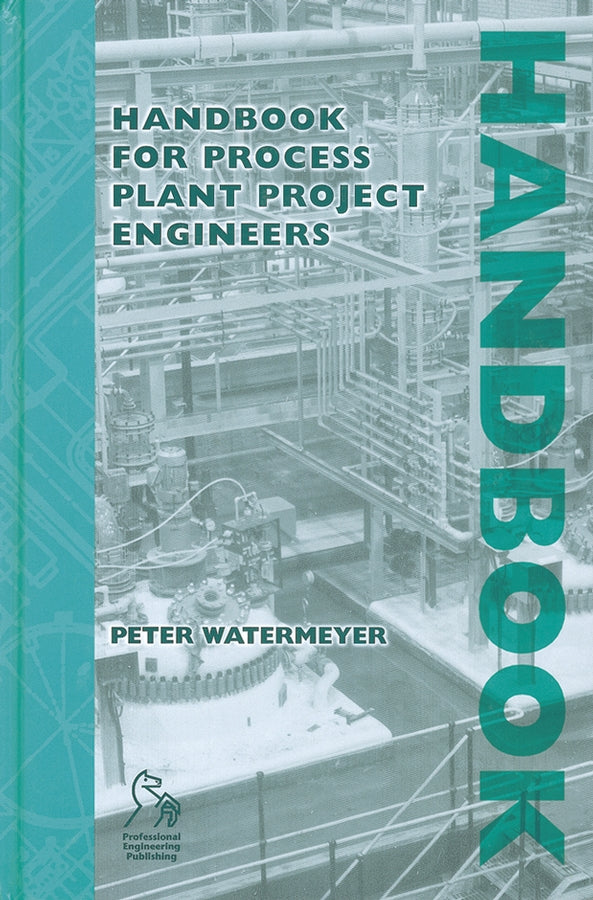
Handbook for Process Plant Project Engineers
Peter Watermeyer (Author)
9781860583704, Wiley
Hardback, published 30 July 2002
336 pages
23.9 x 16.4 x 2.6 cm, 0.624 kg
This excellent book systematically identifies the issues surrounding the effective linking of project management techniques and engineering applications. It is not a technical manual, nor is it procedure-led. Instead, it encourages creative learning of project engineering methodology that can be applied and modified in different situations. In short, it offers a distillation of practical ‘on-the job’ experience to help project engineers perform more effectively. While this book specifically addresses process plants, the principles are applicable to other types of engineering project where multidisciplinary engineering skills are required, such as power plant and general factory construction. It focuses on the technical aspects, which typically influence the configuration of the plant as a whole, on the interface between the various disciplines involved, and the way in which work is done – the issues central to the co-ordination of the overall engineering effort. It develops an awareness of relationships with other parties – clients, suppliers, package contractors, and construction managers – and of how the structure and management of these relationships impact directly on the performance of the project engineer. Readers will welcome the author’s straightforward approach in tackling sensitive issues head on. COMPLETE CONTENTS
First cycle - a process plant and a project: a process plant A project and its management - a brief overview The engineering work and its management The commercial environment The contracting environment The economic environment Plant layout and modelling Value engineering and plant optimization Hazards, loss and safety Fluid transport Bulk solids transport Slurries and two-phase transport Hydraulic design and plant drainage Observations on multi-discipline engineering Detail design and drafting Traditional documentation control. Fifth cycle - more on management: the organization of work Construction Construction contracts Commissioning Communication Change and chaos Fast-track projects Advanced information management systems Key issues
Second cycle - environment: the project's industrial environment
Third cycle - conceptual development: studies and proposals
Fourth cycle - engineering development and detail: specification, selection and purchase
Final cycle - strategies for success: project strategy development
Subject Areas: Mechanical engineering & materials [TG]