Freshly Printed - allow 10 days lead
Couldn't load pickup availability
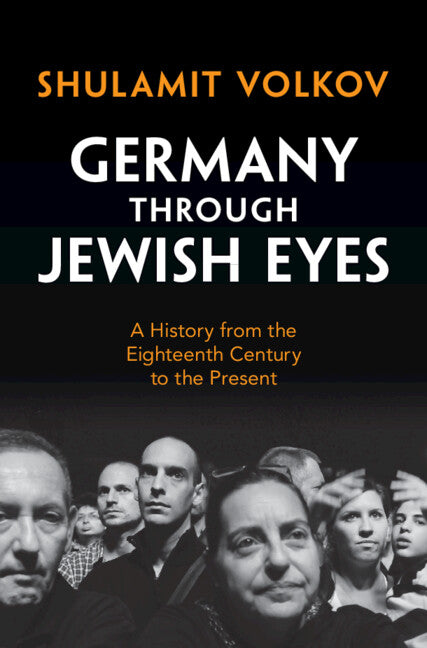
Germany through Jewish Eyes
A History from the Eighteenth Century to the Present
Explores the dramatic course of German history, over two hundred years - all from a Jewish perspective.
Shulamit Volkov (Author)
9781009506496, Cambridge University Press
Hardback, published 21 November 2024
246 pages
23.5 x 15.9 x 1.8 cm, 0.49 kg
'On the basis of decades of scholarship on antisemitism and Jewish history, Shulamit Volkov now reverses the perspective and unfolds the broad and colourful panorama of the many, often contradictory ways in which Jews perceived the German lands and its people. A must-read for anyone interested in German history and a fascinating tour d'horizon for all connoisseurs of Jewish history - not just the German one.' Stefanie Schüler-Springorum, Center for Research on Antisemitism, TU Berlin
What can Jewish history tell us about German history? How can we understand the history of modern Germany from a Jewish perspective? And how do we bring the voices of German Jews to the fore? Germany through Jewish Eyes explores the dramatic course of German history, from the Enlightenment, through wars and revolutions, unification and reunification, Nazi dictatorship, Holocaust, and the rebuilding of a prosperous, modern democracy - all from a Jewish perspective. Through a series of chronologically ordered life-stories, Shulamit Volkov examines how the lived experience of German Jewry can provide new insights into familiar events and long-term developments. Her study explores the plurality of the Jewish gaze, considering how German Jews sought full equality and integration while attempting to preserve a unique identity, and how they experienced security and integration as well as pronounced hatred. Volkov's innovative study offers readers the opportunity to look again at the pivotal moments of German history with a fresh understanding.
Introduction: A Jewish Gaze – Plural and Unique
Part I. Learning to Know Germany: 1780–1840
1. Enlightenment without Toleration
2. Benevolent Autocracy
3. The Half-Open Society
Part II. Liberty, Unity, Equality: 1840–1870
4. Pogroms and Revolution
5. Germany's Entangled Modernities
6. Unification as Rupture
Part III. Living in Germany: 1870–1930
7. Achievements and Unacknowledged Dangers
8. Joined and Disjoint in War
9. Hopes Shattered
Part IV. A Lost Homeland: 1930–2000
10. The Abyss
11. Victims, Witnesses, Plaintiffs
12. Strangers at Home
Epilogue: Berlin is No Weimar.
Subject Areas: European history [HBJD]