Freshly Printed - allow 10 days lead
Couldn't load pickup availability
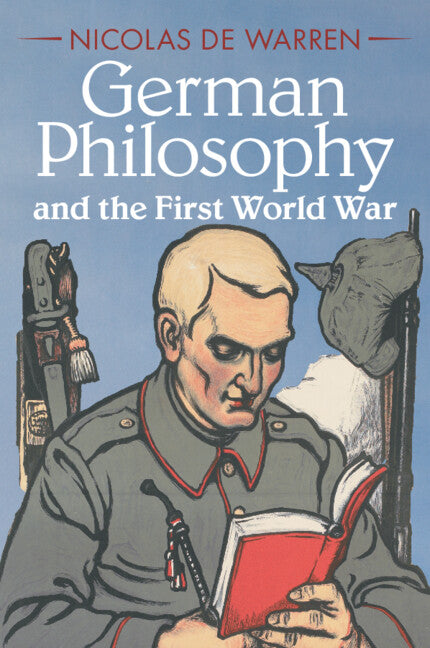
German Philosophy and the First World War
A powerful exploration of how the First World War - 'the war to end all wars' - transformed German philosophy.
Nicolas de Warren (Author)
9781108437615, Cambridge University Press
Paperback / softback, published 1 May 2025
436 pages
22.9 x 15.2 x 2.3 cm, 0.627 kg
'… at the end of reading this fascinating volume, we will express our gratitude to the author, for having been able to present with finesse and accuracy of analysis a difficult question: that of the links which unite philosophical thought to the time and place of its production.' Olivier Rota, Mélanges de science religieuse
How did the First World War, the so-called 'Great War' - widely seen on all sides as 'the war to end all wars' - impact the development of German philosophy? Combining history and biography with astute philosophical and textual analysis, Nicolas de Warren addresses here the intellectual trajectories of ten significant wartime philosophers: Ernst Bloch, Martin Buber, Ernst Cassirer, Hermann Cohen, György Lukács, Martin Heidegger, Edmund Husserl, Franz Rosenzweig, Max Scheler and Georg Simmel. In exploring their individual works written during and after the War, the author reveals how philosophical concepts and new forms of thinking were forged in response to this unprecedented catastrophe. In reassessing standardized narratives of German thought, the book deepens and enhances our understanding of the intimate and complex relationship between philosophy and violence by demonstrating how the 1914-18 conflict was a crucible for ways of thinking that still define us today.
1. The genius of war, the genius of peace: Max Scheler's demons
2. Deutschtum und Judentum: Hermann Cohen in the time of the nations
3. I and you: Martin Buber and dialogical creation
4. More than life: Georg Simmel's philosophical testament
5. The apocalypse of hope: Ernst Bloch's phenomenology of utopic spirit
6. The road to Damascus: György Lukács and History and Class Consciousness
7. From death into life: Franz Rosenzweig's redemptions
8. World-philosophy: Ernst Cassirer, freedom in ways of worldmaking
9. Martin Heidegger and the titanic struggle over being
10. The tragedy of the person: Edmund Husserl at war.
Subject Areas: History of ideas [JFCX], Western philosophy, from c 1900 - [HPCF], First World War [HBWN]