Freshly Printed - allow 10 days lead
Couldn't load pickup availability
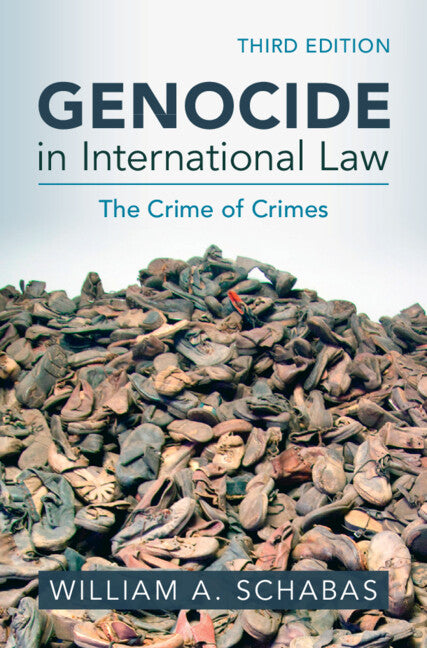
Genocide in International Law
The Crime of Crimes
Analysis of the 1948 Genocide Convention and its impact on international courts and tribunals and its place in law debates.
William A. Schabas (Author)
9781009460811, Cambridge University Press
Hardback, published 3 April 2025
895 pages
22.9 x 15.2 x 4.8 cm, 1.536 kg
The 1948 Genocide Convention is a vital legal tool in the international campaign against impunity. Its provisions, including its enigmatic definition of the crime and its pledge both to punish and to prevent the 'crime of crimes', have now been considered in important judgments by the International Court of Justice, the international criminal tribunals and domestic courts. Since the second edition appeared in 2009, there have been important new judgments as well as attempts to apply the concept of genocide to a range of conflicts. Attention is given to the concept of protected groups, to problems of criminal prosecution and to issues of international judicial cooperation, such as extradition. The duty to prevent genocide and its relationship with the doctrine of the 'responsibility to protect' are also explored.
Introduction
1. Origins of the legal prohibition of genocide
2. Drafting of the Convention
3. Subsequent normative developments
4. Groups protected by the Convention
5. The specific intent to commit genocide
6. Punishable acts of genocide
7. Cultural genocide, ethnic cleansing and other acts not punishable under the Convention
8. 'Other acts' of genocide
9. Defences to genocide
10. Prosecution of genocide by international and domestic tribunals
11. State responsibility and the role of the International Court of Justice
12. Prevention of genocide
13. Activity of international organizations
14. Treaty law questions and the Convention
Conclusions.
Subject Areas: International humanitarian law [LBBS]