Freshly Printed - allow 4 days lead
Couldn't load pickup availability
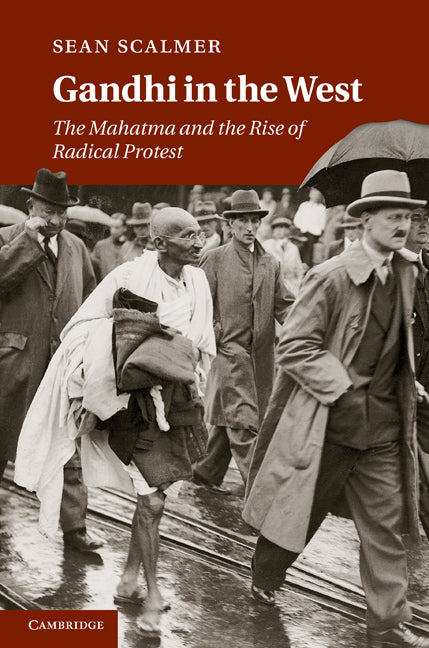
Gandhi in the West
The Mahatma and the Rise of Radical Protest
A history of Gandhi's previously underestimated influence on Western protest, and thereby modern Western history.
Sean Scalmer (Author)
9780521760911, Cambridge University Press
Hardback, published 6 January 2011
254 pages
23.5 x 15.9 x 1.7 cm, 0.54 kg
'… a lucid, clear and highly persuasive analysis of the ways in which US civil rights protesters and British pacifists adopted Gandhian forms of non-violent protest within their own campaigns … The result is one of the first comparative and transnational histories of the ideas and practices of non-violence in British and US peace and civil rights protests in the 1950s and 1960s.' Holger Nehring, English Historical Review
The non-violent protests of civil rights activists and anti-nuclear campaigners during the 1960s helped to redefine Western politics. But where did they come from? Sean Scalmer uncovers their history in an earlier generation's intense struggles to understand and emulate the activities of Mahatma Gandhi. He shows how Gandhi's non-violent protests were the subject of widespread discussion and debate in the USA and UK for several decades. Though at first misrepresented by Western newspapers, they were patiently described and clarified by a devoted group of cosmopolitan advocates. Small groups of Westerners experimented with Gandhian techniques in virtual anonymity and then, on the cusp of the 1960s, brought these methods to a wider audience. The swelling protests of later years increasingly abandoned the spirit of non-violence, and the central significance of Gandhi and his supporters has therefore been forgotten. This book recovers this tradition, charts its transformation, and ponders its abiding significance.
Introduction
1. Meeting the Mahatma
2. Gandhism in action
3. At war over words
4. Waiting for the peace train
5. The experimenters
6. An idea whose time has come?
7. Transformations unforeseen
Conclusion.
Subject Areas: History of ideas [JFCX], 20th century history: c 1900 to c 2000 [HBLW], Asian history [HBJF]